Most people with a garden or a field face the same dilemma: should I buy an excavator or a tractor? Both are tracked, both work on sloping ground, both take attachments. But the main job they do is very different, and the wrong choice means having to buy the second machine too a few months later.
In this article we put the two side by side and state plainly which one wins at which job.
The short answer
- If your work is mainly digging → excavator
- If your work is mainly working the soil and hauling → tractor
- If you have both → a tractor with excavator arm is often the most economical solution
Now let’s unpack that.
What an excavator does and doesn’t do
A mini excavator is a digging machine. With its boom and bucket it digs soil, lifts it out and piles it to the side.
What it does well:
- Digging channels (water, power, drainage lines)
- Foundation digging
- Removing trees, pulling out roots
- Digging pools, pits and manholes
- Loading rubble and soil
What it can’t do:
- Ploughing and hoeing fields
- Sowing and planting
- Towing a trailer
- Carrying loads over long distances
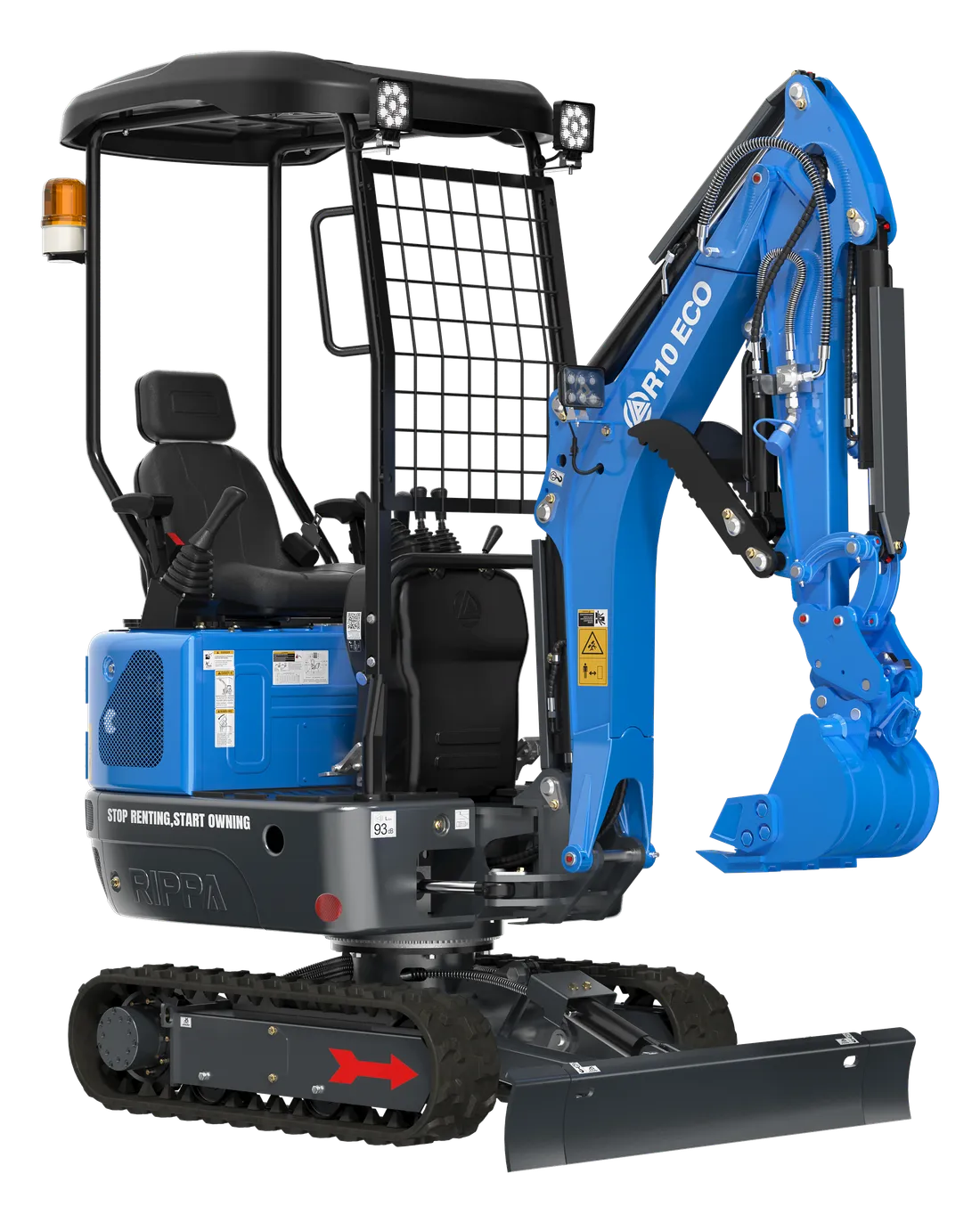
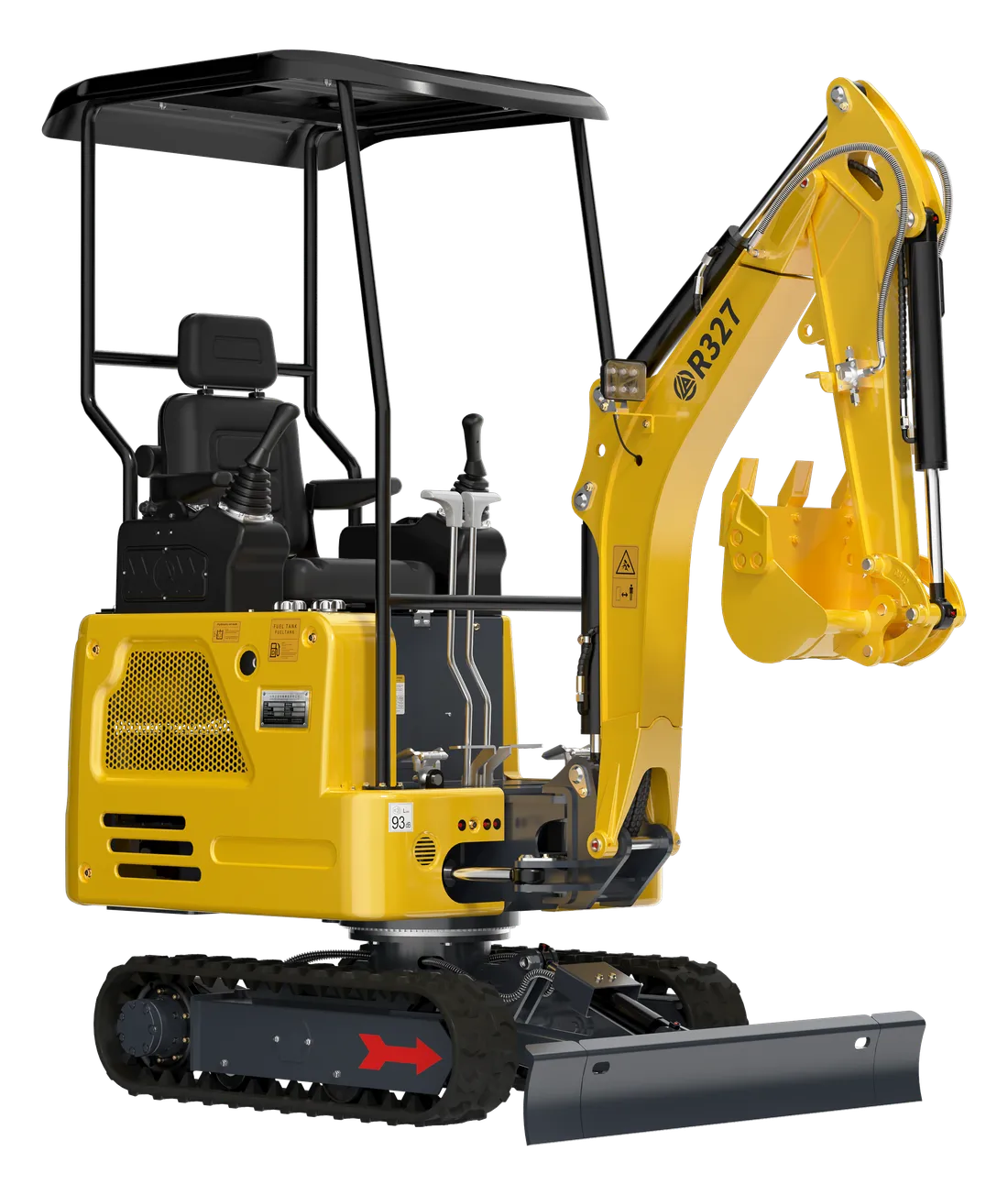
The 1.2-tonne R10 gets into narrow garden paths, and the 1.7-tonne R327 handles mixed jobs. But if you expect it to plough your field, you will be disappointed — that isn’t an excavator’s job. If you are considering a mini excavator for a field, buy it for digging work such as irrigation channels, drainage and root removal; ploughing and hoeing need a tractor.
What a tractor does and doesn’t do
A tracked tractor is a towing and tillage machine. It pulls the equipment attached behind it, works the soil and carries loads.
What it does well:
- Hoeing (rotavator), ploughing
- Weed clearing
- Towing a trailer, hauling produce
- Loading and levelling with a front loader
- Working on sloping, muddy ground
What it can’t do:
- Deep digging (without an excavator arm)
- Precise digging in a tight spot
- Removing heavy rock
The 35 HP QD35 is designed for garden and field work; because it runs on tracks, it can also work on muddy and sloping ground where a wheeled tractor sinks.
Cost comparison
Current starting prices (excluding VAT):
| Machine | Price | What it does |
|---|---|---|
| QD35 Tracked Tractor | 249.000 ₺ | Hoeing, ploughing, hauling, front loader |
| Rippa R10 Excavator (1.2 t) | 299.000 ₺ | Digging, channels, removal |
| QD35 Tractor with Excavator Arm | 349.000 ₺ | Both at once |
| Rippa R327 Excavator (1.7 t) | 479.000 ₺ (campaign) | Heavier digging |
The most striking row in the table is the third. The tractor with excavator arm costs 349.000 ₺ — that is 100.000 ₺ more than the plain tractor, but it comes with an excavator arm fitted at the rear.
Read it like this: if you bought a tractor (249.000 ₺) and an excavator (299.000 ₺) separately, you would pay 548.000 ₺. The single machine with excavator arm is 349.000 ₺. The difference is about 200.000 ₺.
So is the tractor with excavator arm always the right answer?
No. Let’s be honest — the combination has a price:
When a tractor with excavator arm is right:
- Digging comes up occasionally, not constantly
- You don’t need great digging depth
- The budget won’t stretch to two separate machines
- You have space to park one machine
When a separate excavator is right:
- Digging is your main job and you do it every day
- You need deep digging (1.5 m+)
- Precise manoeuvring in tight spaces is essential
- The tractor needs to work at the same time as the digging
For someone who digs constantly, a tractor with excavator arm becomes tiring: a dedicated digging machine has finer hydraulic control and better manoeuvrability.
Decide by the land
Narrow garden, inside a greenhouse, courtyard, residential complex The excavator wins. A 1.2-tonne class machine gets through narrow passages where a tractor can’t.
Large field, orchard, sloping land The tractor wins. Working and hauling soil is the main job here.
Mixed — both garden and field, with some infrastructure work A tractor with excavator arm is the most economical.
Building sites, infrastructure, contracting The excavator wins, and a bigger size is needed (3–3.5 tonnes).
Don’t forget attachment compatibility
Whichever you buy, what really determines a machine’s value is how many different jobs it can do. With compatible attachments:
- An excavator takes a breaker, auger, grading blade and buckets of different widths
- A tractor takes a rotavator, plough, trencher, spiral auger and drawbar
When buying, always ask whether there is a quick coupler and an auxiliary hydraulic line. Without these two, changing attachments turns into a slow, laborious job.
You can explore compatible options on our attachments page.
If you can’t decide
Answer these three questions:
- Which job did you do most last year? — Digging or working the soil?
- Is your land narrow or wide? — Narrow means an excavator, wide means a tractor
- Does your budget stretch to only one machine? — If so, look at the tractor with excavator arm
If you’re still not sure, write to us — describe your land and the work you do, and we will work out together which one suits you. We talk to help you buy the right machine, not just to sell; the wrong machine is a bad outcome for both of us.
To explore the models: Excavator models · Tractor models