Vineyards and orchards are among the hardest places for a tractor to work. The rows are narrow, the branches low, and there are wires and posts everywhere; the ground is often sloping and stays soft for a long time after rain. A large field tractor either can’t get in at all or damages the trees, wires and soil in every row it enters.
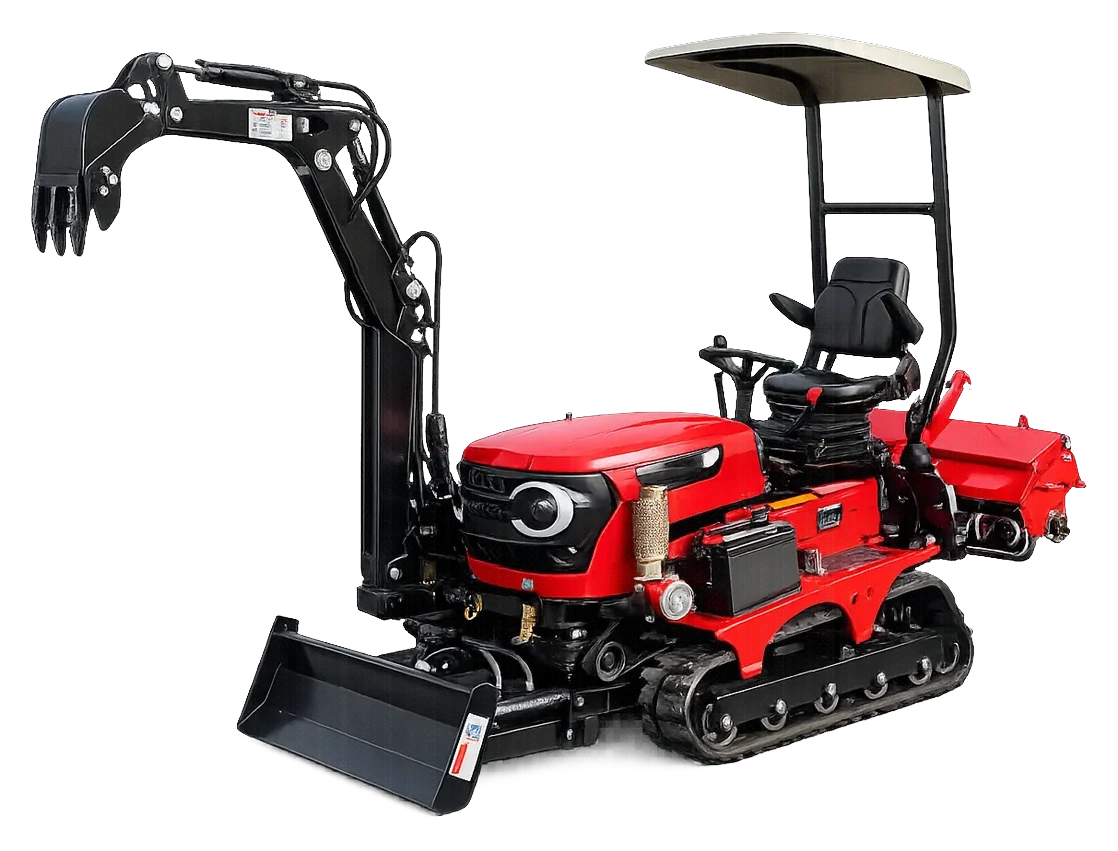
The QD35 tracked tractor is a machine chosen with exactly these conditions in mind: 980 mm wide, 1,150 mm high, with the traction of tracks and low ground pressure. But the machine’s dimensions are only half the story; the other half is which job is done, with which attachment, at what time of year and how.
In this guide we go through the work done with the QD35 in vineyards and orchards season by season, and explain the practical rules for doing each job without harming trees, roots or soil.
A tractor for vineyard and orchard work: what to expect
The job of a vineyard and orchard tractor is different from that of a field tractor. The priority here is not to cover a large area quickly but to carry out regular upkeep in tight spaces, without touching the plants or damaging the soil. The expectations can be listed like this:
- Narrow, low body: Getting between the rows and passing under the branches
- Traction and stability: Working on ground that slopes and softens after rain
- Respect for the soil: Not compacting the soil with repeated passes through the season
- Versatility: Handling tillage, weed control, channel work and haulage with the same machine
- Easy manoeuvring: Turning in tight spaces at the headlands
The QD35 meets most of these expectations; but if your row spacing, branch height and turning space don’t suit the machine, no feature can make up for it. We explained how to measure your land in our guide What Is a Tracked Tractor?, and we cover nursery and greenhouse conditions in a separate guide.
Seasonal work calendar
The calendar below is a general framework; you will need to shift it to suit your crop, your local climate and your soil. Your local agronomist’s advice always comes first.
| Time of year | Job | Attachments | Watch out |
|---|---|---|---|
| Late winter, early spring | Collecting and carting away prunings | Trailer on the drawbar | Keep out of the rows when the soil is wet |
| Spring (once the soil is workable) | Inter-row tillage | Rotary tiller (rotavator) | Work shallow, keep away from the trunks |
| Spring – summer | Weed control | Weed clearing | Act while the weeds are small |
| Summer | Opening and maintaining irrigation channels | Trencher, trench-closing auger | Plan channels to suit the slope of the land |
| Harvest | Carrying crates and produce | Trailer on the drawbar | Respect the load limit, drive slowly on slopes |
| Autumn | Deep tillage, preparing for new planting | Two-furrow plough, rotavator | Protect the soil structure in the new planting area |
Getting the machine ready before the season
The first job on the calendar is actually the machine itself. Before the busy period starts, check the engine oil and filters at the intervals given in the manual, inspect the track tension and rollers, and grease all the grease points. Check the rotavator blades for wear and look over the mounting bolts; a worn blade spoils the work and pushes up fuel use. You’ll find the full list in our tracked tractor maintenance guide. During the season, keep short notes on the work you did, the date and the condition of the soil; next year these notes will let you plan your calendar far more accurately.
Inter-row tillage: respect the roots and trunks
In vineyards and orchards the rotavator is the most frequently used attachment: it aerates the soil, breaks up the surface crust and mixes small weeds into the soil. But unlike field crops, trees and vines keep their roots in the soil all year round, and some of those roots spread close to the surface.
- Work shallow: Tilling deeper than necessary between the rows cuts the feeder roots near the surface. Set the depth for your crop and the age of the plants with your agronomist.
- Keep your distance from the trunks: Don’t bring the edge of the rotavator close to the trunks or the base of the vines; bark wounds open the door to disease. Clear the in-row strip by hand or by another suitable method.
- Don’t work at the same depth every year: Soil that is always tilled to the same depth can develop a hard pan; varying the depth from time to time prevents this.
- Go in when the soil is workable: In wet soil a rotavator turns the earth into paste, and once it dries out it sets into clods.
A young orchard is not the same as a mature one
In a newly planted orchard the rows are wide and open, but the young trees have weak roots and thin trunks; tree guards, slender trunks tied to stakes and drip lines all sit very close to the machine. At this stage weeds compete harder with the young trees, so weed control is needed more often. In a mature orchard it is the other way round: the canopy widens, branches hang down into the space between the rows and the roots spread over a wider area. Reassess the machine and the attachment width as the orchard ages.
We explain rotavator depth, speed and timing settings in detail in our guide to soil preparation with a rotavator.
Weed control: timing is everything
Weeds between the rows compete with the trees for water and nutrients, and at certain times they also shelter diseases and pests. Mechanical weed control is the way to manage this competition without resorting to chemicals, or while using fewer of them.
- Act early: Clearing weeds while they are small is both quicker and more effective. Weeds that have grown and gone to seed strain the attachment, and their seeds get mixed into the soil.
- Work in dry weather: Weeds pulled up in dry soil wither on the surface; in moist soil they can take root again.
- Don’t forget the in-row strip: The tractor clears the space between the rows; the strip close to the base of the vines and trees usually needs a separate job.
- Think carefully before leaving the soil completely bare: In sloping orchards, bare soil can be eroded by rain. Some growers prefer to keep a managed cover crop between the rows; make this decision with your agronomist.
Irrigation channels and harvest haulage
In flood-irrigated orchards, opening the channels and closing them again at the end of the season is a significant labour cost. The trencher attachment fitted to the QD35 opens a channel along the row, while the trench-closing auger pulls the soil back into the channel at the end of the season and levels the surface. The depth and fall of the channel decide whether the water reaches the end of the row, so check the slope of the land before you open it. We cover the subject in detail in our guide to opening irrigation channels with a tractor.
At harvest, the tractor’s most valuable job is haulage. A trailer hitched to the drawbar speeds up moving the crates from the row ends to the store or the loading point. Points to watch here:
- Don’t exceed the load limit of the trailer or the drawbar; get the limit from the trailer manufacturer’s information.
- Drive slowly on slopes with a loaded trailer and avoid harsh braking and sharp turns; remember that going downhill, the load can push the tractor.
- Secure the crates on the trailer; a crate that tips over on rough ground means both lost produce and an accident.
- Nobody should ride on the trailer or the drawbar.
On harvest days, a little logistics planning saves a lot of time. Choose the points where the trailer will stop at the row ends so that pickers carry the crates the shortest distance. Keep one headland track clear at all times so that the full trailer and the empty one don’t have to wait for each other. Driving in the same tracks over and over on wet headlands compacts the soil; if you can, vary the route or set aside the firmest section as the haul road.
Wires, posts and branches: hazards particular to vineyards and orchards
In vineyards and orchards, what does the most damage to the machine and the plants is not the soil but the rows themselves. A few careless moments mean a snapped wire, a broken post or a wounded trunk.
- Wires: Trellis wires can catch on the attachment or on parts of the machine that stick out. Pay particular attention to the anchor wires at the row ends; a wire that is pulled taut and snaps is dangerous.
- Posts: Concrete and wooden posts are the points most exposed to knocks when you turn at the row ends. Make wide turns and, if necessary, ask a helper to guide you from a safe distance.
- Branches: Low branches can hit the operator in the face and eyes. Wear safety glasses, and include very low branches in the pruning plan at the start of the season.
- Irrigation pipes: Drip lines may run between the rows or along them; know where the line runs before you lower the attachment.
If the machine will be driven by someone new to the orchard, make the posts and anchor wires at the row ends visible with paint or tape. Do the first passes slowly in a low gear; an operator who knows the orchard’s obstacles by heart works both faster and more safely.
Working in sloping vineyards and orchards
Many vineyards are planted on sloping land. On a slope, tracks give more stable working than a wheeled machine; but that doesn’t mean you can work safely on every slope.
- Where possible, work along the fall line, that is, up and down the slope; working across the slope increases the risk of rolling over.
- On slopes, avoid sudden turns, sudden acceleration and sudden braking.
- Tracks can slip on wet grass and leaves too; after rain, wait for the ground to dry before going onto sloping sections.
- Don’t start work on a slope you are unsure about.
We have gathered all the rules for working on slopes in our guide to muddy and sloping ground.
Work and fuel planning: calculating from row length
In vineyards and orchards it is more realistic to estimate how much the tractor will work from the total row length rather than the number of decares, because the machine works only between the rows and turns at the end of every row.
Total row length (approx.) = area (m²) / row spacing (m)
Example (illustrative figures): In a 6-decare (6,000 m²) orchard with 3-metre row spacing, the total row length is about 6,000 / 3 = 2,000 metres. If each row is worked in a single pass, the machine covers this distance; turns at the row ends and wide rows that need two passes add to the time. The figures given for the QD35, about 2 decares per hour and 1–2 litres per decare, are general values; in orchards that call for frequent turns, the time and consumption may come out higher. Take your own measurements on the first day and base your later plans on them.
The fuel tank holds 16 litres. On busy days, plan refuelling for the lunch break; keep spare fuel in suitable cans, away from the machine and hot surfaces, and refuel only with the engine stopped.
Quick checklist
- Row spacing, branch height and headland turning space suit the machine
- Seasonal calendar agreed with the agronomist for the crop and region
- Rotavator set shallow, with a gap left to the trunks and the base of the vines
- Weeds controlled while small and in dry weather
- Channel route planned to suit the slope, closing attachment ready
- Trailer load limit known, nobody rides on the trailer
- Positions of wires, posts and drip lines known
- Sloping sections worked up and down, and kept off when wet
For your vineyard or orchard, see the QD35’s technical specifications; the machine starts at 249.000 ₺ + VAT. You’ll find the rotavator, trencher, weed-clearing and other attachments on the tracked tractor attachments page. Tell us your row spacing and the slope of your orchard on WhatsApp and we’ll work out the right equipment together.