Every manager thinking about buying a floor cleaning machine asks this question at some point: “How many people’s work will this machine do?” It is an understandable question, but an incomplete one. The machine’s advantage isn’t just speed; it shows in how long the floor stays wet, in the quality of the cleaning, in how tired staff are at the end of the day and in how predictable the work becomes.
In this guide we explain how to measure the difference between a mop and a machine with your own data, how to turn catalogue output into a realistic figure and how to use the hours you gain. We worked out the financial payback of a machine investment in a separate guide, machine investment for cleaning companies.
The hidden cost of the mop
With mopping, time isn’t only spent wiping the floor. Filling buckets, changing the water, wringing the mop, waiting for the wet floor to dry and keeping the area partly closed in the meantime are all part of the job. Because most businesses never measure these items, they underestimate the real cost of mopping.
Then there is quality. As the water in the bucket gets dirtier, the mop carries it back onto the floor; towards the end of the shift, cleaning turns into spreading dirty water around. Results vary from person to person, and even from hour to hour with the same person. A machine with brushes and suction, by contrast, keeps clean and dirty water in separate tanks, and the squeegee picks up the dirty water in the same pass.
| Criterion | Mop | Machine with brushes and suction |
|---|---|---|
| Dirty water | Spread back onto the floor by the bucket and mop | Collected by the squeegee into the dirty water tank |
| Drying | The floor stays wet for a while | Dries shortly after the pass |
| Quality | Varies with the person and the time of the shift | Consistent as long as the settings stay the same |
| Physical strain | Bending, twisting, carrying buckets, wringing the mop | Steering on foot or seated |
| Measurability | Difficult | Area and time are easy to track |
| Tight spaces and corners | ✅ Flexible | Edges need finishing by hand |
| Initial investment | Low | High |
Wet floors and the risk of slipping
A mopped floor stays wet for a while. Where traffic can’t be stopped, such as supermarkets, hospital corridors or factory walkways, warning signs go up during this time, people walk across the wet floor and the risk of slipping rises. With a machine, the squeegee collects the water in the same pass, so the area is back in use much sooner. This difference is hard to put into figures, but it is one of the most important gains for workplace safety.
Measure your own data: a simple time study
The figures circulating online — “so many square metres an hour with a mop, so many with a machine” — don’t reflect your area. The number of obstacles, the amount of soiling and the type of floor change the result completely. The most reliable figure comes from a simple measurement you carry out in your own area over one week:
- Choose a representative area. A section of known size with both open and cluttered parts; for example, a 500 m² corridor and its surroundings.
- Time the mopping from start to finish. Include bucket preparation, water changes and the time until the area is back in use.
- Time the same area with the machine. Include filling the tank, cleaning, emptying the dirty water and cleaning the machine. If you don’t have a machine, measure it during a demo or trial.
- Repeat on different days with different people. A single measurement is misleading; take the average of several.
- Note the quality too. Drying time, marks and stains, user complaints.
At the end of the study you will have two figures: real output (m²/h) = area cleaned ÷ total time. Preparation and clean-up must always be included in the total time; otherwise both methods look faster than they are and the comparison loses its meaning.
Turning catalogue output into a realistic figure
The m²/h figure in machine catalogues is usually the cleaning width multiplied by the working speed, and it assumes the machine keeps moving without ever stopping. In reality, turns, obstacles, refilling water and emptying tanks bring this figure down. So multiply the catalogue figure by an efficiency factor. In the table below the factor is taken as 0.5 by way of example; it can be higher in open halls and lower in narrow, cluttered areas.
| Model | Catalogue output | Example real output (× 0.5) | Battery run time |
|---|---|---|---|
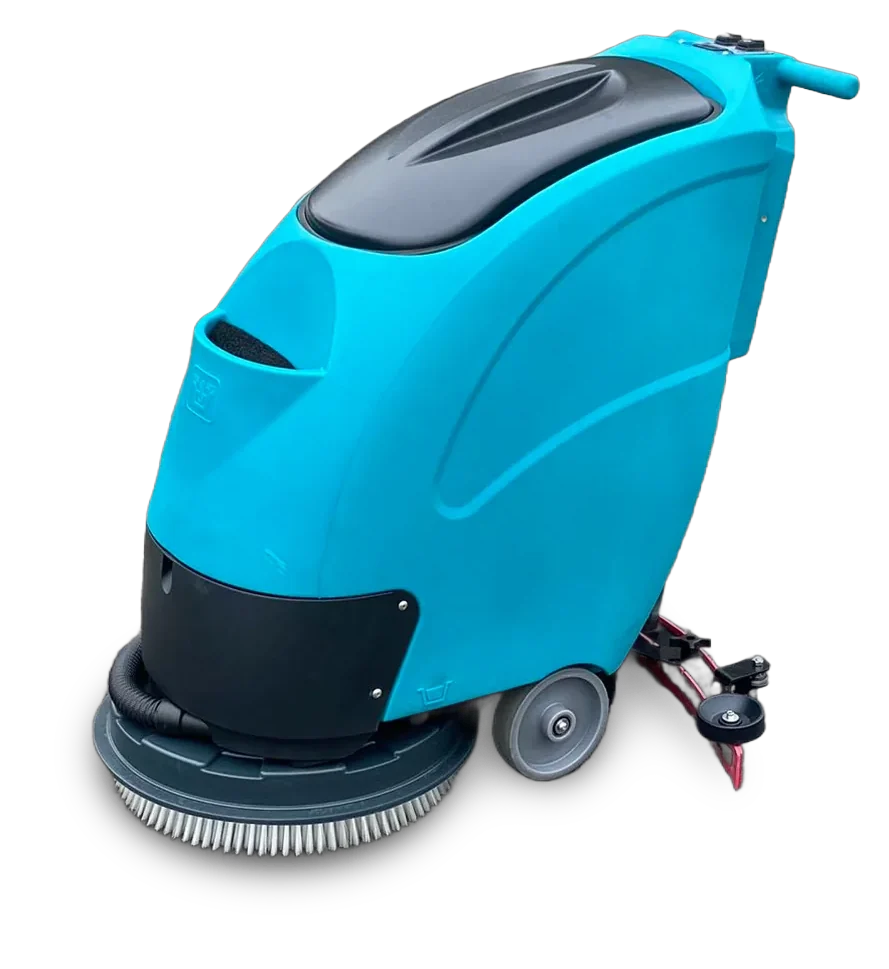
| K2 (walk-behind) | 2,400 m²/h | 1,200 m²/h | 2–3 h |
| K1 (walk-behind) | 3,760 m²/h | 1,880 m²/h | 3–4 h |
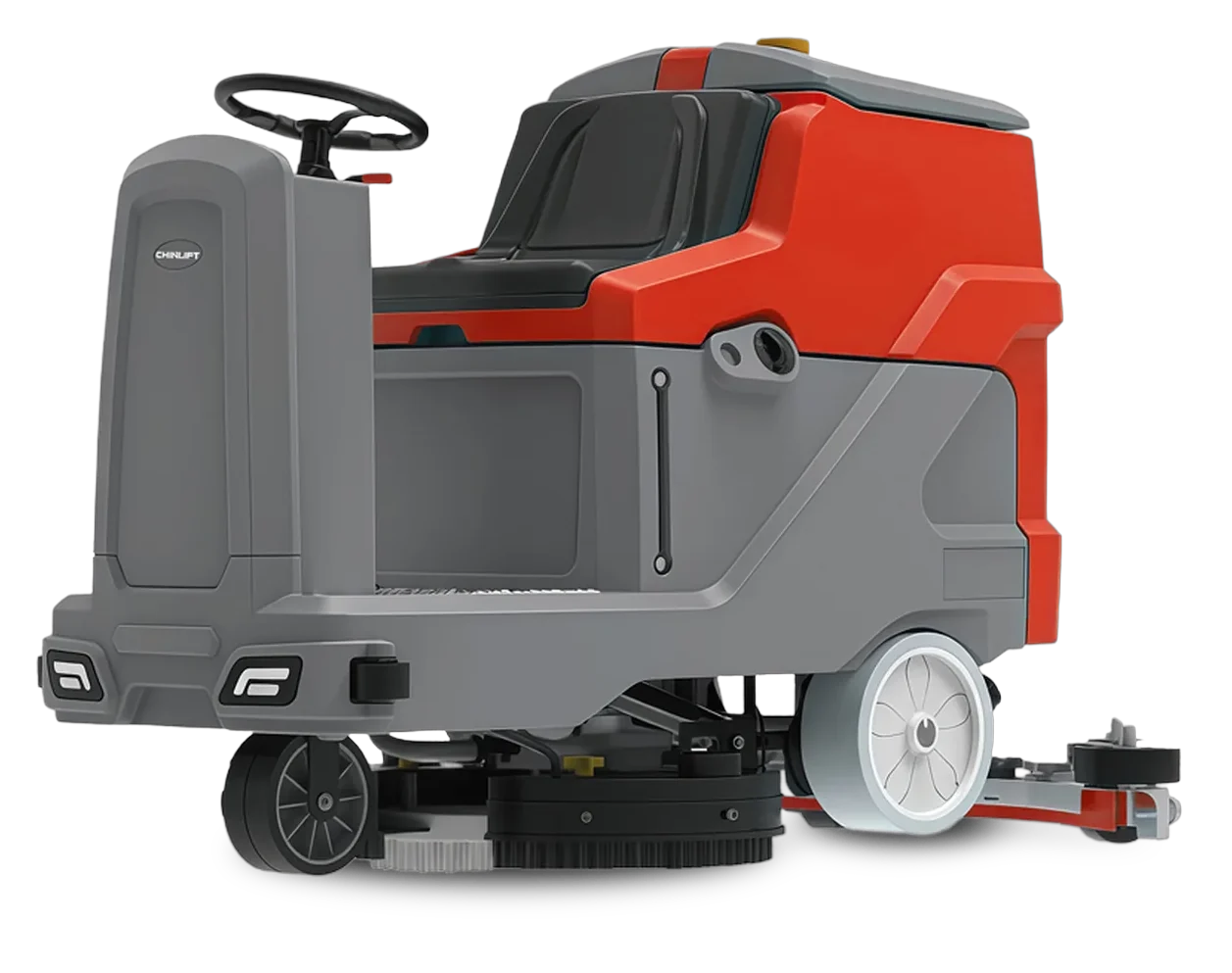
| KL860 (ride-on) | 5,600 m²/h | 2,800 m²/h | 4–5 h |
| HY660 (ride-on) | ≥ 6,950 m²/h | ≥ 3,475 m²/h | 3–5 h |
Don’t skip the run-time column. How many hours a machine runs on one charge shapes the daily plan just as much as how much it cleans per hour. Tank volume counts too: the bigger the clean water tank, the less often you stop to refill. We explain choosing a model by floor area in detail in our guide to choosing a machine by floor area.
Worked example: where will the hours you gain go?
Let’s work through it with example figures; do the same calculation with your own measurements. Take a business that wet-cleans 6,000 m² a day, and suppose the time study shows a real mopping output of 250 m²/h. That comes to 24 person-hours a day. If the example real output of the K2 walk-behind floor scrubber is 1,200 m²/h, the same area is finished in about 5 hours; add some time on top for finishing edges and corners by hand.
This example shows two important things. First, the K2’s run time of 2–3 hours isn’t enough for a 5-hour job on a single charge; you need to split the work into two sessions with charging in between, or choose a model that runs longer. Second, the roughly 19 person-hours saved don’t turn into a gain by themselves; if you don’t plan where they go, they get spread through the day and lost.
There are three ways to use the hours you gain:
- More area with the same team: A new building, an extra floor or a new customer contract.
- Higher frequency in the same area: A second cleaning round at busy times, especially where foot traffic is heavy.
- Shifting time to detail work: Toilets, glass, door handles, dusting — the jobs that stand out most in inspections but usually never get the time.
If you are making staffing decisions, base them on a few weeks of real usage data, not on catalogue output. We explain how machine cleaning is planned in high-traffic areas in our guide to cleaning shopping centres, supermarkets and hospitals.
Shift patterns can change too
Areas cleaned with a mop are often left until night-time or after closing because of the wet floor. With a machine, the squeegee collects the water in the same pass, so in some areas it can become possible to clean during the day while traffic carries on. The relatively quiet operation of battery machines helps too; the K1’s noise level, for example, is given as 72 dB. Cutting back the night shift or spreading cleaning across the day adds real flexibility to staff planning; even so, don’t neglect wet-floor signs and pedestrian safety when cleaning during the day.
Splitting the work properly between machine and hand
The most common mistake after buying a machine is expecting that “the machine will do everything now”. In reality the machine takes over wet cleaning of the open floor; the rest of the work is still done by hand. Splitting the jobs in two from the start makes the staffing plan realistic and stops the places the machine can’t reach from being forgotten.
- Machine work: Corridors, open halls, rack aisles, sales floors and wide walkways.
- Hand work: Stairs, lift cars, toilets, under furniture, door thresholds and around the base of columns.
- Shared work: Picking up coarse litter before the machine, finishing corners and edges after it.
Mark this split on a floor plan and write down who cleans each section, by which method and at what time. That way the figures from your time study turn into a real task list.
Give the machine an owner: operators and team set-up
What hurts productivity most in machine cleaning is a machine that belongs to “everyone and no one”. When someone different uses it every shift, charging gets forgotten, the squeegee gets knocked against walls and the dirty water tank is left unemptied overnight. Within a few weeks the machine turns into a smelly tool that leaves marks and stops halfway through the day.
- Appoint one or two responsible operators and train them first.
- Put the start- and end-of-shift routine in writing: charging, water and detergent, dirty water tank, squeegee and filter.
- Plan the route: Start and finish according to the water filling and emptying points, don’t pass the same spot twice, and end the round at the charging point.
- Involve the staff: A machine can raise the worry that “it will take our jobs”. Including the team in the time study and talking openly about where the gained hours will go reduces this resistance.
Ergonomics is part of productivity too. Wringing a wet mop, lifting a full bucket and bending and twisting for hours slow the pace as the day goes on. With a machine, the operator’s job is to steer it, so cleaning in the last hour of the shift is as good as in the first. For details of daily checks and cleaning, see our guide to floor cleaning machine maintenance.
Typical mistakes that hurt productivity
- The machine was bought, but the mopping habit lives on: The machine sits in the store room and the team still works with a bucket. This habit won’t change until target areas and responsible people are set down in writing.
- Wrong size: A ride-on machine in a very cluttered, partitioned area, or a walk-behind machine in a large open hall, lowers productivity.
- Too much water and detergent: The tank has to be filled and emptied more often, the floor stays slippery and another pass is needed.
- A poorly maintained squeegee: A squeegee that leaves water marks means a second pass, and a second pass halves the productivity for that area.
- No charging routine: A machine that starts on half a charge stops in the middle of the job, and the rest of the area is left to the mop again.
Indicators to track
After buying the machine, track the following indicators in a simple spreadsheet for the first three months. These figures inform your staffing plan and show whether you will need a second machine later on.
- Area cleaned per day and real m²/h
- The machine’s daily operating hours and number of charges
- Time spent hand-cleaning edges and corners
- Water and detergent consumption
- Re-cleaning requests and user complaints
- Breakdowns and downtime
Summary
- The difference between a mop and a machine isn’t just speed; it is drying time, quality, physical strain and predictability.
- Use your own time study, not someone else’s figures.
- Turn catalogue output into a realistic figure with an efficiency factor, and take battery run time into account.
- Plan from the start where the hours you gain will go.
- Give the machine a responsible operator and a written routine.
Tell us the size of your cleaning area in square metres, how often you clean each day and how your team is currently organised; we will work out the right machine and a realistic work plan together. Explore our floor cleaning machines or message us on WhatsApp for a current price.