On a farm, the need for machinery doesn’t come from a single job. In the same year the soil is ploughed and prepared, irrigation channels are opened and closed, drainage ditches are dug, saplings are planted, and produce is hauled, packed and stored. Buying a separate machine for each job isn’t possible for most farms; trying to do everything with one machine creates a bottleneck in the busiest week.
In this guide we split farm work into three families: digging, tillage and hauling. We then explain which machine handles which family, how the work calendar determines the number of machines and how ground conditions change the choice.
We covered the question of which machine to buy first on a small farm, in order of priority, in our machinery for a small farm guide. This guide looks for the answer to a broader question: which combination of machines will carry your farm through the whole year with the fewest bottlenecks?
Choosing machinery for farms: three families of work
The benefit of splitting work into families is that each family calls for a different machine logic:
- Tillage: Ploughing, soil preparation with a rotary tiller, weed clearing. These jobs are very time-sensitive; if they aren’t done while the soil is at the right moisture for working, the opportunity is lost. Pulling power and working width are decisive.
- Digging: Irrigation and drainage channels, pipelines, sapling and tree pits, ponds or irrigation reservoirs, stump removal, foundations for shelters and stores. Most of these jobs can be spread across the year, but some, such as pits before planting, are squeezed into a particular week.
- Hauling and loading: Carrying produce, fertiliser and materials by trailer; loading palletised produce and stacking it in the store. These are at their busiest during the harvest.
Most mistakes in choosing machinery come from expecting one machine to meet the needs of all three families. A tracked tractor is strong at tillage but isn’t designed for digging; a mini excavator is strong at digging but doesn’t plough fields; and a forklift only works on flat, firm ground.
Draw up your work calendar
To find the right combination of machines, first draw up your farm’s work calendar. The table below is a template; the periods vary with the crop and the region, so fill it in with your own calendar.
| Job | Time sensitivity | Typical period | Machine and attachment |
|---|---|---|---|
| Ploughing | High | Before sowing, when the soil is workable | QD35 + two-furrow plough |
| Soil preparation | High | Before sowing and planting | QD35 + rotary tiller |
| Weed clearing | Medium | Growing season | QD35 + weed clearing |
| Opening and closing irrigation channels | Medium | Start and end of the irrigation season | QD35 + trench opening / closing auger |
| Drainage and pipelines | Low–medium | Usually after harvest, when the ground is suitable | Mini excavator or QD35 with excavator arm |
| Sapling and tree pits | Medium | Planting season | Mini excavator + auger |
| Stump removal, land clearing | Low | Off-season | R327 or R350 + grapple, ripper |
| Hauling produce | High | Harvest | QD35 + drawbar + trailer |
| Loading and stacking pallets | High | Harvest and dispatch | RF20E (concrete-floored store) |
Once you have filled in the table, write in the estimated time for each job too. For tillage this is easy to calculate: according to the spec sheet, the QD35’s work rate is about 2 decares per hour and its fuel consumption 1–2 litres per decare. Example: on a 40-decare plot, rotary tilling means about 20 hours and 40–80 litres of fuel using the spec sheet figures. These values vary with the soil condition, the shape of the plot and the attachment; take your own measurements in the first season.
The overlap test: one machine or two?
What the work calendar really tells you is which jobs fall in the same week. It is these overlaps, more than the amount of work, that determine the number of machines.
- Mark the periods in your calendar when digging and tillage fall in the same week.
- Check whether you have separate operators to do both jobs in those weeks. If only one person is working, two machines can’t work at the same time; a combined machine may be enough.
- If overlaps are rare and you work with one operator, a single combined machine makes sense.
- If overlaps are frequent and you have two operators, two separate machines take the pressure off the busiest week.
Example scenario: Picture a family business running an orchard. In spring, saplings are to be planted in a new plot, and in the same weeks the rows of the old plot need tilling. If two people are working and this overlap recurs every year, a QD35 for the tilling and a mini excavator with an auger for the pits split the busiest week in two. If the planting is a one-off this year, or only one person is working, it makes more sense to concentrate the pit digging in one week and do it with the tractor with excavator arm or a hired machine.
With a combined machine, make a point of asking about one thing: changing attachments. On the QD35 with excavator arm, the digging arm is at the rear. Before you buy, find out how it is used together with rear-mounted tillage attachments and how the changeover is done; see it in practice during the training on delivery. The changeover time determines how much time you will lose in the busiest week.
Tillage: when does a tracked tractor stand out?
A tracked tractor makes a difference where tillage gets difficult: sloping land, fields softened by rain, narrow rows and greenhouses. Because the tracks spread the machine’s weight over a larger surface, loss of traction and rut depth on soft ground are usually lower.
The QD35’s key figures: a 35 HP water-cooled diesel engine, 750 kg weight, 980 mm width, full-gear mechanical transmission, 3 forward + 1 reverse gears (8 with high/low range) and a 16 L fuel tank. The 980 mm width makes it possible to work in the rows of vineyards, nurseries and orchards; measure your row spacing including branches and drip irrigation lines. The QD35 starts at 249.000 ₺ + VAT.
To be honest, a tracked machine is not as practical on the road as a wheeled tractor. If your land is made up of plots far apart from each other, plan transport between plots from the start. We explain which attachment suits which job in detail in our tracked tractor attachments guide; all the options are on our tracked tractor attachments page.
Digging: tractor with excavator arm or mini excavator?
Digging needs on a farm come in two types: occasional digging and intensive digging.
Occasional digging: the QD35 with excavator arm
If you dig irrigation ditches, small drains or holes a few times a year, buying a separate digging machine is usually unnecessary. The QD35 tracked tractor with excavator arm handles these jobs with its rear digging arm and starts at 349.000 ₺ + VAT. Compared with the cost of a separate digging machine, the 100.000 ₺ difference from the standard QD35 is a sensible middle way for farms with limited digging needs.
Intensive digging: a mini excavator
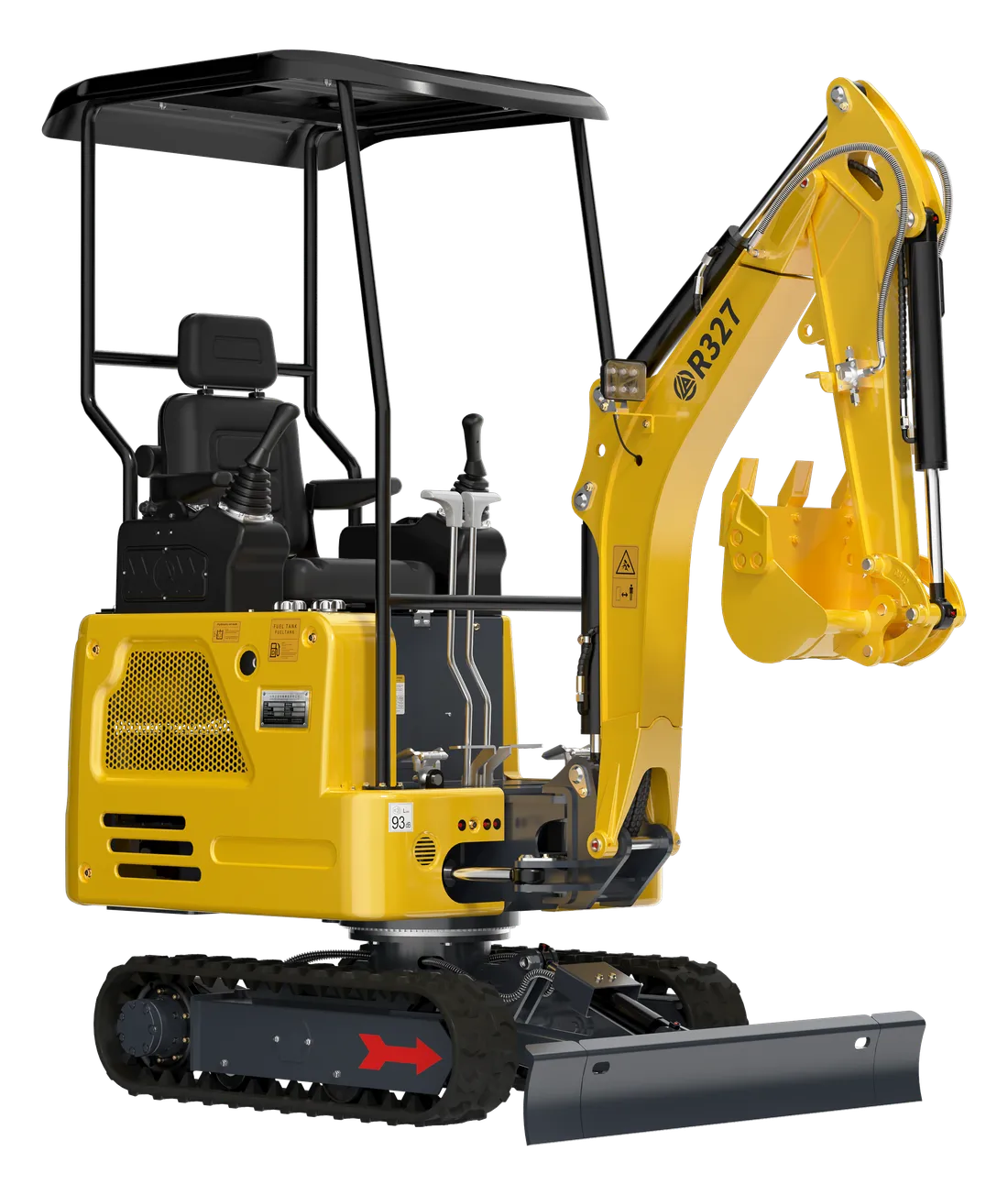
If jobs such as drainage networks, ponds, irrigation reservoirs, large numbers of sapling pits or stump removal dominate, a mini excavator designed for digging works far more efficiently. The dozer blade, the rotating upper structure and hydraulics tuned for digging improve both speed and precision on these jobs.
- R10 (from 299.000 ₺): Light digging in gardens, nurseries and tight spaces.
- R327 (549.000 ₺, from 479.000 ₺ on promotion): A versatile mid-class machine with telescopic tracks and 120° boom swing.
- R350 (ask for a quote for the price): 2,927 mm maximum digging depth and 22.5 kN bucket digging force according to the spec sheet; for ponds, deep drainage and stump removal.
Prices exclude VAT. We explain the steps for drainage and pipeline work in our drainage and pipe laying guide. For a general comparison between an excavator and a tractor, see our excavator or tractor guide too.
Hauling and loading: from drawbar to forklift
Hauling on the farm: The QD35’s drawbar attachment makes it possible to haul produce, fertiliser and materials by trailer. Find out the towing limits from the operator’s manual; on sloping land, use a low gear when going downhill with a loaded trailer and don’t overload the trailer.
Loading and stacking in the store: On farms that pack produce on pallets and ship it, the forklift becomes the most critical machine of the harvest. The RF20E electric forklift, with its 2,000 kg capacity, 4.5 m triplex mast, side shifter and fork positioner, works in packing houses and cold stores; producing no exhaust gas is a big advantage indoors and where food is handled. It starts at 599.000 ₺ + VAT.
To be honest, the RF20E is a warehouse forklift on solid tyres; it is not suitable for use in the field or on soil or muddy ground. Only consider investing in a forklift if you have a packing or storage area with a flat, firm floor.
Quick choice by ground conditions
- Narrow rows (vineyards, nurseries, orchards): QD35; compare its 980 mm width with your row spacing.
- Sloping or often muddy land: A tracked tractor; learn the safety rules for working on slopes with attachments from the manual.
- A few days of digging a year: QD35 with excavator arm.
- Constant digging, ponds, drainage networks: QD35 for tillage, R327 or R350 for digging.
- Palletised produce, indoor store: RF20E.
- Plots far apart: Whichever machine you choose, a transport plan and a budget for a trailer.
Hidden items: maintenance, storage and the operator
Farm machinery is used seasonally; a machine works hard for a few months and then stands for a long time. Both periods carry their own risks:
- Pre-season maintenance: Before the busy period starts, have the filters, oils and track tension checked, and on belt-driven machines such as the QD35, the condition of the belt. A machine that stops mid-season is the most expensive breakdown.
- End-of-season storage: Clean the machine, store it somewhere dry and covered, and lubricate the moving parts of the attachments. Before a long lay-up, follow the instructions in the manual for the fuel and battery.
- Operator: On family farms it is common for more than one person to use the machine. Make sure everyone who will use the machine attends the basic operator training on delivery; learn the rules for working on slopes and with attachments together.
- Parts and service: In harvest week you have no time to wait. 382 spare parts are shipped from stock on the same day; we have 14 authorised sales and service points in 12 provinces and a contracted service network in all 81 provinces.
- Warranty: Machines come with a warranty of 2 years or 2,000 operating hours. With seasonal use the hour meter moves slowly; track servicing by date as well as by hours, and keep your records in order.
Quick checklist
- I have drawn up my farm’s annual work calendar by the three families.
- I have identified my most time-sensitive jobs and how long they take.
- I have marked the weeks when digging and tillage overlap.
- I have decided, based on the number of operators, whether I need one machine or two.
- I learned how attachments are changed on a combined machine before buying.
- I have compared my row spacings and access widths with the machine dimensions.
- If I am considering a forklift, my store floor is flat and firm.
- My plan for transport between plots and for storage is ready.
If you have drawn up your work calendar, you can compare the machine options and share your calendar to ask on WhatsApp which machine and attachment combination suits your farm.