On a construction machine, fuel is a bill you pay every day. You buy the machine once, but you buy the fuel again for every hour it works. That is why habits that look small add up to a serious cost by the end of the year.
Saving fuel usually brings to mind “working less” or “working more slowly”. But that is not the aim. The aim is to finish the same job with fewer litres: to cut the fuel the machine burns while idling, travelling unnecessarily, straining the hydraulics for nothing and wasting through poor maintenance.
In this guide we have gathered 12 practical habits for diesel construction machines, especially mini excavators and tracked tractors, under six headings. Unlike our mini excavator fuel consumption guide, which looks in detail at hourly consumption, and our fuel efficiency in tracked tractors guide, which examines consumption per decare, here we focus on behaviour that applies whatever the machine.
Measure first: no savings without a fuel log
Habit 1: Measure tank to tank. You can’t reduce what you don’t measure. The most reliable method is simple: fill the tank to the top and note the hour meter reading. At the next full fill-up, divide the litres you added by the operating hours in between. On a tracked tractor, also write down the decares worked as well as the hours.
Write down not just the figure but the type of work too. Digging, breaking, grading, tilling and hauling consume different amounts even on the same machine; compare like with like. The average of several measurements is far more reliable than a single one.
| Date | Hour meter | Fuel added (L) | Hours or decares worked | Type of work | Consumption |
|---|---|---|---|---|---|
| Fill-up day | Meter reading | Added at a full fill-up | Since the previous fill-up | Digging, tilling, breaking… | L/h or L/decare |
You also calculate the value of the savings with the same log: (old consumption − new consumption) × annual operating hours × price per litre. Example (hypothetical figures): on a machine that works 800 hours a year, cutting consumption by 0.2 litres per hour means 160 litres a year. Do the calculation with your own figures.
Engine and rev habits
Habit 2: Don’t leave it idling. An engine left running while you wait for a lorry, take a phone call or have a break burns fuel without doing any work. On top of that, the hour meter keeps running, bringing service intervals forward for nothing. If you are going to wait for more than a few minutes, stop the engine. A short cool-down at idle after heavy work is a separate matter and should be done as instructed in the manual.
Habit 3: Match the revs to the job. Full throttle isn’t needed for every job. On jobs such as light grading, positioning, short travel and light loading, full throttle often increases consumption without gaining any speed. Digging in hard ground or breaker work may need higher revs. Learn the operating speed range in your machine’s manual and agree a “standard rev setting” for each type of work with the operator.
Habit 4: Don’t overdo the warm-up, but don’t skip it. Putting a cold engine straight under full load increases wear; on the other hand, warming it up at idle for a long time wastes fuel. After a short idle, warming the engine up with light work at low load is better for both the engine and your fuel bill.
Hydraulic and digging habits
Habit 5: Don’t hold cylinders at the end of their stroke. When you run the arm, boom or bucket to the end of its travel and keep holding the control, the hydraulic relief valve opens. The pump works at full pressure but no work is done; the engine is loaded, fuel is burnt and the oil heats up. Releasing the control when the movement is complete is one of the cheapest fuel-saving habits. The same logic applies to a hydraulic breaker: work it square to the material and under down-pressure, and stop the moment the material breaks. Blank firing wastes fuel and damages both the breaker and the machine.
Habit 6: Use the right bucket for the job and fill it properly. A bucket wider than needed for a narrow trench makes the machine dig extra soil and strains it. In general digging, on the other hand, a bucket that is too narrow means more cycles for the same volume. We explain bucket choice in detail in our bucket width guide. Worn bucket teeth also penetrate the ground less easily and need extra power on every cycle; replace the teeth on time.
Habit 7: Reduce the slew angle. In every digging cycle the machine takes the load, slews, dumps and slews back. If you position the lorry or dumping point so that the machine slews through as small an angle as possible, you save both time and fuel on every cycle. We have collected other ways to shorten the cycle time in our operator tips guide.
Site planning and travel
Habit 8: Cut down on empty travel. On a tracked machine, travel means both fuel and undercarriage wear. Plan the digging sequence before you start: position the machine so it can dig the largest possible area from one spot, and choose the spoil heap and dumping point so as to shorten travel. At the end of the day, park the machine close to the next day’s first job.
Five minutes of planning in the morning also pays off: put the day’s jobs in order, group attachment changes so they come one after another, and fit refuelling into breaks between jobs. Going back and forth to the same spot twice in a day is usually the price of poor planning.
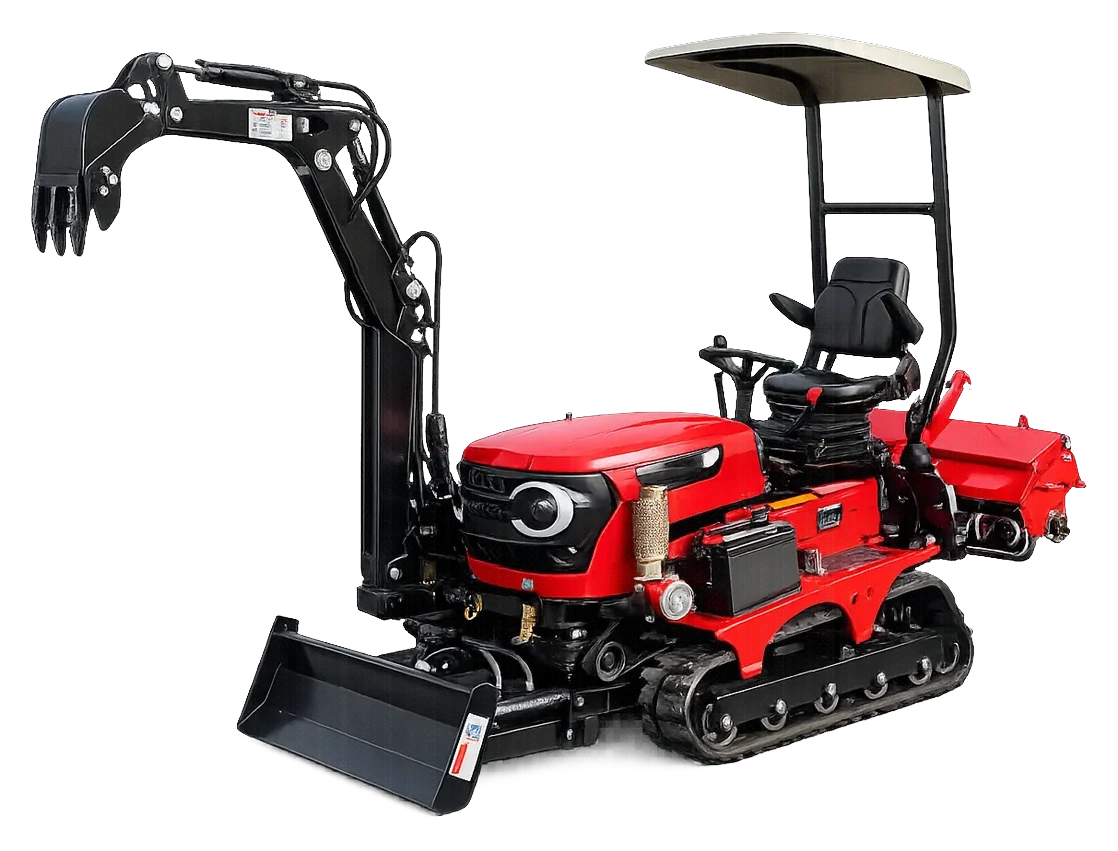
Habit 9: On the tractor, the right gear, the right depth and the right turning plan. On a tracked tractor, the three decisions that most affect consumption are the choice of gear, the working depth and the turning pattern in the field. The QD35 has 3 forward gears and 1 reverse, giving 8 steps in total with the high/low range; find the gear that neither bogs the engine down nor makes it scream at unnecessarily high revs. Working the soil deeper than necessary increases draught resistance and therefore consumption. Working the plot along its long side to reduce the number of turns also cuts the time lost.
How maintenance affects fuel
Habit 10: Change filters on time. A blocked air filter makes it harder for the engine to breathe; a dirty fuel filter strains the fuel system. In both cases the engine has to work harder to do the same job. On dusty sites, check the air filter more often than the interval in the manual. We explain which filter to change when in our filters guide; you can find filters and engine parts on our engine spare parts page.
Habit 11: Don’t neglect the undercarriage and grease. An over-tight track strains the rollers and drive sprocket; the machine uses extra power when travelling. A slack track, on the other hand, causes both lost efficiency and damage. Check track tension using the method in the manual, and grease the pins and bushings regularly. Every bit of energy lost to friction is fuel out of the tank.
Another way maintenance affects fuel is the cooling system. When the radiator core clogs up with dust and straw, the engine runs hot and efficiency drops. Clean the core regularly, especially on field and earthmoving work.
The fuel itself: cleanliness and storage
Habit 12: Use clean fuel and store it properly. Fuel carried to site in cans is the fuel that gets dirtiest. A dirty can, a cap left off and water collecting at the bottom of the tank clog filters early and put the injection system at risk. The basic rules:
- Use fuel cans for fuel only, keep their caps closed and store them clean.
- Filling the tank at the end of the day reduces water building up in the tank through condensation overnight.
- If the machine has a water separator, drain it at the interval given in the manual.
- Don’t overfill when refuelling; spilt fuel is both waste and a fire risk.
- The engine should be off when refuelling, and nobody should smoke nearby.
If your log shows a sudden rise in consumption that the type of work can’t explain, habits aren’t always the reason. Check the fuel hoses and connections for leaks, keep the tank cap locked, and on machines left on site overnight, note the fuel level in the evening and in the morning.
Bear in mind too that the tanks are small: the R327’s fuel tank holds 10 L and the QD35’s 16 L. A small tank means more frequent refuelling on site, so a clean can routine is part of both saving fuel and staying safe.
Notes by machine
| Machine | Relevant spec sheet value | Practical note |
|---|---|---|
| R10 | Koop 192F diesel, 10 HP | Light jobs don’t need full throttle; measure consumption with your own log |
| R327 | Kubota D722, 21 HP; fuel tank 10 L | Because of the small tank, plan your refuelling routine at the start of the day |
| R350 | Kubota D1703, 25 HP; fuel consumption 1.3 L/h | Compare the spec sheet figure with your own measurement; a rise on heavy work is normal |
| QD35 | 35 HP; 1–2 L/decare; about 2 decares/h; tank 16 L | Gear, working depth and turning plan are the decisions that affect consumption most |
| RF20E | Electric; charging 6–8 h, run time 8–10 h | No fuel; to save energy, cut down on unnecessary empty driving and charge as instructed in the manual |
Spec sheet values are figures under specific conditions. Ground hardness, the attachment, the operator’s habits and the air temperature change real consumption, so always make the comparison with your own log.
Saving is a team effort: work with the operator
Most of these habits are in the operator’s hands. Involving the operator in the process, rather than imposing rules from above, gives lasting results:
- Share the results: Go through the figures in the fuel log with the operator once a week. An operator who sees the numbers also sees the effect of their own habits.
- Compare like with like: Compare digging with digging and tilling with tilling. Comparing different jobs leads to unfair conclusions and loss of motivation.
- Tell new operators from day one: Idling, rev and end-of-stroke habits are formed in the first weeks. The basic operator training given on delivery is also a good starting point.
- Don’t put savings before the quality of the work: Skipping the warm-up, putting off maintenance or bending safety rules is not saving fuel; it is the start of a more expensive bill.
Summary: the 12-habit checklist
- I measure tank to tank and note the type of work.
- I stop the engine when waiting for more than a few minutes.
- I set the revs to the power the job needs.
- I warm the engine up with a short idle and light work.
- I don’t hold the cylinders at the end of their stroke.
- I use the right bucket for the job and replace the teeth on time.
- I position the lorry and dumping point so that the slew angle is small.
- I plan the digging sequence and cut down on empty travel.
- On the tractor, I choose the gear, depth and turning pattern deliberately.
- I check and change the air and fuel filters on time.
- I don’t neglect track tension and greasing.
- I carry fuel in clean cans and fill the tank at the end of the day.
If you are looking for an efficient machine for the field, you can explore the QD35 tracked tractor, and send questions about your machine’s consumption and the figures from your log to our technical service WhatsApp line.