Everyone who is about to buy a mini excavator or price a job asks the same question: “How many litres an hour does this digger burn?” The short answer to this question, which on site is also often asked as “how much diesel does a mini digger use”, is in the catalogue; but the answer on site varies with what work the machine is doing, how it is used and how well it is maintained.
In this volume we cover one by one what the catalogue figure tells you, how to measure your own machine’s real consumption, how to convert litres into lira and into units of work, and the habits that waste fuel. The aim is to turn the complaint “it’s using too much fuel” into a measurable figure and a list of things that can be fixed.
What does the catalogue figure tell you, and what doesn’t it?
The fuel consumption given by the manufacturer or seller is a reference value measured under certain operating conditions. For example, on the R350’s product page fuel consumption is given as 1.3 L/hour. This figure is useful for comparing models and making a rough budget.
But on site, no two hours are alike. Five minutes spent idling, twenty minutes loading loose soil and half an hour breaking out hard clay demand very different power from the engine. The fuel a diesel engine burns rises or falls with the load on it at that moment. That is why the same machine can show markedly different consumption on two different sites.
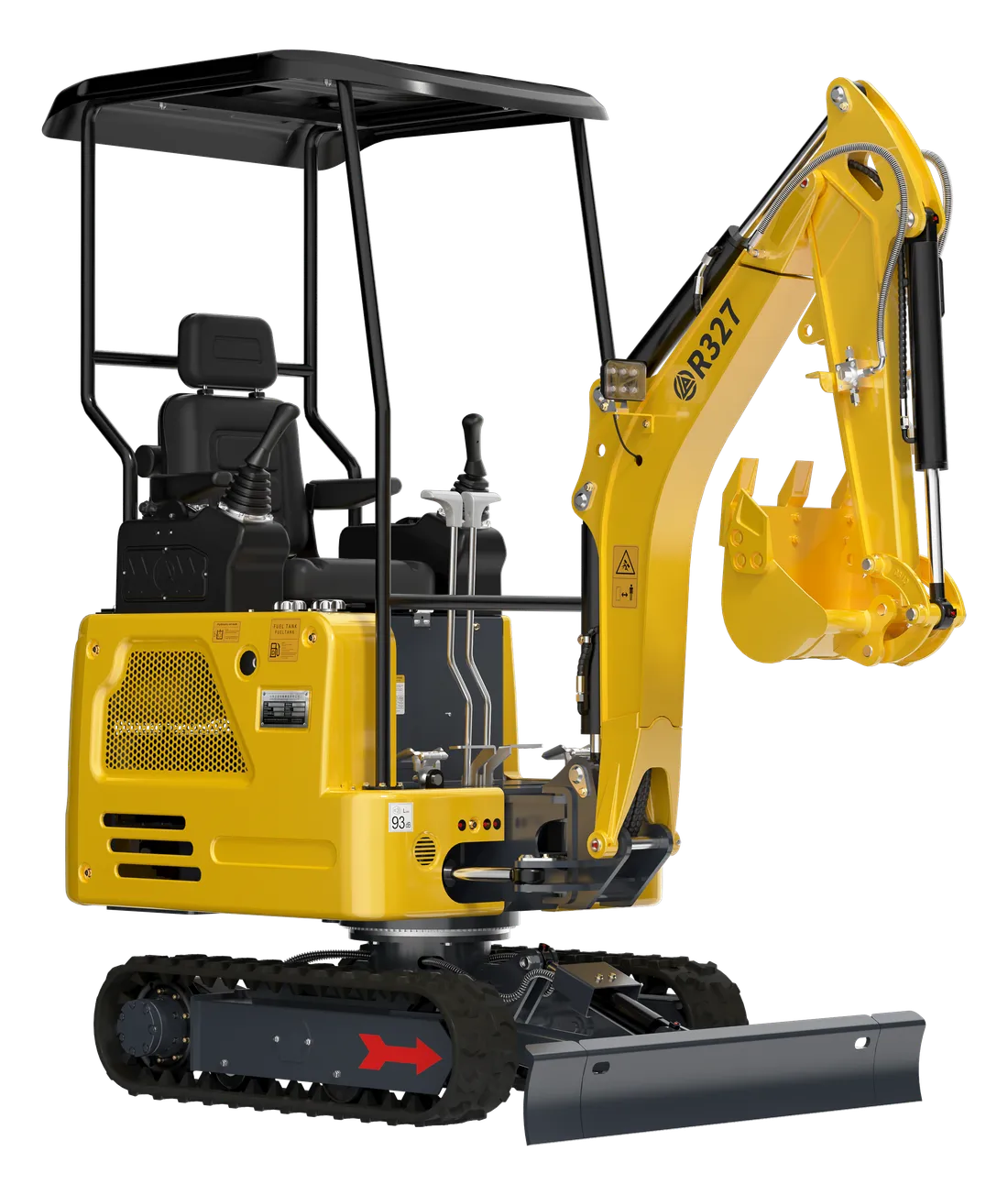
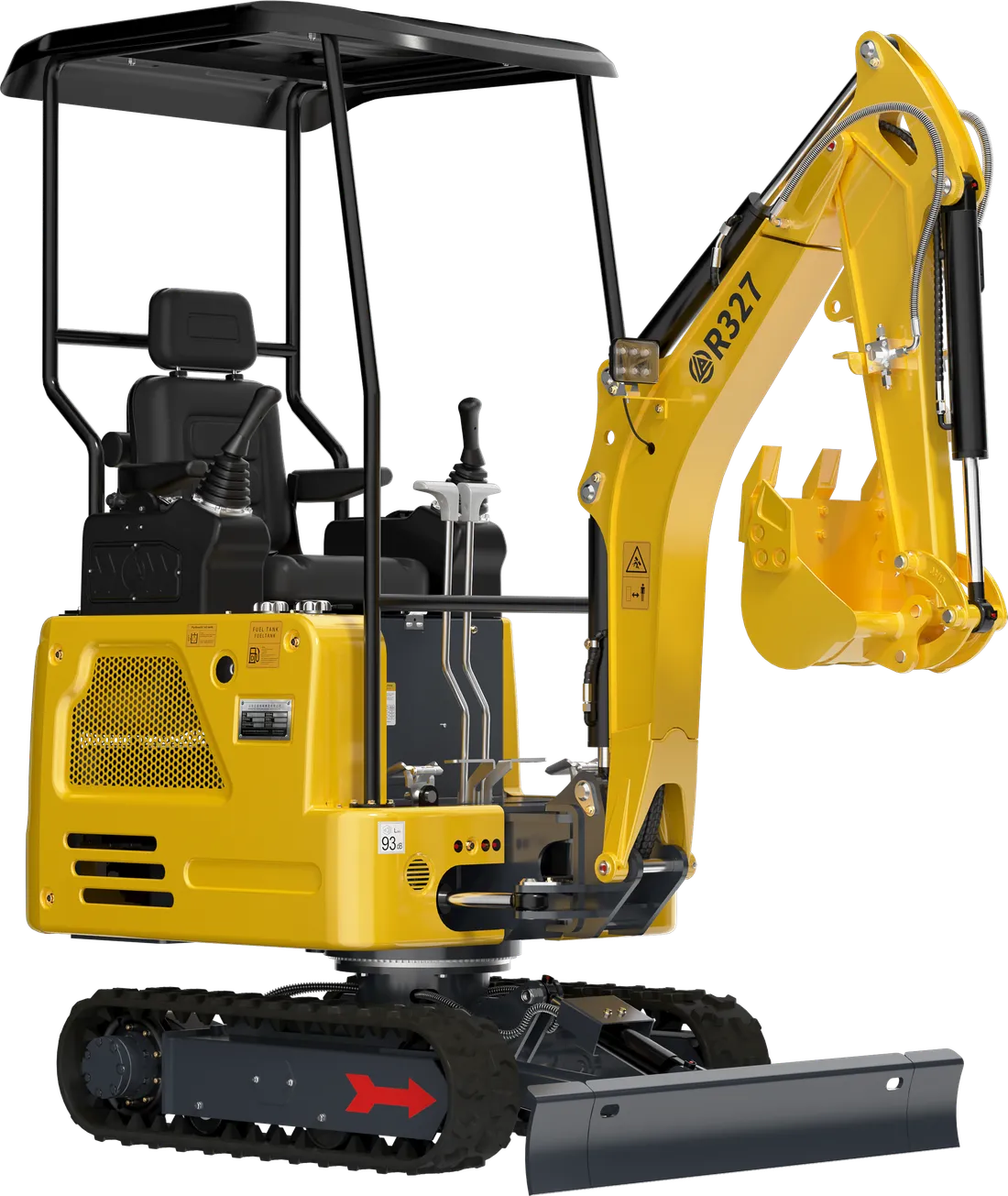
Engine power also affects the picture. Among the models at EKSFORK, the R10 has a 10 HP Koop 192F, the R327 a 21 HP Kubota D722 and the R350 a 25 HP Kubota D1703 diesel engine. As a general rule, hourly consumption rises as power and operating weight grow; but when a big machine finishes the same job in less time, consumption per job can paint a very different picture. The right comparison is therefore made not per hour but per unit of work done.
Six factors that determine mini digger fuel consumption
- Type of work and ground: Loading loose soil takes much less power than breaking out compacted clay or stony ground. Working with a hydraulic breaker also generally means higher consumption than digging with a bucket.
- Engine speed: Not every job needs the throttle wide open. On precise jobs or under light load, mid revs are usually enough; full revs should be used only when power is really needed.
- Idling time: An engine running while you wait for a truck, talk on the phone or take a lunch break burns fuel without doing any work and also adds to the hour meter.
- Hydraulic forcing: Holding the lever after a cylinder has reached the end of its stroke, or forcing the bucket against a rock that won’t budge, dumps the oil the pump delivers through the relief valve. This is consumption that produces no work and heats the oil.
- State of maintenance: A clogged air filter, a dirty fuel filter, missing grease or over-tensioned tracks make the engine work harder for the same job.
- Choice of bucket and attachment: A bucket wider than necessary in hard ground strains the engine on every cycle. To choose the right width, see our bucket width guide.
Measuring your own machine’s consumption: the fill-to-fill method
The most reliable way to find out your real consumption is a simple measurement. It can be done on any machine with an engine hour meter:
- Park the machine on level ground, fill the tank to the brim and note the reading on the hour meter.
- Do your normal work; the measurement should last at least one full working day so that short stops don’t skew the result.
- Fill the machine to the brim again in the same place, in the same way, and write down the litres you add.
- Divide the litres added by the operating hours between the two readings: the result is your L/hour figure.
- Repeat the measurement separately for different types of work (digging, loading, breaking, levelling) and work out your own figure for each job.
On machines with a 10-litre tank such as the R327, the tank is filled often, so the measurement gives a result quickly; but with a small volume, even a filling difference of a few hundred millilitres affects the result. Fill up with a graduated can and fill to the same level every time. Enter the results in a notebook or a simple table on your phone; after a few weeks you will know what each type of work burns from records, not guesswork.
Five columns are enough in your logbook: date, start and end hour-meter reading, litres added, type of work and ground, notes. In the “notes” column, write who the operator was, whether a breaker was used, and any long waits. The reasons for differences in consumption are usually hidden in this column.
A side benefit of measuring on small-tank machines is a refuelling plan. When you know your daily need, you can work out in advance how much fuel to take to the site. Don’t run the tank completely dry: sediment at the bottom is drawn into the filter, and if air gets into the fuel system, bleeding may be needed to restart the engine.
Turning litres into lira and into work
The L/hour figure you measure goes into two basic calculations:
- Hourly fuel cost = L/hour × diesel price per litre
- Daily fuel requirement = L/hour × daily operating hours
Example: With the 1.3 L/hour figure on the R350’s product page, an 8-hour day comes to 1.3 × 8 = 10.4 litres. Do the same calculation with the figure you have measured and the pump price in your area; don’t treat the figure as fixed, but update it according to the type of work.
The really useful indicator, though, is fuel per job: divide the day’s litres by the work you did that day — metres of trench, number of truckloads or area levelled. This indicator does two things. First, you can compare different operators and methods fairly. Second, when you provide a service you can build your price so that it also covers the fuel cost; we explain the whole of this calculation in the starting a business with a mini excavator volume.
Fuel items often forgotten when quoting
- Transport fuel: On small jobs, the round-trip fuel of the vehicle towing the machine on a trailer can approach the machine’s own consumption. Count the distance as a separate item.
- Warm-up and waiting: Morning warm-up, waiting for trucks and repositioning time also go on the engine hours.
- High-consumption attachment hours: If part of the job will be done with a breaker, calculate those hours separately with their own L/hour figure.
- Carrying fuel to site: Extra trips to refuel at a distant site are also a cost; plan to take the daily requirement in one go.
Habits that waste fuel
| Habit | Why does it waste fuel? | The right way |
|---|---|---|
| Full throttle for every job | The engine runs at high revs even on light work | Choose revs to suit the job; mid revs for precise work |
| Long idling | Fuel and engine hours are used without doing work | On long waits, stop the engine as the manual describes |
| Forcing a cylinder at the end of its stroke | Oil returns through the relief valve; energy turns into heat | Release the lever when the movement ends; tackle ground that won’t break out with a ripper or breaker |
| Slewing through a wide angle to dump | Unnecessary slewing, acceleration and braking on every cycle | Position the pile or truck beside the machine, at a short slewing angle |
| Tracking the machine frequently | The travel motors burn fuel without producing work | Plan your position in advance; finish the area you can reach from one point, then move on |
| Raising a full bucket higher than necessary | Wasted lifting work | Raise it just enough to reach the dumping point |
| Heavy load on a cold engine | Inefficient combustion and increased wear | A short warm-up, then gradual load |
| Running the air conditioning on its coldest setting all the time | The air-conditioning compressor draws power from the engine | Leave the machine in the shade if possible; use the air conditioning only as needed |
Most of these habits also lengthen cycle times; in other words, less fuel and faster work usually come from the same corrections. We have gathered general fuel-saving habits that apply to all construction machines separately in our fuel saving volume.
The effect of maintenance on the fuel bill
When maintenance slips, consumption doesn’t rise overnight but gradually; that is why it is hard to notice. Your fill-to-fill measurement helps here too: if the L/hour figure rises markedly for the same type of work, look at these items first:
- Air filter: It clogs quickly on dusty sites; when the engine can’t get enough air, combustion efficiency falls. For check and replacement times, see our filters volume.
- Fuel filter and water separator: Dirty or watery fuel upsets injection and the engine loses power.
- Engine oil: Going outside the viscosity and change interval specified in the manual increases internal friction.
- Greasing: Dry pins and bushes create extra resistance with every movement.
- Track tension: Over-tensioned tracks strain the engine for nothing when travelling; for the right adjustment see the track maintenance volume.
- Injectors and engine tuning: If black smoke, loss of power and increased consumption appear together, this is something for the service team to look at.
Fuel quality and storage
As important as how much the machine burns is how the fuel gets into the tank. If you carry fuel to site in cans, the cans must be reserved for diesel only, capped and clean. If you transfer from a drum, use a funnel with a strainer and don’t draw up the sediment at the bottom of the drum.
In dusty and windy weather, don’t leave the tank cap open longer than necessary. Filling the tank at the end of the day reduces condensation in the space inside the tank, especially in cold and damp weather, and lowers the risk of water getting into the fuel. Fuel pump and injector failures caused by dirty fuel can cost far more than the small saving you make on cheap fuel of uncertain origin.
Your records show one more thing: unexplained differences. If consumption suddenly jumps even though the type of work and the operator are the same, check the fuel hoses and filter connections for leaks. On machines left on site overnight, keeping the tank cap locked and noting the tank level in the evening and morning is the simplest way to notice fuel going missing early.
Weekly fuel checklist
- I recorded this week’s L/hour figure by type of work.
- I checked whether there was a marked increase compared with last week.
- I checked the air filter or the filter restriction indicator.
- I checked the water separator and drained it when necessary.
- I greased the pins and bushes at the interval in the manual.
- I measured the track tension.
- I discussed waiting arrangements with the team to reduce time spent idling.
- I checked the cleanliness of the cans, funnel and tank cap.
Summary
- The consumption in the catalogue is a reference; the real figure varies with the type of work and the engine load.
- Measure your own L/hour figure with the fill-to-fill method, separately for each type of work.
- Track cost not per hour but per job (metres, truckloads, m²).
- Full throttle, long idling, hydraulic forcing and wide slewing angles are the most common items of waste.
- A gradual rise in consumption is usually a sign of a maintenance item.
To weigh up engine power and fuel consumption together when choosing a model, take a look at our mini excavator models, and we can choose the right machine for your work together on WhatsApp.