For a municipal public works team or a village council, the digging jobs that come up most often are not big, but they are urgent: a burst water pipe, a blocked culvert, saplings to plant, a pavement to relay. Taking a large backhoe loader to these jobs is often more machine than the job needs: it may not fit down a narrow street, its stabiliser legs and weight can damage block paving, and it ties up the whole crew for a small job.
A mini excavator fills this gap. In this guide we cover typical uses for municipalities and villages, which model suits which organisation, what to look out for when drawing up a technical specification, and how to make sure a shared machine doesn’t end up with nobody looking after it.
A small machine where a big one can’t go
In public works, the real advantage of a mini excavator is that it can get into tight spaces and work without damaging its surroundings. The narrow streets of old neighbourhoods, footpaths in parks, the gaps between rows in cemeteries, and village yards and the backs of barns are often off limits to a large machine. A small machine gets into these places, digs a narrower trench and leaves less damage behind it.
The second advantage is crew productivity. A repair pit that would take several workers a whole day to dig by hand is opened up far more quickly with a mini excavator, and the crew can concentrate on repairing the pipe and on safety measures instead of digging. Because the trench is narrower, there is also less backfilling and surface reinstatement to do.
Let’s be honest: a mini excavator isn’t the machine for every job. For high-volume earthmoving, loading trucks in quick succession or long stretches of roadworks, it can’t replace a large machine. The right way to look at it is to put the mini excavator alongside the large machine in the fleet, not in its place.
Main uses in municipalities
- Drinking water and sewer faults: Opening up the fault point in a narrow street, digging carefully around the pipe and backfilling after the repair.
- Storm drain gratings and culverts: Digging out around gratings and clearing the soil and debris that build up at culvert mouths.
- Parks and gardens: Planting holes with an auger, preparing lawn areas with a grading bucket and rake, and levelling the ground for playgrounds.
- Pavement and kerb renewal: Breaking up old concrete with a hydraulic breaker, lifting it out with the bucket and excavating for the new infrastructure.
- Cemetery works: Laying out paths and walkways, digging foundations for boundary walls, tree planting.
- Marketplaces, car parks and sports grounds: Small drainage lines, foundations for lighting columns, edging work.
What these jobs have in common is that most of them are done close to underground services. Even if the municipality has its own water utility, don’t start digging without getting information about electricity and gas lines from the relevant utilities, and dig the last layers slowly and carefully. We cover trench slopes and worker safety in detail in our channel and trench digging guide.
A practical tip for repair crews: keep the machine ready on its trailer, together with a narrow bucket, barrier tape, traffic cones and basic hand tools. When a water fault comes in at night or at the weekend, the crew gets out faster and the street stays closed for less time.
An excavator for the village: main uses
- Village drinking water line: Faults on the line between the spring and the storage tank, tidying the ground around the tank, new house connections.
- Irrigation ditches and channels: Pre-season clearing and repairing collapsed banks.
- Roadside ditches and culverts: Clearing ditches that have filled up after rain, and stopping water from damaging the road.
- Common areas: The village square, the mosque and school grounds, the cemetery, and the areas around livestock watering troughs.
- Tree planting: Digging planting holes in quick succession with an auger.
- Clearing up after storms and downpours: Removing soil and branches carried onto the road, once the safety of the ground and slopes has been assessed.
If work is to be carried out in a stream bed or on public land, find out in advance whether permission from the relevant authority is needed. In villages, the machine often shares its calendar with farm work, so options that combine farming and digging in one machine are also worth considering.
Which model for which organisation?
| Organisation and work profile | Recommended model | Key features |
|---|---|---|
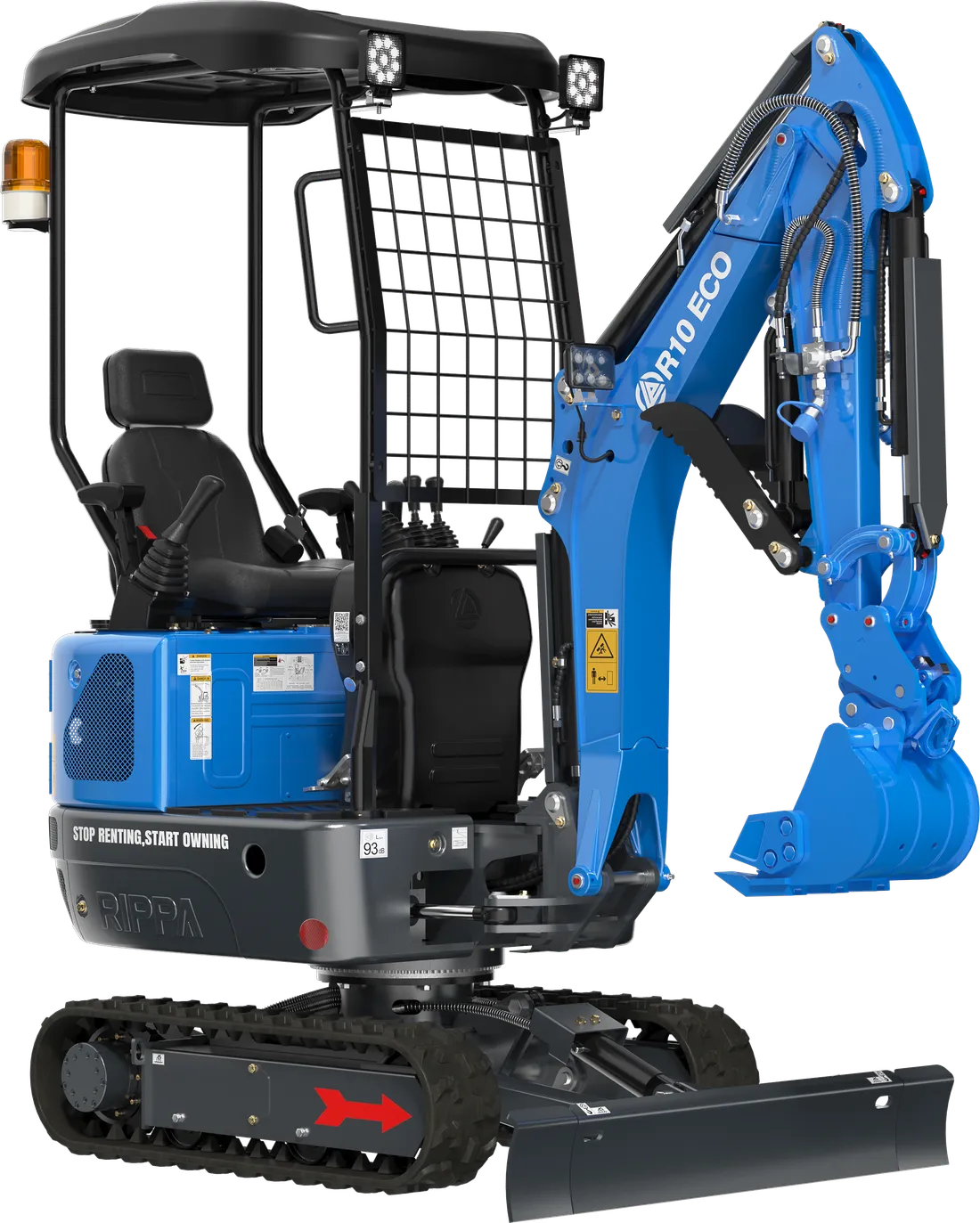
| Small municipality, mostly parks and gardens work | R10 (1.2 tonnes) — from 299.000 ₺ | 1,200 kg operating weight, 1,650 mm digging depth, 40 cm bucket, 100 cm dozer blade; easy to transport |
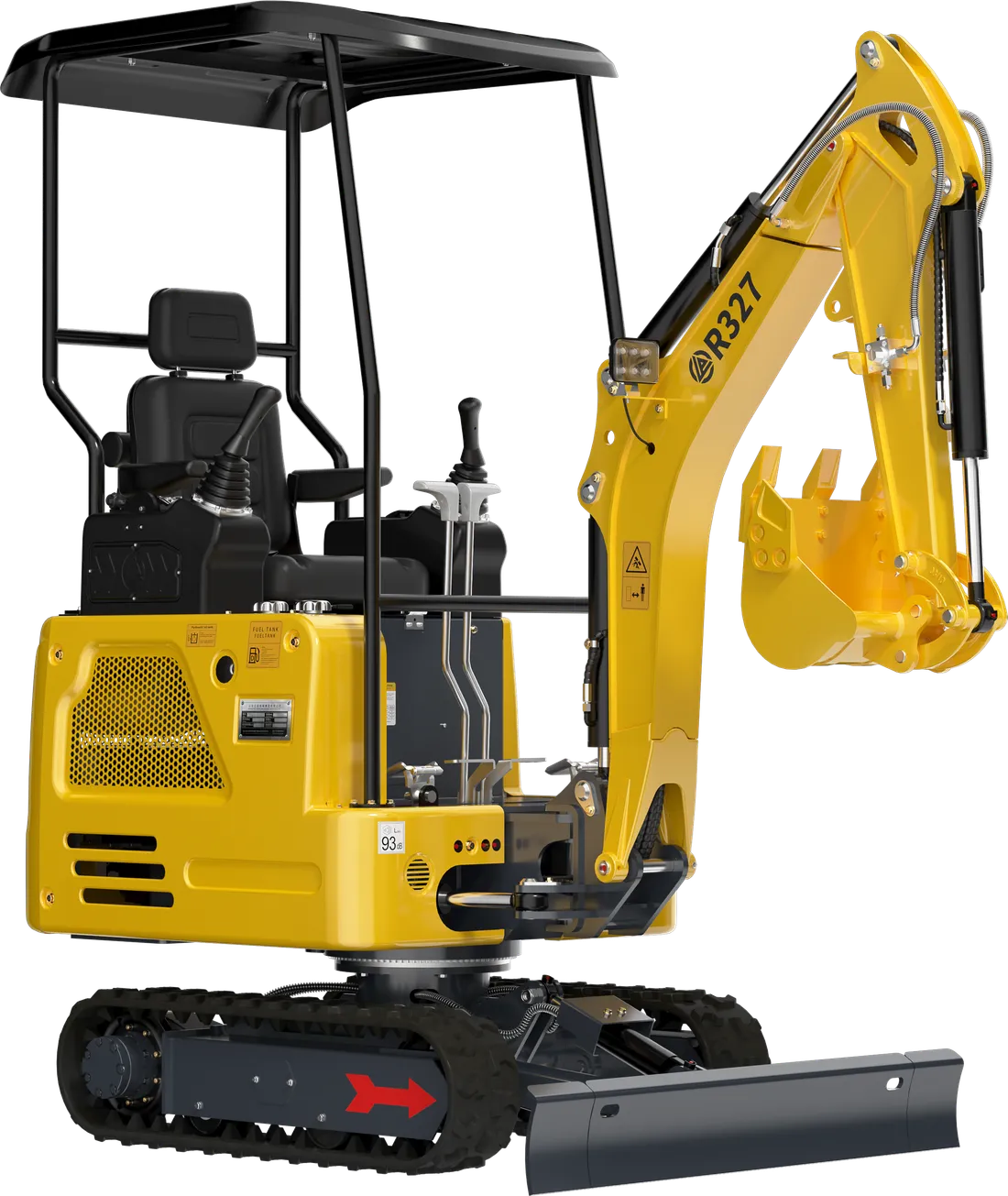
| Water and sewer faults in narrow streets, digging along walls | R327 (1.7 tonnes) — from 549.000 ₺, 479.000 ₺ on promotion | Telescopic retractable tracks, 120° boom swing, 21 HP Kubota D722, 1,580 mm digging depth |
| Deeper utilities, hard ground, long shifts and winter conditions | R350 (3.5 tonnes) — ask for a quote | 2,927 mm digging depth, 22.5 kN digging force, 25 HP Kubota D1703, enclosed cab with air conditioning |
| Village: farm work and digging combined | QD35 with excavator arm (35 HP) — from 349.000 ₺ | Tractor and rear digging arm in one machine; attachments such as a rotavator and plough |
Prices are starting prices excluding VAT. You can find the details of the R350 on its product page, and the option that combines farming and digging on the QD35 tractor with excavator arm page.
The most decisive question in the choice is this: How deep are the water and sewer lines in your area? To the depth of your deepest line, add the bedding material to be laid under the pipe and a working margin; the machine’s digging depth must cover this requirement. A machine one class too small can’t do the main job, while one bigger than necessary won’t fit down a narrow street.
What to consider when drawing up a technical specification
In public procurement, the purchasing procedure and the documents required are determined by your organisation’s procurement unit and current legislation; here we only give a practical checklist for the technical content. The basic principle: write the specification around your needs, not around a brand.
- Operating weight class: Specify a range that suits your needs rather than a single kilogram figure.
- Minimum digging depth: Calculate it from your deepest line plus the working margin.
- Engine: A diesel engine from a well-known engine manufacturer, with spare parts widely available.
- Controls and equipment: Pilot controls; boom swing and telescopic tracks for work in narrow streets.
- Cab: An enclosed cab if the machine will work long hours in winter and summer; for occasional use, a canopy may be enough.
- Attachment package: List items such as buckets in different widths, a grading bucket, an auger, a hydraulic breaker and a quick coupler according to your work.
- Documents: CE certification and an operator’s manual in Turkish. We explain what CE certification means in our CE marking guide.
- Warranty and service: Warranty period and coverage, the nearest service point, spare parts lead time.
- Training and delivery: Place of delivery, setup and operator training.
You’ll find an extended list of questions to ask the seller in our guide 15 questions to ask before buying a machine.
Who is responsible for the machine? Setting up use and maintenance
A common problem in organisations is that the machine belongs to everyone and no one: everybody uses it, nobody takes charge of its maintenance. The way to prevent this is to set up a simple routine:
- Appoint one responsible operator and one backup. Only trained people with the necessary certificate should use the machine; confirm the current requirements for the operator certificate with the relevant authorities or your health and safety specialist.
- Keep a machine logbook: Date, hour meter reading, work done, who used it, fuel added and any problems noticed. The logbook shows both the maintenance schedule and how much the machine has worked for each department.
- Make the daily check a rule: Oil and coolant levels, hydraulic leaks, tracks and greasing. A machine that hasn’t been checked doesn’t go out on site.
- Put periodic maintenance in the calendar: Track the hour intervals in the manual with the logbook, and include maintenance materials in the annual budget.
- Keys and storage: Keep the machine in an enclosed or sheltered area, and always know who has the key.
- Site safety: Hard hats, hi-vis vests and gloves for the operator and ground crew; suitable signage and traffic management on streets open to traffic.
In villages, if the machine goes out to work for more than one household, how the order of use and the fuel costs will be shared should be put in writing from the start. This small arrangement prevents most disputes over a shared machine before they even arise.
Annual work plan: keeping the machine from standing idle
In public bodies, how productive a machine is depends as much on planning as on the purchase. Faults come in all year round, but planned work has its seasons. Adapt the framework below to your own climate and work calendar:
| Period | Priority work | Useful attachments |
|---|---|---|
| Winter | Water and sewer faults, surfaces that have sunk after frost, breaking up old concrete | Narrow bucket, hydraulic breaker, ripper for the frozen top layer |
| Spring | Tree planting, preparing parks and green spaces, irrigation line repairs | Auger, grading bucket, rake |
| Summer | Utility renewal, pavement and kerb work, sports ground and playground landscaping | Buckets in different widths, hydraulic breaker, quick coupler |
| Autumn | Clearing culverts, gratings and ditches before the rains; tidying cemeteries and common areas | Grading bucket, narrow bucket, hydraulic grapple for branches and stones |
Entering planned work in the logbook in advance has two benefits: when a fault comes in, it is clear which job can be postponed, and periodic maintenance can be slotted into weeks when work is not piling up. Servicing the machine before the season starts keeps it from going into the workshop just when it is needed most.
After-sales: service, parts and training
When a public body buys a machine, after-sales support matters as much as the price; a machine standing idle means a fault left waiting and a neighbourhood complaining. At EKSFORK:
- Machines come with a warranty of 2 years or 2,000 operating hours and are CE certified.
- There are 14 authorised sales and service points in 12 provinces and a contracted service network across all 81 provinces; you can find the point nearest to you on our dealer and service network page.
- 382 spare parts are shipped from stock the same day.
- We deliver to all 81 provinces, villages included, with setup and basic operator training on delivery. We describe the steps of the process in our guide to delivery to all 81 provinces.
- We apply a single-price policy: the price doesn’t change through haggling and is the same for every buyer.
Summary
- In public works, a mini excavator goes alongside the large machine, not in its place: for narrow streets, parks, cemeteries and work within villages.
- The decisive questions in choosing a model are how deep your deepest line is and how wide your working areas are.
- The R10 stands out for mostly parks and gardens work, the R327 for utility work in narrow streets and the R350 for deep and heavy work; in a village where farming and digging go together, it’s the QD35 with excavator arm.
- Write the specification around your needs, not a brand, and make sure warranty, service and parts supply are included.
- A responsible operator, a logbook and daily checks keep a shared machine up and running.
To find the right machine for your organisation’s work, take a look at our mini excavator models, and send us your questions about technical specifications and quotes on WhatsApp.