When choosing a mini excavator, most people see the cab as a comfort extra: “If the budget stretches, I’ll get one with a cab.” Yet the choice between an enclosed cab and an open canopy also affects how many days a year you can work, how fresh the operator still is by the evening, how the machine will be transported and what goes on the maintenance list.
In this guide we compare the two options in terms of climate, dust and noise, visibility and tight spaces, transport and security, and cost and maintenance. At the end you’ll find a table where you can mark your own situation and reach a decision, plus a short checklist.
Canopy and cab: what they are and what they share
A canopy is a protective structure made up of a roof above the operator’s seat and the posts that hold it up; its sides are open. An enclosed cab, by contrast, is a fully enclosed operator area with windows, a door and, in most cases, climate control.
Both share the job of protecting the operator, and neither takes the place of a seat belt. Check the label on the machine and the operator’s manual to see what your machine’s protective structure is certified for and to which standard (for example, protection against rollover or falling objects). Drilling or welding the protective structure, or mounting extra parts on it, can weaken that protection; if you are considering such a change, talk to the manufacturer or an authorised service centre first.
Climate and working hours: the real case for a cab
The strongest argument for a cab isn’t comfort but the number of days and hours you can actually work. Working under a canopy in the midday heat of summer, in winter frost, or in rain and wind is possible but tiring: the operator stops early, takes more breaks and loses concentration. An enclosed cab wins back a large share of these losses.
Ask yourself: on how many days last year did you stop early, or not start at all, because of the weather? If the number is small, a canopy is enough. If the machine is on site for most of the year, if you sell contract work, or if you are an organisation such as a municipality that has to work in all weathers, a cab is not a comfort expense but an investment in productivity. We cover the other aspects of working in winter in our guide to winter use.
Example (hypothetical figures): Imagine that on 30 days a year you lose half the day to the weather. That adds up to 15 full working days. If you sell contract work, work out the income you miss on those days; if you use the machine for your own work, work out what the delayed jobs cost you. Then compare the result with the price difference between the cab and canopy versions. Use your own number of lost days and your own figures; the calculation takes a few minutes, but it settles the argument.
One detail that is easy to overlook in cold weather is control precision. An operator working under a canopy in frost has to wear thick gloves, and thick gloves make it harder to give pilot controls the fine movements they need. Working in thin gloves in a heated cab makes a real difference in precision work such as grading and digging around pipes.
A warning for hot climates: an enclosed cab without air conditioning can get hotter in the sun than a canopy. If you are considering a cab, consider climate control at the same time. EKSFORK’s 3.5-tonne R350 comes with an enclosed cab and air conditioning.
Dust, noise and flying debris
On dry soil, crushed stone and demolition jobs, an operator under a canopy works in the middle of the dust. With the windows and door shut, an enclosed cab noticeably reduces exposure to dust and noise. Over long shifts, this makes a big difference to the operator’s health and concentration.
But keep two points in mind. First, if you work with the cab windows and door open, this advantage is largely lost; in a cab machine, too, a dust mask and hearing protection should be used when needed. Second, when you work with a hydraulic breaker, fragments of concrete and stone can fly towards the operator. On a canopy machine, front protection and safety glasses are essential for this work; on a cab machine, too, the windscreen should be checked to make sure it is sound and clean. We explain the safety side of small demolition jobs with a breaker in our demolition guide.
On a dusty site, a cab machine brings a maintenance load of its own: the cab air filter clogs quickly. A clogged filter stops enough clean air getting into the cab and makes the windows mist up more easily. On very dusty jobs, check this filter more often than the general interval in the manual.
Visibility, communication and tight spaces: where the canopy wins
Let’s be honest — a canopy also has clear advantages over a cab:
- Hearing and seeing what’s around you: Under a canopy you can hear the ground crew and communicate more easily with the signaller. On jobs where you work closely with the ground crew, such as pipe laying, this is a significant advantage for both safety and speed.
- Uninterrupted view: Cab pillars, the door frame and dirty windows break up the view at certain angles. Under a canopy, the view to the sides and rear is clearer.
- Getting on and off often: For an operator working alone who often climbs down to take measurements, position pipes or help the crew, a canopy is practical; there is no door to open and close every time.
- Door clearance in tight spaces: A cab door needs space at the side to open. Next to a wall or inside a greenhouse, make sure you will be able to get out wherever you stop the machine.
If you will be working in greenhouses, inside barns or in other low-ceilinged spaces, always compare the machine’s total height with its cab or canopy against the height of the entrance. For more on working in tight spaces, see our guide to greenhouses and tight spaces.
If you have chosen a cab machine, make up for the communication drawback with good method: before starting work, agree the hand signals and the “stop” signal with the ground crew and, if possible, work with a single signaller. Make sure that any warning you can’t hear inside the cab is given with a signal you can see.
Transport, weight and machine security
A cab adds weight to the machine. The difference may not be large, but if you are working close to the load capacity of your trailer and towing vehicle, it has to be taken into account. In transit, check the total height against bridges, underpasses and tree branches; cab windows can break if they hit a branch. We explain the steps for loading onto a trailer and tying down in our transport guide.
When transporting a cab machine, check three things before setting off: is the door shut and locked, are the opening windows closed, and are the mirrors and any protruding parts secured? A door that swings open on the road can damage both the cab and other vehicles nearby.
On security, the cab has one more advantage: it can be locked. On a machine left overnight on a construction site or in the open, the seat, controls and instrument panel are protected from rain and tampering. On a canopy machine, a cover (tarpaulin) for the seat and consoles is a simple way to protect the control lever boots and electrical components from rainwater.
Differences in cost and maintenance
An enclosed cab raises the purchase cost of a machine in the same class, and the difference grows once air conditioning is added. The maintenance list gets longer too:
- Cab air filter and air-conditioning servicing (at the intervals in the manual); running the air conditioning briefly now and then in winter too keeps the system from standing idle for long periods
- Checking the windows, wipers and door seals
- Lubricating the door hinges and locks
- Cleaning inside the cab: built-up dust can damage the controls and electrical components
A canopy has none of these items; maintenance is limited to checking the seat, the seat belt and the mounting bolts of the protective structure. When it comes to resale value, local preferences decide: in cold and wet regions, demand for cab machines may be higher. If you plan to sell, look at the second-hand listings in your area.
Good working habits in the cab
- Keep the windows clean: A dirty windscreen makes the cab’s visibility drawback worse. Start the day by wiping the windows and mirrors.
- Don’t leave loose items in the cab: A water bottle or phone that slides under the pedals can get in the way of the controls. Keep your belongings in a fixed place.
- In winter, don’t work until the windows are demisted: Moving with misted-up windows is when your view is restricted in the most dangerous way.
- Don’t leave the door half open: If you are going to work with the door open, it must be secured as described in the manual; a door that hits an obstacle as the machine slews can break.
Ways to improve comfort if you choose a canopy
With the right habits, a canopy will give you many years of trouble-free use. In summer, move work to the cool hours of the morning, and wear clothing suited to sun and dust, glasses and, if needed, a dust mask. For rain, keep rainwear for the operator and a seat and console cover for the machine. On noisy jobs, don’t neglect hearing protection. These small measures reduce the canopy’s drawbacks while keeping its advantages of low cost and a clear view.
Decision table
| Your situation | Canopy | Enclosed cab |
|---|---|---|
| Few days a year, mostly in good weather | ✅ Enough | May be more than you need |
| Year-round work in all weathers | ❌ Lost productivity | ✅ Recommended |
| Dusty digging, demolition with a breaker | Protective equipment essential | ✅ Better choice |
| Close work with the ground crew, frequent getting on and off | ✅ Practical | Door and windows can make communication harder |
| Winter work in a cold region | ❌ Hard going | ✅ Recommended |
| Long shifts for a municipality or on a construction site | Fine for short jobs | ✅ Recommended |
| Machine left unattended in the open | Needs a cover | ✅ Lockable |
| Budget comes first, light use | ✅ Lower cost | Higher cost |
Whichever column most of the rows you marked fall into is most likely your answer. If it’s a tie, the deciding question is: how many months of the year will the machine be on site?
How EKSFORK models are equipped
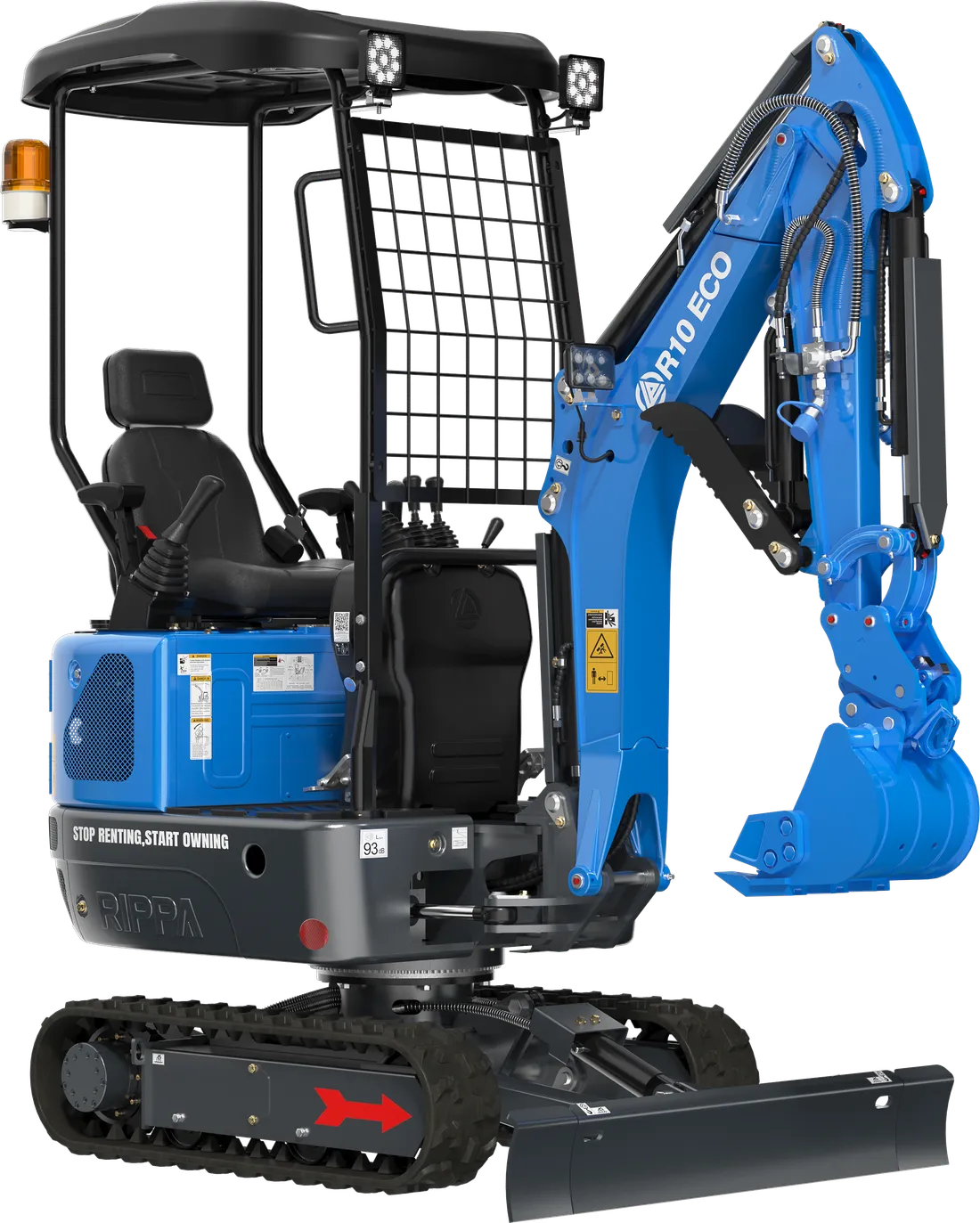
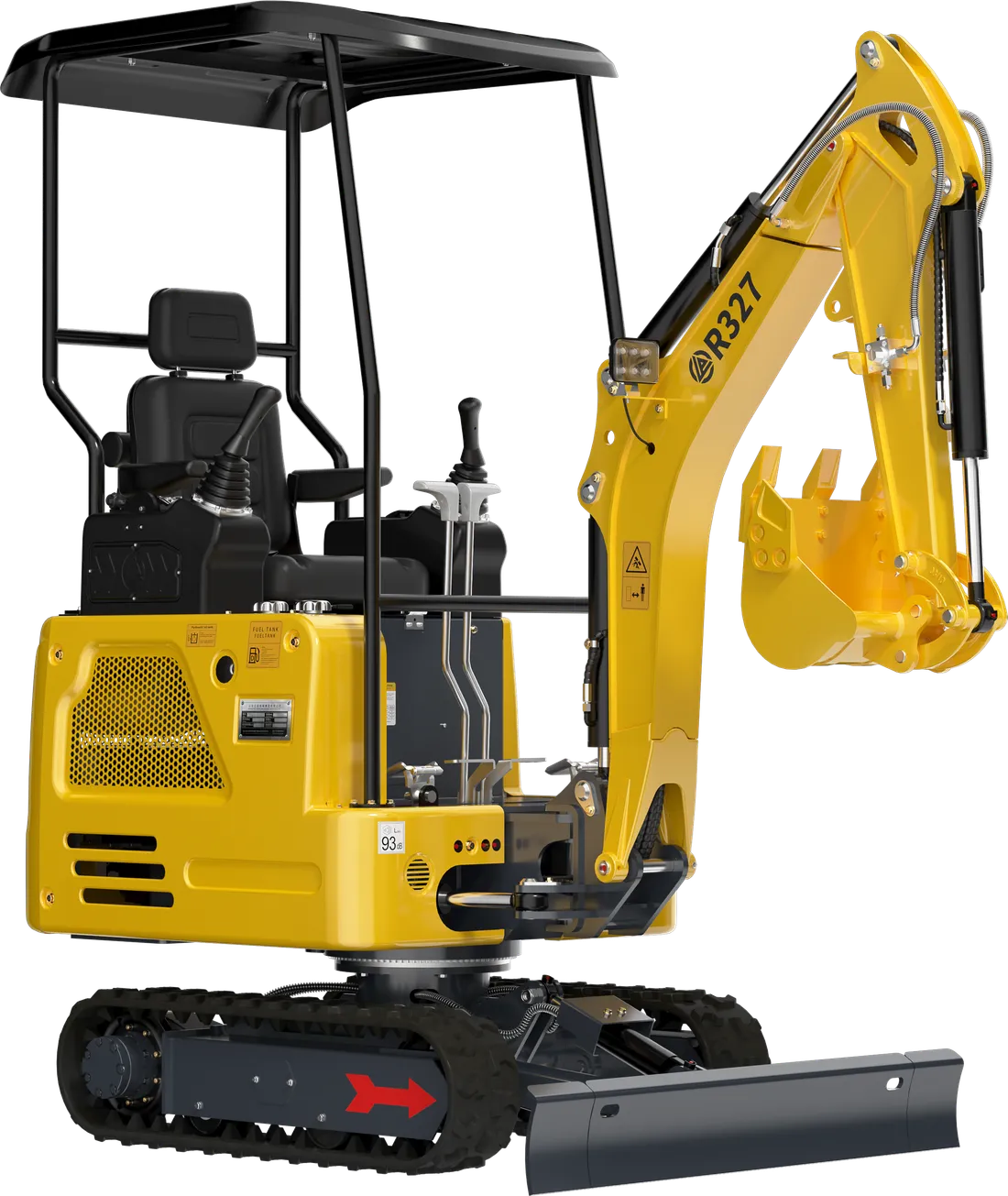
The R350 comes with an enclosed cab and air conditioning; this equipment gives a direct advantage on long shifts, winter jobs and dusty sites. For the R10 and R327, ask us for up-to-date information on cab or canopy equipment and on which option the machine is delivered with. As these two models are compact machines aimed at garden, greenhouse and tight-space work, the advantages of a canopy come more to the fore in this kind of work, which involves getting on and off often; if you will be using the same machine to provide services all year round and in all weathers, give the cab option serious thought. A cab is also among our mini excavator attachments; don’t decide until you have confirmed that it suits your model and what the fitting conditions are.
Whichever you choose, cab or canopy, you can also ask any questions about the seat belt, getting on and off safely and the protective structure during the basic operator training we give on delivery.
Quick checklist
- Written down how many days a year, and in which seasons, the machine will work.
- Thought through the days lost to the weather last year.
- Assessed the share of dusty work and breaker use.
- Taken into account the need for close work with the ground crew and for getting on and off often.
- Measured the height of greenhouse, barn or garage entrances.
- Checked the load capacity of the trailer and towing vehicle.
- Planned where and how the machine will be left overnight.
- Asked whether the cab option suits my model and what its maintenance list involves.
To compare the models, take a look at our mini excavator page, and ask us about cab and canopy options on WhatsApp.