Winter tests every system on a machine at once. On cold mornings the battery weakens, the engine oil thickens, the fuel filter can clog and the hydraulics turn sluggish; out on site, frozen ground, ice and short daylight hours make the work harder.
Many of the problems that appear in winter are not actually new: the cold simply exposes a battery that was already weak, antifreeze that has aged or a fuel filter that has taken on water. That is why the most effective defence against winter breakdowns is preparation done before the cold arrives.
In this guide we look at what cold does to the machine, pre-season preparation, the cold-morning start-up routine, fuel and battery problems, working on frozen ground and end-of-day winter maintenance. The cold-weather instructions in your machine’s operator’s manual always take priority.
What does cold do to a machine?
- Engine oil thickens: The starter motor has to work harder, and in the first few seconds the oil takes longer to reach every part of the engine.
- The battery delivers less power: The chemical reaction inside the battery slows down in the cold; a battery that turns the engine over easily in summer struggles in winter.
- Diesel changes consistency: In very cold weather, wax (paraffin) crystals can form in diesel and clog the fuel filter.
- Condensation forms in the tank: The temperature difference between day and night makes water condense out of the air inside the tank, and that water gets into the fuel system.
- Hydraulic oil gets heavier: Movements slow down, and the pump struggles to draw in cold, thick oil.
- Rubber and plastic parts harden: Hoses, seals and rubber boots lose their flexibility; a hose that is strained in the cold cracks more easily.
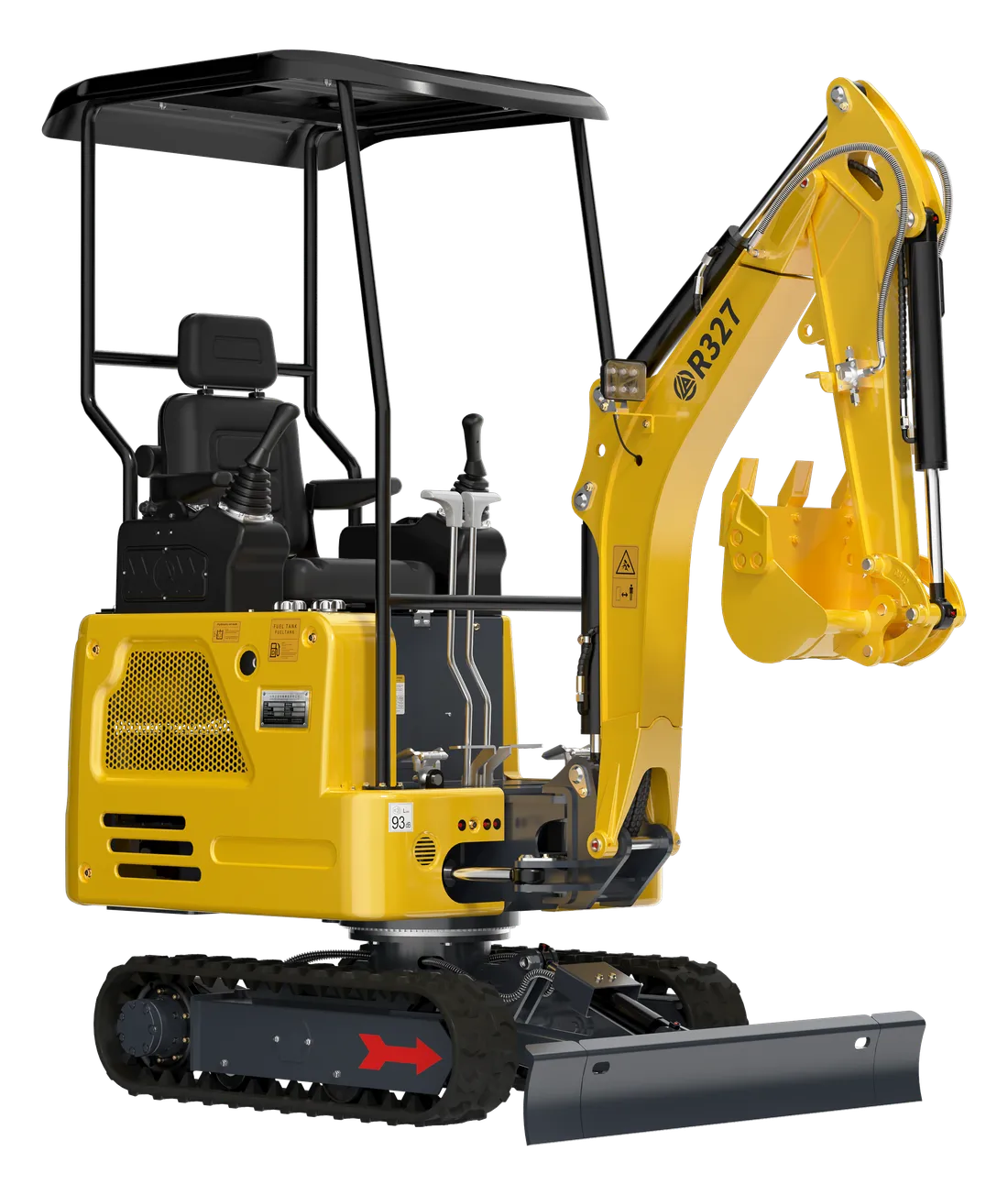
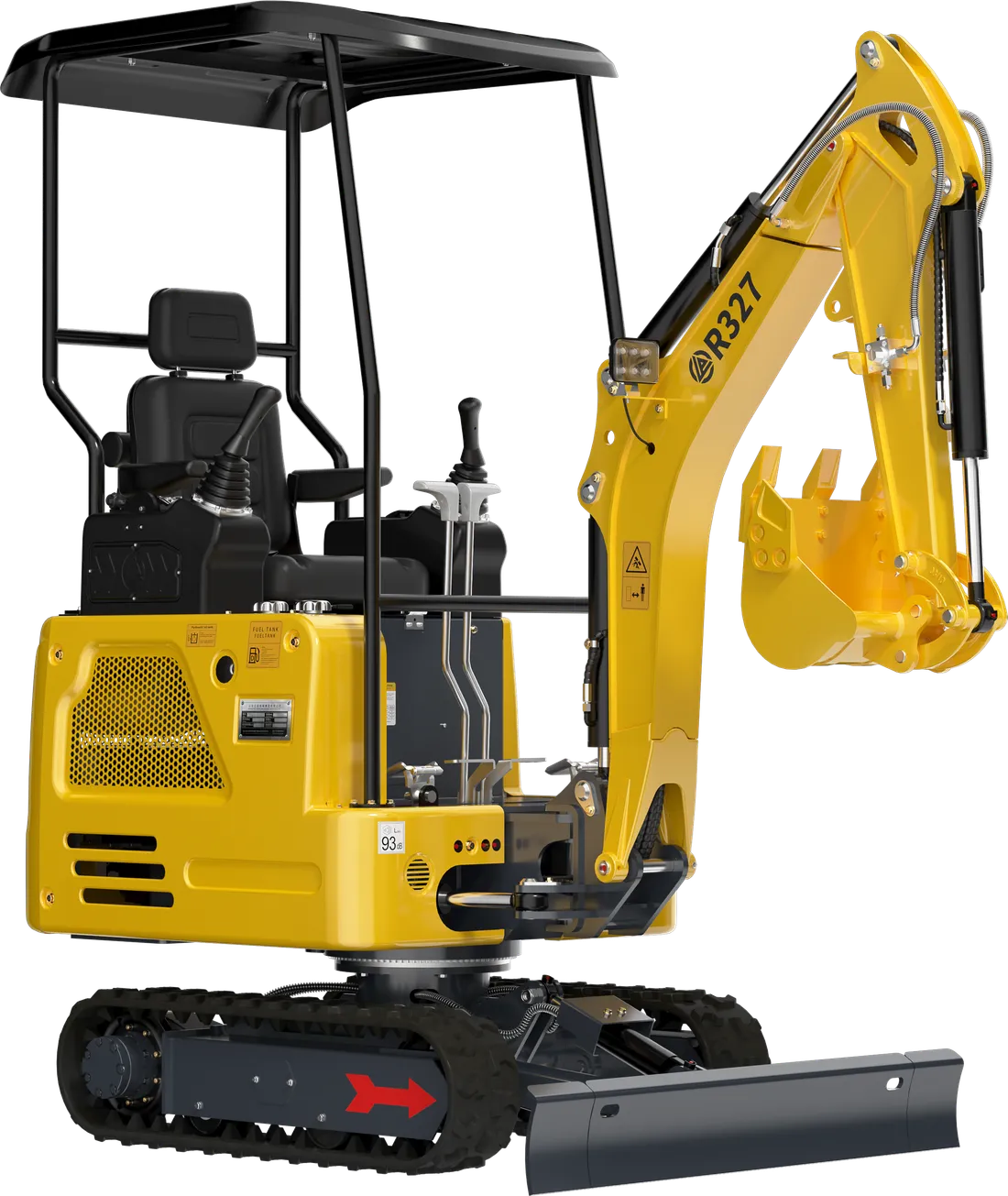
- Coolant can freeze: On water-cooled engines, if the antifreeze protection is inadequate, freezing water can damage the radiator and the engine block. The Kubota D722 in the R327 and the Kubota D1703 in the R350 are both water-cooled engines.
Before winter arrives: pre-season preparation
A round of checks done once before the weather turns cold greatly reduces morning surprises all winter long:
| Item | What to check | Note |
|---|---|---|
| Antifreeze | Level and freeze protection | Test with an antifreeze tester; follow the manual for the mixing ratio and type |
| Battery | State of charge, terminals, connections | Don’t go into winter with a weak battery; clean corroded terminals |
| Engine oil | Viscosity and change interval | Choose according to the temperature–viscosity table in the manual; if a change is nearly due, do it before winter |
| Fuel filter and water separator | Water build-up, filter condition | Check or replace the filter before winter, drain the water |
| Hydraulic oil | Level, type and cleanliness | See the manual’s recommendation for cold climates |
| Grease | All grease points | Use a grease suitable for low temperatures; water finds it harder to get into a well-greased pin |
| Preheating system | Whether the glow plug system works | If in doubt, have it checked by a service centre |
| Lights and cab | Work lights, beacon, glass, wipers, door seals | Lighting is essential on short days |
For choosing hydraulic oil for winter conditions and when to change it, see our hydraulic oil guide; for general engine maintenance habits, see our Kubota diesel engine maintenance guide.
You can do some of these checks yourself; for items such as the glow plug, charging and cooling systems, if you are not sure, book a pre-season check through our technical service line on 0552 947 92 09. Having the check done before the first hard frost also saves you queuing when the service centre is at its busiest.
Starting a mini excavator in winter: the cold-morning routine
- Walk-around: Check around the machine for ice, snow and leaks, and clear any ice from the steps. See whether the tracks have frozen to the ground.
- Water separator: If your machine has a water separator, check it and drain off any water that has collected.
- Preheating: Switch on the ignition; if there is a preheat indicator, wait for it to go out.
- Cranking: Don’t hold the starter for longer than the manual specifies. If the engine doesn’t start, wait a while and try again; repeated long attempts drain the battery and wear out the starter motor.
- Warm-up: Once the engine is running, let it warm up at low revs for a few minutes; check that the oil pressure and charging lights have gone out.
- Hydraulic warm-up: Release the hydraulic lock and follow the hydraulic warm-up method in the manual. The general approach is to circulate the oil by operating all the functions a few times with slow, unloaded movements.
- Travel: If the tracks are frozen, don’t force them; first clear the ice and soil around them, then move off slowly.
- The first few minutes: Don’t go straight into heavy work; spend the first few minutes on light jobs. Until the oil has warmed up, don’t drive the cylinders hard to the end of their stroke, and avoid movements that bend cold-stiffened hoses at sharp angles.
Three things are strictly off limits. Don’t start and warm up the engine in a closed garage or anywhere without ventilation; exhaust fumes can be fatal in an enclosed space. Don’t try to heat the fuel line, tank or filter with a naked flame. Unless your manual explicitly allows it, don’t use starting spray; it can be dangerous on engines with a preheating system.
Fuel: freezing and water
Fuel is one of the most common reasons an engine won’t start in winter, or stalls after starting. To prevent it:
- Use winter-grade diesel in cold regions. Ask whether the diesel sold at your local filling station is suitable for winter conditions. If you are thinking of using a fuel additive, only use products approved by the engine manufacturer.
- Fill the tank in the evening. A full tank leaves less empty space for condensation to form in.
- Drain the water separator regularly. If the collected water freezes, it can cut off the fuel flow completely.
- Take care with fuel carried in jerrycans. Keep the cans closed and dry; condensation can form inside a cold can too.
Leaving the engine idling for hours so that it “doesn’t get cold” is not a good solution either: an engine running at low load doesn’t warm up properly and wastes fuel. Follow the idling and warm-up recommendations in your manual; if you are taking a long break, switch the engine off and repeat the warm-up routine when you get back to work.
If the engine won’t start because the fuel has thickened, don’t force it. Wait for the weather to warm up or, if you can, move the machine to a warmer, ventilated area; replace the clogged filter. Don’t run the engine in an enclosed space in the meantime.
Battery and electrics
On cold mornings, the battery is usually the first part to struggle. To keep it healthy throughout the winter:
- Keep the terminals clean and tight; corrosion reduces the starting current.
- If the machine won’t be used for days, turn off the battery isolator switch (if fitted), or remove the battery and keep it charged somewhere warm.
- If the charging light comes on while the machine is working, have the charging system checked; in winter, a battery left undercharged won’t be able to start the machine the next morning.
- If you need to jump-start the machine, follow the connection sequence in the manual; the gas given off by the battery is flammable, so keep it away from sparks.
- Don’t try to charge or jump-start a battery you suspect has frozen; let it thaw in a warm place first, and replace it if the case is swollen or cracked.
We cover the symptoms of battery, fuse and starter problems in detail in our guide to electrical faults.
Frozen ground, snow and ice: working on site
- Don’t force the frozen top layer with the bucket. Forcing frozen ground strains the bucket teeth, pins and cylinders. Breaking up the frozen crust with a ripper first makes the job easier; we explain how to use one in our ripper guide.
- Underground services are still there in winter. When digging in frozen ground, too, get information on electricity, gas and water lines from the relevant utilities.
- You can’t know what’s under the snow. Manhole covers, kerbs, holes and stumps can’t be seen under snow. Mark out the work area before it snows, or walk over it first to check.
- Ice and slopes together are dangerous. Track grip drops markedly on icy surfaces; don’t work on icy slopes.
- Light snow pushing with the blade: You can push snow over small areas with the dozer blade, but the machine is not a snowplough. Work at low speed and don’t press the blade hard into the ground; watch out for pavements and kerbs.
- Protect yourself too: Steps and tracks are icy, so keep three points of contact when climbing on and off. Thick gloves reduce control precision; if possible, work in a heated cab wearing thin gloves.
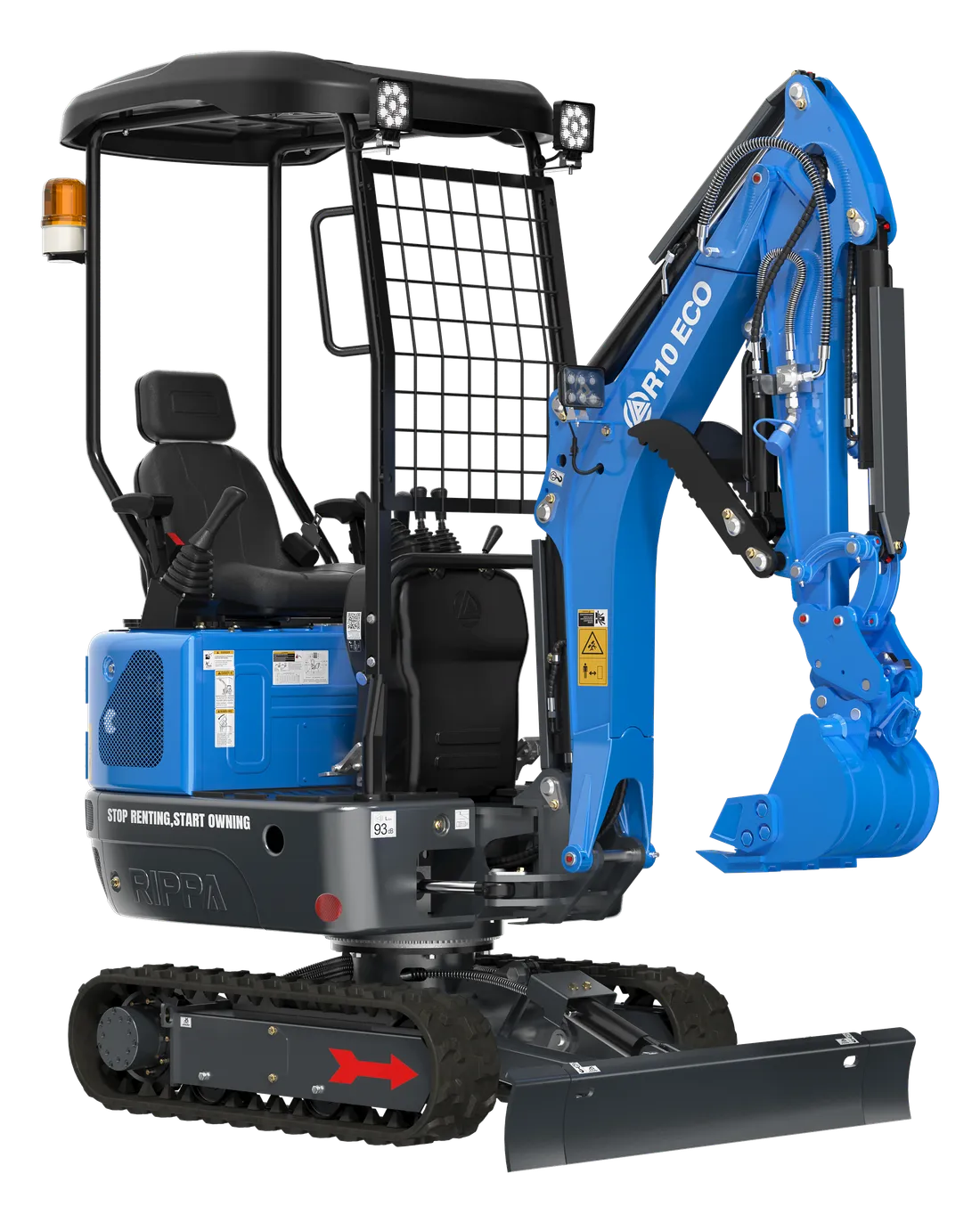
On a machine that will work regularly through the winter, the cab is a matter of productivity and safety rather than comfort. The 3.5-tonne R350, which comes with an enclosed cab and air conditioning, has the edge here; we compare the pros and cons of the two options in our cab or canopy guide.
Planning winter work: short days, frozen soil and backfilling
In winter, it is not just the machine: the work itself needs to be planned differently. A few simple adjustments protect both the machine and the quality of the work:
- Schedule heavy work for the warmest hours of the day. Spend the first hour of the morning on the warm-up, the walk-around and light jobs; plan hard digging and breaker work for the middle of the day.
- Allow for the light. On short days, darkness falls early. Make sure the work lights and beacon are working; when visibility drops, leave precision work for the next day.
- Don’t let the excavated soil freeze. A spoil heap left uncovered overnight freezes into hard lumps, which makes backfilling harder the next day. If possible, fill the trench in the same day or cover the heap.
- Don’t backfill with frozen soil. The voids left between frozen lumps lead to settlement when the weather warms up and the soil thaws, and the surface above sinks. Backfill with unfrozen material, in layers.
- Make open excavations safe. In a snowfall, an open trench or pit becomes invisible. Surround every excavation that will stay open overnight with tape and warning signs.
End-of-day and winter maintenance routine
- Clean the tracks. Mud left between the tracks and rollers freezes overnight; in the morning it strains the tracks and rollers, and can even stop the machine from travelling.
- Park the machine on dry ground or on timber boards. This stops the tracks freezing to wet ground.
- Lower the bucket and blade to the ground. Choose a parking position that leaves as little of the cylinder rods exposed as possible; ice and dirt on the rods can damage the seals.
- Fill the tank. It reduces condensation and saves you fuel trouble in the morning.
- Grease. In particular, grease the pins that have been in water and mud; fresh grease pushes the water out.
- Clean the windows and mirrors. On a machine with a cab, this makes de-icing easier in the morning.
- Turn off the battery isolator switch (if your machine has one) and take the key with you.
If you won’t be using the machine at all over the winter, the storage and restarting steps are different; we cover them in our long-term storage guide.
Summary
- Cold puts strain on the battery, fuel, engine oil and hydraulics all at once.
- Antifreeze, battery, filters, oils and grease should be checked before winter arrives.
- Morning routine: walk-around, preheating, short starting attempts, engine and hydraulic warm-up.
- Don’t run the engine in an enclosed space, and don’t heat the fuel line with a flame.
- Don’t force frozen ground with the bucket; use a ripper, and don’t forget underground services.
- At the end of the day, cleaning the tracks, filling the tank and parking on dry ground cut down on winter breakdowns.
You’ll find the battery and electrical parts needed for pre-winter servicing in our electrical parts category, and if you have cold-starting problems or a fault, you can message our technical service line on WhatsApp.