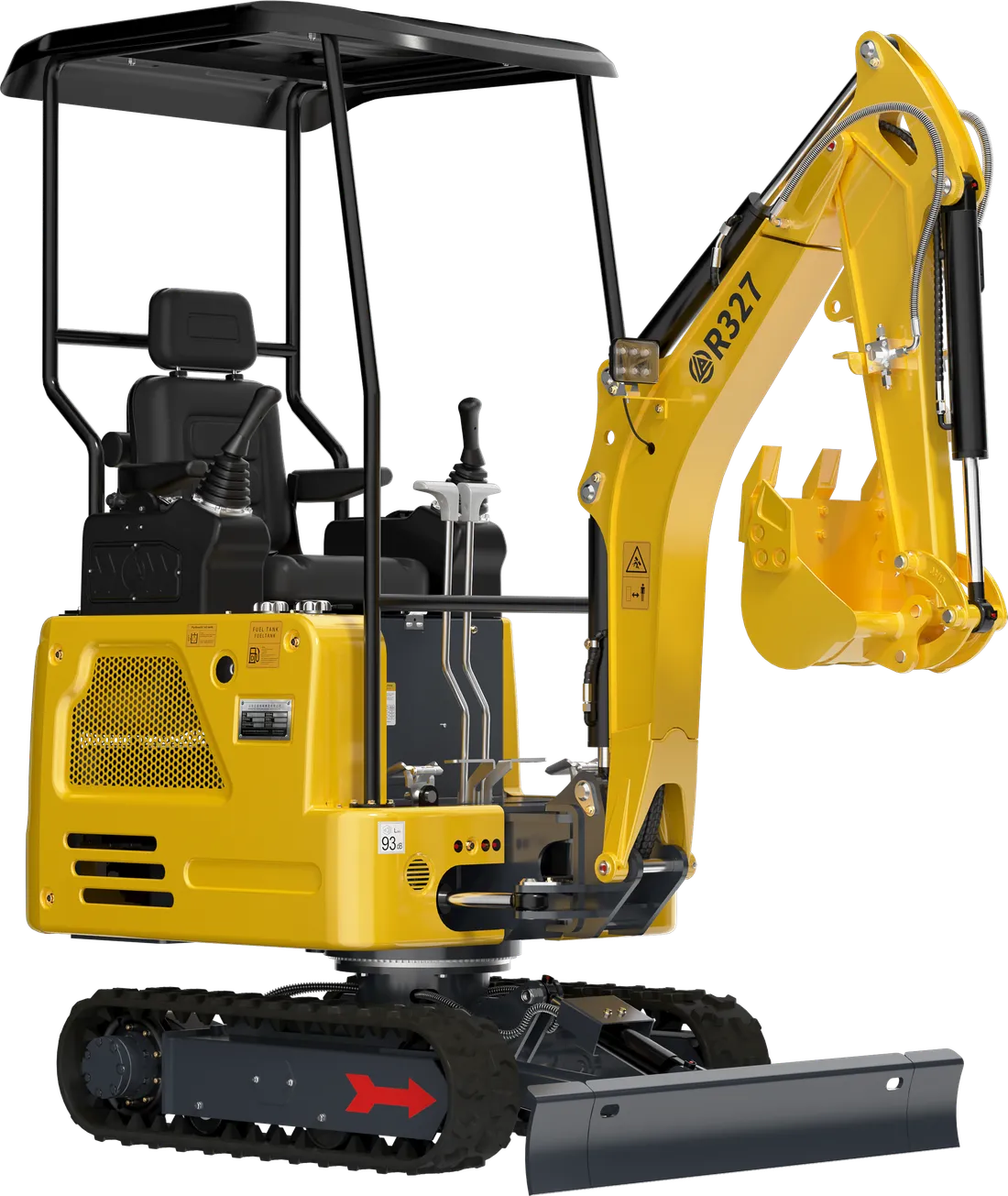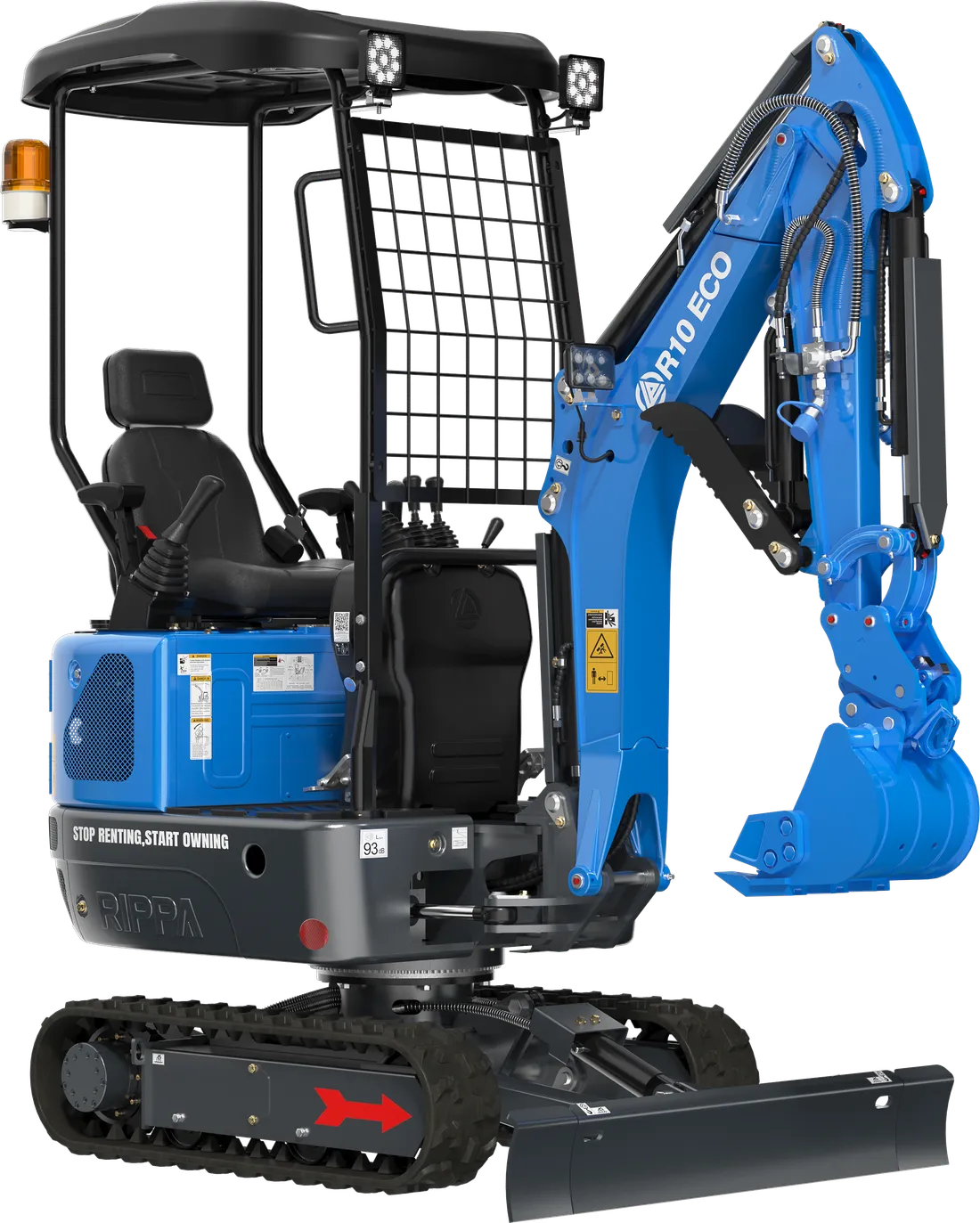
Two things determine the life of a diesel engine: the service schedule and day-to-day operating habits. The schedule is written in the manual; the habits are in the operator’s hands. The same engine can run trouble-free for years with one operator, while with another it can wear out much sooner.
The machines at EKSFORK use Kubota and Yanmar diesel engines; the R327 has a Kubota D722 and the R350 a Kubota D1703. This guide focuses on the daily habits that give these engines a long life: starting and warming up, the balance of revs and load while working, ending the day properly, fuel discipline, oil and cooling checks, and reading the warnings the engine gives you.
We cover service intervals separately in our service schedule; rather than repeating them here, we look at how you use the engine every day. In every case, the engine’s and the machine’s operator’s manuals take precedence.
The Kubota engines in the R327 and R350: a quick introduction
| Machine | Engine | Power | Cylinders | Cooling |
|---|---|---|---|---|
| R327 | Kubota D722 | 21 HP | 3 | Water-cooled |
| R350 | Kubota D1703 | 25 HP | 3 | Water-cooled |
Both engines are compact three-cylinder, water-cooled diesels. Water cooling means a radiator, thermostat, water pump and coolant. That is why the cleanliness of the cooling system and the coolant level are an integral part of the daily check on these engines. In the R350’s technical data, fuel consumption is given as 1.3 L/h; real consumption varies with the workload, the operator and the engine speed used.
The R10, on the other hand, uses a different engine, the Koop 192F diesel. Most of the habits below apply to it too, but follow that engine’s own manual for the details.
Starting the day right: glow plugs, starting and warm-up
For a cold diesel engine, the first few minutes matter more than the rest of the day. The oil hasn’t yet reached all the surfaces, the parts haven’t reached working temperature and their clearances haven’t settled yet.
- Do the daily round before starting: engine oil, coolant, fuel and belt.
- If your machine has a glow plug system, hold the key in the glow position for the time given in the manual; in cold weather this takes longer. Most small diesels in this class have glow plugs that make cold starting easier.
- Press the starter in short bursts. If the engine doesn’t start, don’t crank it for a long time; follow the waiting time in the manual to let the battery and starter motor rest.
- When the engine starts, check that the oil pressure and charging lamps go out. If they don’t, stop the engine and don’t start work until you have found the cause.
- Spend the first few minutes at low revs, then warm the engine up with light work. Don’t force a cold engine at full throttle and under heavy load.
- Warm up the hydraulics too: in the cold, use the controls slowly and move the cylinders several times without running them to the end of their stroke.
Whether the starter turns over healthily at the first attempt depends largely on the battery. Keep the terminals clean and tight, and don’t let white or green corrosion build up on the battery connections. If the starter turns more sluggishly with each passing morning, have the charging system and battery checked before the battery dies completely and leaves you stranded on site.
Leaving the engine idling for a long time “to warm up” isn’t right either; a diesel engine warms up faster and more healthily under light load. We explain the precautions to take for fuel, battery and coolant in winter conditions in our winter use guide.
While working: the balance of revs, load and idling
A diesel engine is at its most efficient and healthiest at the working speed recommended in the manual and under a reasonable load. Three habits tire the engine unnecessarily:
- Lugging the engine: Overfilling the bucket or forcing it into very hard ground keeps dragging the engine speed down. If the revs drop and black smoke increases, the engine is overloaded; take smaller bucketfuls or loosen the ground first.
- Unnecessary full throttle: Constantly running at maximum revs on light work increases fuel use, noise and wear, but hardly speeds up the job.
- Long idling: Leaving the engine idling during long breaks runs up the hour meter and wastes fuel. Combustion residues can build up in diesels that run for long periods at low load, especially in cold weather. Switch the engine off during long waits.
Keep an eye on the gauges regularly while working: coolant temperature, oil pressure and the charging warning. When one of these gauges goes out of the ordinary, saying “I’ll just finish this job” is the shortest way to turn a small problem into a major breakdown.
Don’t forget that hours spent idling also count towards service hours. A machine whose hour meter is climbing fast but whose output is low is often a sign of unnecessary idling. Talking to operators about this directly affects both the fuel bill and the service frequency.
Ending the day right: cool-down, fuel and a quick round
- Don’t stop the engine straight after heavy work; run it at low revs for the time given in the manual and let the temperatures even out.
- Before stopping the engine, lower the attachment to the ground and engage the hydraulic safety lever.
- Fill the fuel tank at the end of the day; the less empty space in the tank, the less water condenses overnight.
- Do a quick round while the engine cools: is there a new leak, a loose belt or dust building up on the fins?
- Note the hour meter reading; this is the easiest way not to miss an upcoming service threshold.
This five-minute close-down saves you from greeting the machine the next morning with a cold engine, an empty tank and an unnoticed leak.
Fuel discipline: clean diesel, a full tank
The most sensitive parts of compact diesels are the fuel pump and injectors. The biggest danger to these parts is water and dirt; the damage often builds up silently and one day shows up as loss of power or hard starting.
The R327’s fuel tank holds 10 L, which means frequent refuelling on busy days. Every refuel is a new opportunity for dirt and water to get into the tank. On small machines that refuel often, a clean can, a filter funnel and wiping around the cap before opening it are therefore even more important.
- Buy fuel from a reliable source; in the winter months, use the winter-grade fuel suitable for your region.
- Keep cans closed and clean, and use them only for fuel.
- Don’t run the tank completely dry; air gets into the fuel line and sediment from the bottom can be drawn into the system.
- Check and drain the water separator regularly.
Monitoring fuel consumption is also a diagnostic tool. Establish your own average by noting for a few weeks how much fuel your machine uses per day or per hour on similar jobs. If consumption starts to rise noticeably on the same job, consider that something has changed in the air filter, the fuel system or the way the machine is being used, and look for the cause.
We explain the maintenance of the fuel filter and water separator in detail in our filters guide.
Oil and coolant: the level every day, the type from the manual
Check the engine oil level every day, with the machine on level ground and the engine stopped. If the engine has only just been stopped, wait a short while for the oil to drain back into the sump. The level should be between the two marks; too much oil is as harmful as too little and can cause foaming and leaks.
The oil’s quality grade and viscosity are given in the manual; most diesel engine manuals also give a table for choosing viscosity by outside temperature. A noticeable drop in the oil level between two services is a sign of oil burning or a leak; note every top-up with its quantity.
Check the coolant in the expansion tank with the engine cold. Never open the radiator cap while the engine is hot; pressurised, hot coolant can cause serious burns. Use coolant of the type and mixing ratio given in the manual, don’t mix different types of antifreeze, and have the antifreeze concentration measured before winter.
Breathing and keeping cool: the air filter and radiator fins
In farming and landscaping work, one of the engine’s biggest enemies is the straw, pollen, seeds and dust in the air. These collect first on the radiator and oil cooler fins; as the fins clog, the engine heats up and the temperature gauge climbs.
- Check the fins on the daily round; in dusty work and work with a lot of straw, look at them during the day as well.
- When cleaning, use low-pressure air or water in the direction recommended in the manual; don’t wash them so close and at such high pressure that you flatten the fins.
- Check the fan belt for tension and cracks; a loose belt weakens both cooling and charging.
- Squeeze the air filter’s dust ejector valve every day; check the filter more often in dusty work.
- Look for cracks or leaks in the radiator hoses and clamps.
Even a small leak in the air path makes the engine draw in unfiltered air. Take the hose and clamps between the air filter housing and the engine as seriously as the filter itself.
Be careful when cleaning the engine compartment too. Don’t wash the engine before it has cooled down; cold water on hot parts can cause damage. Don’t point a pressure washer directly at electrical connections, the air intake or the points the manual warns about. Cleaning off oil and dust build-up regularly, on the other hand, helps you spot leaks early and helps the engine shed heat more easily.
What is the engine telling you? Smoke, noises and warning lamps
An engine usually gives advance notice of its problems. The table below is a starting point for a first interpretation; a definite diagnosis is a job for service.
| Symptom | Possible cause | First step |
|---|---|---|
| Black smoke under load | Overloading, a clogged air filter, a fuel system problem | Reduce the load and check the air filter; if it persists, call service |
| Brief white smoke at a cold start | Cold combustion, condensation | Should disappear once warm; if it persists, call service |
| Constant white smoke, coolant level dropping | Possibility of coolant getting into the combustion chamber | Stop the engine and contact service |
| Bluish smoke, oil level dropping | Oil burning or overfilled oil | Check the oil level; if it persists, call service |
| Oil pressure lamp on | Low oil level or oil pressure | Stop the engine immediately and check the level |
| Temperature gauge climbing | Clogged fins, a loose belt, low coolant | Remove the load, cool down and stop the engine as described in the manual; don’t open the radiator cap while hot |
| A new, metallic knocking noise | Possibility of a mechanical fault | Stop the engine and contact service |
You will find a broader list of these symptoms in our fault symptoms guide. We explain what to do to protect the engine if you won’t be running the machine for a while in our guide to long-term storage.
When you talk to service, note when the symptom started, whether it appears with the engine cold or hot and the hour meter reading; if possible, take a short video of the smoke or noise. This information speeds up the first remote assessment considerably.
Summary: a daily engine habits checklist
- Check the oil, coolant, fuel and belt before starting.
- Observe the glow time, don’t crank the starter for long and make sure the lamps go out.
- Warm the engine up with light work; don’t force a cold engine under heavy load.
- Don’t lug the engine, and avoid unnecessary full throttle and long idling.
- Give the engine a short cool-down after heavy work and fill the tank at the end of the day.
- Keep the fins and air filter clean; take every deviation on the gauges seriously.
For engine parts, take a look at our engine spare parts; you can send any questions about the engine in your R350, R327 or other machines, with the model and serial number, to our service line on WhatsApp.