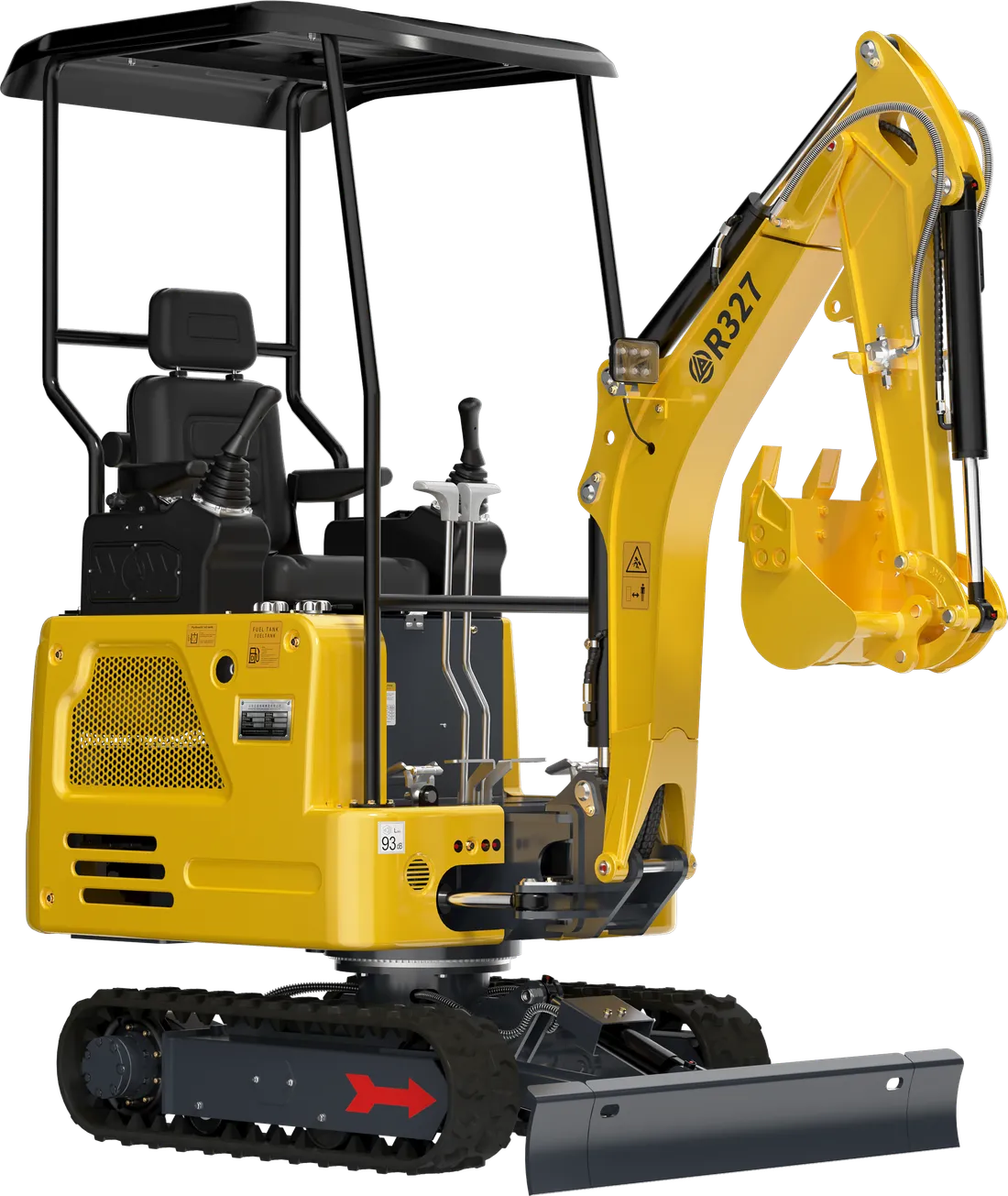
Every mini excavator’s operator’s manual has a maintenance table, but on site that table often stays in the glovebox. Maintenance is remembered when a noise appears or the oil turns dark, parts are hunted for on the last day, and the machine stops in exactly the busiest week of the job. Whatever they are called on site — mini excavators, mini diggers or compact diggers — the maintenance logic for these machines is the same.
This guide doesn’t replace the manual; on the contrary, it helps you turn the manual’s intervals into a schedule you can actually follow on site. We explain what is typically done at each stage from the daily check to the 500-hour service, in which conditions the intervals get shorter, and who should do the maintenance with which materials.
A note at the outset: service intervals and oil types vary from machine to machine, and even between different engines from the same brand. The intervals below are typical values often seen on compact machines; your machine’s operator’s manual always takes precedence.
Base the schedule on the hour meter
On construction machines, the service schedule is kept by operating hours, not by mileage. The hour meter, which advances while the engine runs, shows the machine’s real use. Time spent idling counts too; oil ages and filters get dirty while the engine idles.
The second rule is the “whichever comes first” rule. Most manuals give the service interval both in hours and by calendar. On a machine that works little, even if the hours aren’t reached, the oils absorb moisture over time and lose their properties; that is why there is a calendar limit.
The third rule is keeping records. A simple maintenance log is enough:
- Date and hour meter reading
- Work done, for example an engine oil and filter change
- Name and quantity of the parts and oil used
- Observations: leaks, noises, wear
- A photo of the replaced part and of the hour meter
This record makes it easier to plan the next service, and it helps when you sell the machine or during a warranty claim. Don’t wait for the meter to pass the threshold before ordering parts; get everything ready a few days before the threshold.
Example (sample figures — calculate with your own usage): Imagine a new machine that will work about 600 hours a year. During the year, the 50-hour checks are done every week, the 250-hour service comes at 250 hours and the 500-hour service at 500 hours; if the manual requires it, the running-in service in the first 50 hours is added to these. If you divide the threshold hours by your average weekly use, you can see in advance which week each service will fall in and plan it for quiet days instead of the busiest ones.
Daily maintenance: 10–15 minutes at the start of the shift
The daily check is the cheapest way to catch most faults before they grow. With the machine on level ground, the attachment lowered and the engine cold, do this round:
- Walk round the machine: are there oil or fuel spots underneath, loose or missing parts, damaged panels?
- Check the engine oil level on the dipstick; it should be between the two marks.
- Check the coolant level in the expansion tank. The Kubota D722 on the R327 and the Kubota D1703 on the R350 are water-cooled engines; never open the radiator cap while the engine is hot.
- Check the hydraulic oil level in the sight glass, with the machine in the position described in the manual.
- Check the fuel level and any water or sediment in the water separator, if fitted; drain it if necessary.
- Check the air filter indicator or dust ejector valve; don’t skip this step in dusty work.
- Check the radiator and oil cooler fins for a build-up of straw, leaves and dust.
- Check the track tension visually; clear stones and mud jammed in the tracks and rollers.
- Grease the boom, dipper arm, bucket, thumb and dozer blade pins.
- Check the hoses, couplings and cylinder rods for leaks, scratches and chafe marks.
- Test the lights, horn, warning lamps, safety lever and seat belt.
- Check that the bucket pin retainers and visible bolts are in place.
The list looks long, but once it becomes a habit it takes no more than fifteen minutes. After starting the engine, watch the gauges and warning lamps for the first few minutes; if the oil pressure or charging lamp doesn’t go out, don’t start work.
The mini excavator 50-hour service and weekly checks
On a machine working eight hours a day, 50 hours is roughly one week. At this interval, the typical jobs done in addition to the daily checks are:
- Draining the water and sediment that collect at the bottom of the fuel tank, via the drain plug if fitted
- Measuring the track tension and adjusting it to the value in the manual
- Checking the fan belt for tension and cracks
- Cleaning the battery terminals and checking that the connections are tight
- Checking the grease condition of the slewing ring bearing and gear (on some machines this has a longer interval)
- In dusty work, checking the outer air filter element and cleaning it as the manual allows
- Checking the bucket teeth and the dozer blade mounting bolts
The first 50 hours on a new machine
Many manufacturers require the first oil and filter change on a new machine much earlier than the normal interval; the aim is to flush out the fine metal particles produced during the running-in period. Some manuals also bring the first hydraulic return filter change forward. Find out the first service hour for your own machine from the manual and don’t postpone this service. We explain what to watch for during the running-in period separately in our first 50 hours guide.
The mini excavator 250-hour service: the first big round of oil and filters
On most compact machines, 250 hours is the threshold for the first major periodic service; some manuals ask for these jobs at slightly shorter or longer intervals. A typical list looks like this:
- Engine oil and engine oil filter change (with the oil grade and viscosity specified in the manual)
- Fuel filter change (at 500 hours on some machines)
- Cleaning or replacing the outer air filter element
- Cleaning the outside of the radiator and cooler fins, checking the coolant hoses and clamps
- Checking the oil level in the travel gearboxes
- Checking the grease condition of the slewing ring gear
- Adjusting the fan belt tension
Draining the engine oil while the engine is warm helps it flow better, but hot oil and parts carry a risk of burns, so wear gloves. After the change, run the engine briefly, stop it and check the level again; the new filter takes up some oil. We explain what each filter does, with replacement tips, in detail in our filters guide.
The mini excavator 500-hour service: filter set and gearboxes
At 500 hours all the 250-hour jobs are repeated and longer-life parts are added to the list. Typically:
- Fuel filter and fuel pre-filter element, if fitted
- Hydraulic return filter and pilot line filter, if fitted (this interval is shorter with breaker use)
- Hydraulic tank breather filter
- Changing the travel gearbox oil (at 1,000 hours on some machines)
- The inner (safety) air filter element, if the manual calls for it at this interval
- Measuring the antifreeze concentration in the coolant, especially before winter
- A general check of the engine mounts, exhaust connections and belts
The hydraulic oil itself is usually not changed at 500 hours, but this service is a good opportunity to assess the oil’s colour, smell and clarity. We cover choosing hydraulic oil and the steps for changing it in a separate guide.
The service schedule at a glance
The table below summarises a typical compact excavator schedule. Intervals vary by machine; update the table with the values in your own manual and keep it with the machine.
| Interval | Main jobs | Who does it? |
|---|---|---|
| Every day / start of shift | Levels, leak round, greasing, filter indicator, track and safety checks | Operator |
| Every 50 hours | Fuel tank sediment, track tension, belt, battery, slewing ring grease | Operator |
| First 50 hours (new machine) | First engine oil and filter change and first hydraulic filter change, if the manual requires them | Trained staff or service |
| Every 250 hours | Engine oil and filter, fuel filter (on some machines), air filter, gearbox oil level | Trained staff or service |
| Every 500 hours | Fuel and hydraulic filters, breather filter, gearbox oil (on some machines), antifreeze check | Trained staff or service |
| 1,000 hours and above / yearly | Hydraulic oil (at the interval in the manual), coolant, engine jobs such as valve adjustment | Service |
Shorten the intervals in severe conditions
The intervals in the manual are usually given for normal operating conditions. If any of the following describes your work, plan to shorten the intervals:
- Using a hydraulic breaker: A breaker heats the hydraulic oil and increases contamination; many manufacturers shorten the hydraulic filter and oil intervals for breaker work.
- Dusty environments: In work such as demolition, dry soil and stony ground, the air filter is checked every day and the cooler fins are cleaned more often.
- Working in mud and water: The pins can be greased during the shift as well; the tracks and undercarriage should be cleaned every day.
- Extreme heat: The cooler fins and oil levels are watched more closely.
- Cold weather: The battery, fuel and the antifreeze concentration in the coolant are checked before winter.
- Fuel of doubtful quality: The water separator is drained more often and the fuel filter is changed earlier.
Let’s be honest: shortening the intervals looks like an extra cost at first. But a filter or a tub of grease is a small item next to the damage that overheated oil or a pin left dry can cause.
Who does the maintenance, and what should you have to hand?
The daily and 50-hour checks are the operator’s job; the basic operator training given on delivery is a good start for this. The 250 and 500-hour services can also be done by experienced staff, but the right parts, the right oil and clean working are essential. Internal adjustments to the engine and hydraulic system, and fault diagnosis, are a job for service.
So as not to leave the job half-done on service day, have these to hand:
- A filter set and gaskets suitable for your machine
- Engine oil and hydraulic oil of the grade given in the manual
- Grease and a grease gun
- A clean drain pan, a funnel and rags
- A container with a lid for waste oil and filters; hand these over to authorised collection points in line with environmental regulations
Order parts with your machine’s model and serial number; 382 parts, including engine spare parts, are shipped from stock the same day. If you would like service to carry out the maintenance, you can create a request using the service request form. When you open a request, also send a photo of the hour meter, the last entry in the maintenance log and any problems you have noticed; that way the right parts are prepared first time and the machine doesn’t have to stop twice.
A note on the warranty: at EKSFORK, machines come with a 2-year or 2,000-operating-hour warranty. Having the services done on time and recorded makes things easier in the event of a warranty claim; check the detailed conditions in your warranty certificate and take a look at our warranty guide.
Summary
- Base the schedule on the hour meter; service is due at whichever comes first, the hour or the calendar limit.
- The daily round takes fifteen minutes and catches most faults early.
- At 50 hours the focus is on fuel sediment, track tension and belts; at 250 hours on engine oil and filters; at 500 hours on the filter set and gearboxes.
- Breakers, dust, mud and extreme temperatures shorten the intervals.
- Write every service in the log and get parts ready before the threshold; your machine’s manual always takes precedence.
To get a maintenance kit ready for your machine or book a service, find your machine on our mini excavator models pages and send your model and serial number to our service line on WhatsApp.