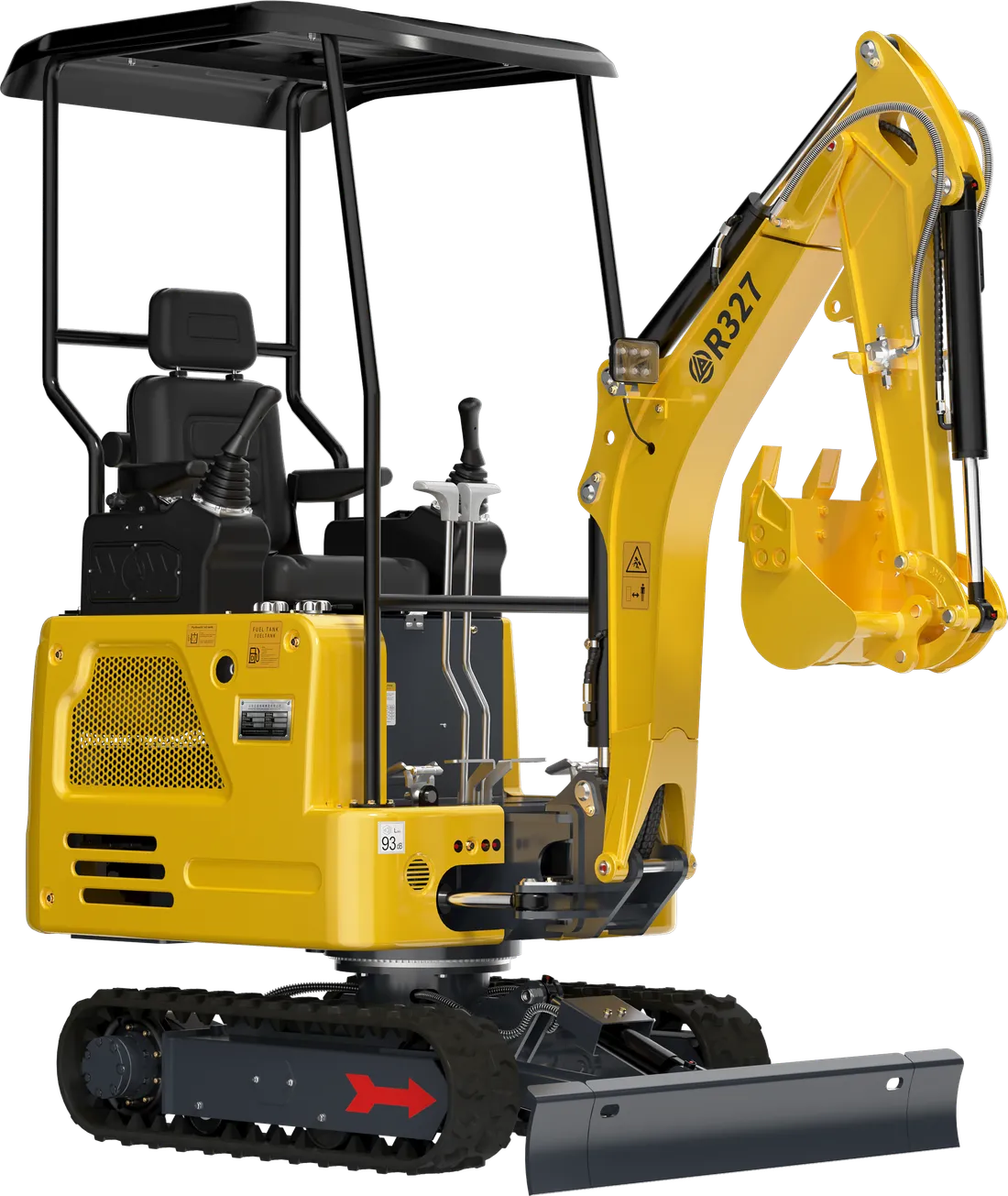
When you take delivery of a new machine, the first instinct is usually to put it straight onto the hardest job: the digging, breaking or ploughing work you had in mind when you ordered it is already waiting. Yet a machine’s first operating hours shape the years that follow.
During this period, the engine parts, hydraulic connections, tracks and pins bed in. Mistakes made here often don’t cause a fault straight away; they come back a few hundred hours later as oil loss, a weeping fitting or early play. By then, tracing the cause back is almost impossible.
In this guide we take you step by step through the first 50 hours of a new mini excavator, tracked tractor or electric forklift: what is happening, what to do, what to put off and what to record. We have just one rule: the running-in instructions in your machine’s operator’s manual always take precedence over this article. We explain the general framework and the reasons behind it.
Why is there a running-in period? What “beds in” on a new machine
However precisely factory parts are machined, it takes time for them to adapt to each other under real loads. The running-in period exists so that this happens in a controlled way. Changes take place in five main areas:
- Engine: The piston rings bed in to the cylinder walls and the bearings to the shafts. During this process the engine’s oil consumption may be slightly higher than that of a run-in engine.
- Hydraulic system: Hose and fitting connections settle with the first pressure cycles. Very fine particles left over from assembly enter circulation and collect in the filter.
- Undercarriage: New tracks can stretch a little in the first hours; the tension changes.
- Pins and bushings: New contact surfaces bed in to each other. During this period, grease is the only protection against wear.
- Bolts and clamps: Some connections can work loose as they settle with vibration.
What this list has in common: everything on it can be fixed free of charge or very cheaply if spotted in time. If it isn’t spotted, a small bit of looseness turns into wear on an expensive part.
Day one: delivery and first start
At EKSFORK we provide set-up and basic operator training on delivery. Treat this training not as a formality but as the first step of the running-in period. During the training, ask to be shown on the machine: where to read the oil and coolant levels, the grease points, the hour meter, what the warning lights mean and how to stop the machine in an emergency.
Write the machine’s serial number and the reading on the hour meter on the delivery note. A small reading on the meter may come from factory tests and loading and unloading; what matters is that the starting point is recorded. We have listed the other points to check on delivery, item by item, in our delivery checklist guide.
At the first start, follow this sequence:
- Start the engine and let it idle for a few minutes; check that the warning lights go out.
- Operate each hydraulic function (boom, arm, bucket, slew, dozer blade) a few times without load, slowly and without running into the end of the stroke. This gets oil to every point in the system.
- Drive the machine forwards and backwards a short distance on level ground and try turning.
- Stop the engine, recheck the levels after a few minutes and look under the machine.
Engine: load, revs and warm-up in the first 50 hours
During the running-in period, both extremes are harmful to the engine: constant full load and long idling. The ideal is to work at moderate, varying loads.
Don’t load it before it warms up
After a short idling period, start a cold engine on light work first. Spending the first few minutes of the morning travelling, positioning and making light bucket movements gets the oil to every point.
Long idling isn’t running in either
Leaving the engine idling for hours may look like “running it in without straining it”, but it is the opposite. At low load the combustion temperature stays low, the piston rings can’t bed in properly and a glazed layer can form on the cylinder walls. If you are going to wait for more than a few minutes, switch the engine off.
Vary the revs
Instead of working for hours at the same revs and the same pace, vary the engine speed to suit the job. Using low revs for light grading and medium to high revs for digging is right for both running in and fuel economy.
Keep an eye on the gauges
On water-cooled engines (such as the Kubota D722 in the R327 and the Kubota D1703 in the R350), the coolant level and the temperature gauge are the two most important readings in the first days. On the Koop 192F engine in the R10, measure the oil level every day too. In a new engine the level can drop a little faster, so an “I’ll check it once a week” habit isn’t enough during this period.
Don’t switch the engine off straight after heavy work; let it idle for a short while so the temperature can even out.
Hydraulic system and attachments: a gentle start
The essence of running in the hydraulic system is not pushing the pressure to its peak unnecessarily. When you run a cylinder into the end of its stroke and keep holding the lever, the relief valve opens; the oil heats up without doing any work, and hoses and seals are strained for nothing. This habit costs even more on a new machine, because the connections haven’t settled yet.
For the first two weeks, do a short “leak walk-round” twice a day: in the morning before starting and in the evening when work is done. Look for weeping at the base of fittings, wetness on hoses or drip marks under the machine.
Safety note: Never feel for a leak with your hand. A fine jet of oil from a pressurised line can penetrate the skin and cause serious injury. Check a suspicious spot with a piece of cardboard or wood, mark any leak you see and tell the service team. Don’t try to tighten a fitting under pressure yourself.
Take it gradually with attachments too. In the first days, use attachments that load the system continuously — such as a hydraulic breaker, a ripper in hard ground or an auger — in short sessions, and work the machine on bucket jobs in between. Some manufacturers also require the hydraulic return filter to be changed at the first service; the aim is to flush out of the system the particles collected during running in. If your manual includes this item, don’t skip it.
Tracks, belts, pins and bolts: early loosening
Track tension: New tracks can stretch a little in the first operating hours. A slack track can come off when turning, while an over-tight track wears the rollers and drive sprocket faster than necessary. In the first days, check the tension using the method in the manual. We explain the measuring and adjustment steps in our track maintenance guide.
Belts: On belt-driven machines such as the QD35, a new belt can stretch in the first hours. If you notice a slipping noise, loss of power under load or a burning smell, have the tension checked.
Pins and bushings: Grease the grease points at the interval in the manual, and on a new machine never skip one. New grease pushes out the old grease and the dirt in it; when you see clean grease coming out around the pin, the job is done. You can find which point to grease how often in our pins, bushings and greasing guide.
Bolts and clamps: In the first days, visually check points such as the bucket linkage, guards, hose clamps and battery connections. Leave connections with a torque value given in the manual for the service team to check at the first service; a bolt tightened by guesswork can cause as much trouble as a loose one.
Hour-by-hour running-in schedule
The table below is a general framework. Hour intervals vary from machine to machine; your manual determines at what hour the first service is done.
| Period | What to do | Watch out |
|---|---|---|
| First start | Levels, warm-up, operating all functions slowly, recording the hour meter reading | If a warning light stays on, stop work |
| First day (first 8 hours) | Light and medium work, frequent short breaks, end-of-day leak walk-round | No long breaker sessions and no constant full load |
| 8–20 h | Track or belt tension, clamps, greasing | Note any loosened connection and report it to the service team |
| 20–50 h | Increasing the load gradually, moving to the normal work pace | Write any drop in the oil level in the log |
| First service (hours as per the manual) | Engine oil and filter, hydraulic return filter if required, general inspection | Have it done at an authorised service centre and recorded |
Once running in is over, you move on to the regular service schedule. We cover the daily, 50, 250 and 500-hour checks in detail in our service schedule guide.
Running in an electric forklift: battery, mast and brakes
An electric forklift has no engine oil or piston ring issues, but that doesn’t mean the first weeks don’t matter. The RF20E uses a 60V gel battery pack (12V 200Ah × 10); the charging time is given as 6–8 hours and the run time as 8–10 hours. What to watch in the first weeks:
- Battery: Carry out the first charges according to the instructions in the manual, don’t run the battery completely flat and don’t interrupt charging unnecessarily. Note how many hours the battery actually lasts you in the first weeks; this is the most reliable way to spot a drop in performance later. See our forklift battery guide for details.
- Mast: The triplex mast chains and channels bed in during the first days. Increase load and height gradually before combining full capacity with full height; have the chain tension checked at the first service.
- Brakes and steering: Get to know the machine’s braking response and turning unladen at first, at low speed and in an open area.
Keeping records: for the warranty and for a future sale
The cheapest but most neglected part of the running-in period is record keeping. A simple notebook is enough: date, hour meter reading, work done, oil or coolant added and your observations. A one-line note such as “slight squeak from the right-hand track” can help the service team find a problem much faster a month later.
At EKSFORK, machines come with a warranty of 2 years or 2,000 operating hours. Under warranty conditions, having the scheduled services done on time and recorded is usually decisive; read the conditions in your warranty certificate and have the first service done at an authorised service centre. We have collected the habits that protect your warranty in our warranty guide. A maintenance log is the strongest document you can show a buyer when you sell the machine years later.
As the first service approaches, get the filters and oils in advance; a part left until the last day delays the first service. We ship spare parts from stock on the same day.
Quick checklist
- I have read the running-in instructions in the manual and noted the hour mark for the first service.
- I wrote the serial number and the starting hour meter reading on the delivery note.
- Every morning I check the engine oil, coolant, hydraulic oil and fuel levels.
- I don’t load the engine before it warms up, and I don’t leave it idling for long.
- In the first days I break breaker work and hard-ground jobs into short sessions.
- I don’t force the cylinders at the end of their stroke.
- I grease the grease points at the interval in the manual, without skipping any.
- I checked the track or belt tension in the first days.
- I check for leaks with a piece of cardboard, not my hand.
- I make a short note every day; I will have the first service done at an authorised service centre.
If your first service is approaching, you can book an appointment using the service request form. You can explore the models and their maintenance requirements on our machinery page, and send any questions about running in to our technical service WhatsApp line.