Farm machinery stands idle after the harvest, landscaping equipment over winter, and site machines between two jobs — for weeks, sometimes months. Standing idle may look like rest for a machine, but it isn’t: the battery discharges by itself, water collects in the fuel tank, exposed hydraulic rods rust and rodents nest in the wiring. On a machine that has stood for a long time, some faults only show up on the day it is started again.
In this guide we explain how to prepare a machine for a lay-up, what to check while it stands and what sequence to follow when you restart it. The advice follows the same logic for mini excavators, tracked tractors, electric forklifts and floor cleaning machines; for machine-specific details, the operator’s manual always takes priority.
How long counts as “long”?
There is no hard limit, but you can draw a practical distinction:
- From a few days to two weeks: Normal parking is enough. Lower the equipment to the ground, switch off the battery isolator and take the key.
- More than a month: Follow the preparation steps in this guide and do a short check once a month.
- A season or longer: Full storage preparation is needed, along with an antifreeze check against the lowest temperature expected during the lay-up and a thorough inspection before restarting.
Where the machine stands matters as much as how long. A machine kept in a closed, dry, well-ventilated area does not face the same risks as one left outdoors in the rain and sun. If you don’t have indoor space, at least choose firm, dry ground where water doesn’t collect.
Example: If you park a tracked tractor after the harvest in November and plan to take it back to the field in April, the machine will stand for about five months, including a whole winter. In that case, the antifreeze, battery and fuel preparation must not be skipped, and you should set aside time for a check a week before the restart date. That way, if a part is needed, the first day of the season isn’t spent waiting for it.
Before storage: cleaning and maintenance
Don’t leave the machine dirty. Mud and plant debris hold moisture, start rust under the paint and hide leaks. Before storage, follow these steps:
- Wash the machine thoroughly and let it dry. Don’t aim the pressure washer directly at electrical connections, the instrument panel or seals.
- Check for leaks. On a clean machine a new oil mark is easy to spot; you will compare against this at the check after the lay-up.
- Bring forward any service that is nearly due. Used engine oil carries dirt and combustion residues; if a scheduled service is approaching, it is usually better to change the oil and filter before storage.
- Grease all the grease points. Fresh grease pushes water out of the joints and prevents corrosion.
- Note any worn or faulty parts. The lay-up is a good opportunity to source parts, so you won’t be waiting for parts on restart day.
System-by-system preparation table
The table below summarises what each system needs before, during and after the lay-up. If your machine’s manual has additional steps, add them to the table.
| System | Before storage | During the lay-up | Before restarting |
|---|---|---|---|
| Engine | Oil and filter change if due; cover the air intake and exhaust | Check for leaks and signs of rodents | Remove the covers, check the oil level |
| Fuel | Fill the tank, drain the water separator | Check that the tank cap is tightly closed | Drain the water separator, change the filter if needed |
| Cooling | Check the antifreeze ratio for winter conditions | Check for leaks | Check the coolant level |
| Battery | Charge fully, switch off the battery isolator or disconnect the negative terminal | Check the voltage monthly, charge if needed | Clean and reconnect the terminals |
| Hydraulics | Lower the equipment, leave the rods retracted as far as possible | Check exposed rod surfaces | Check the oil level, warm up the functions without load |
| Undercarriage | Clean the tracks and rollers | Store on firm, dry ground | Check track tension and rollers |
| Electrical wiring | Inspect the wiring harnesses | Check for signs of rodents | Check the cables for gnawing and corrosion |
Fuel and cooling: the silent risks
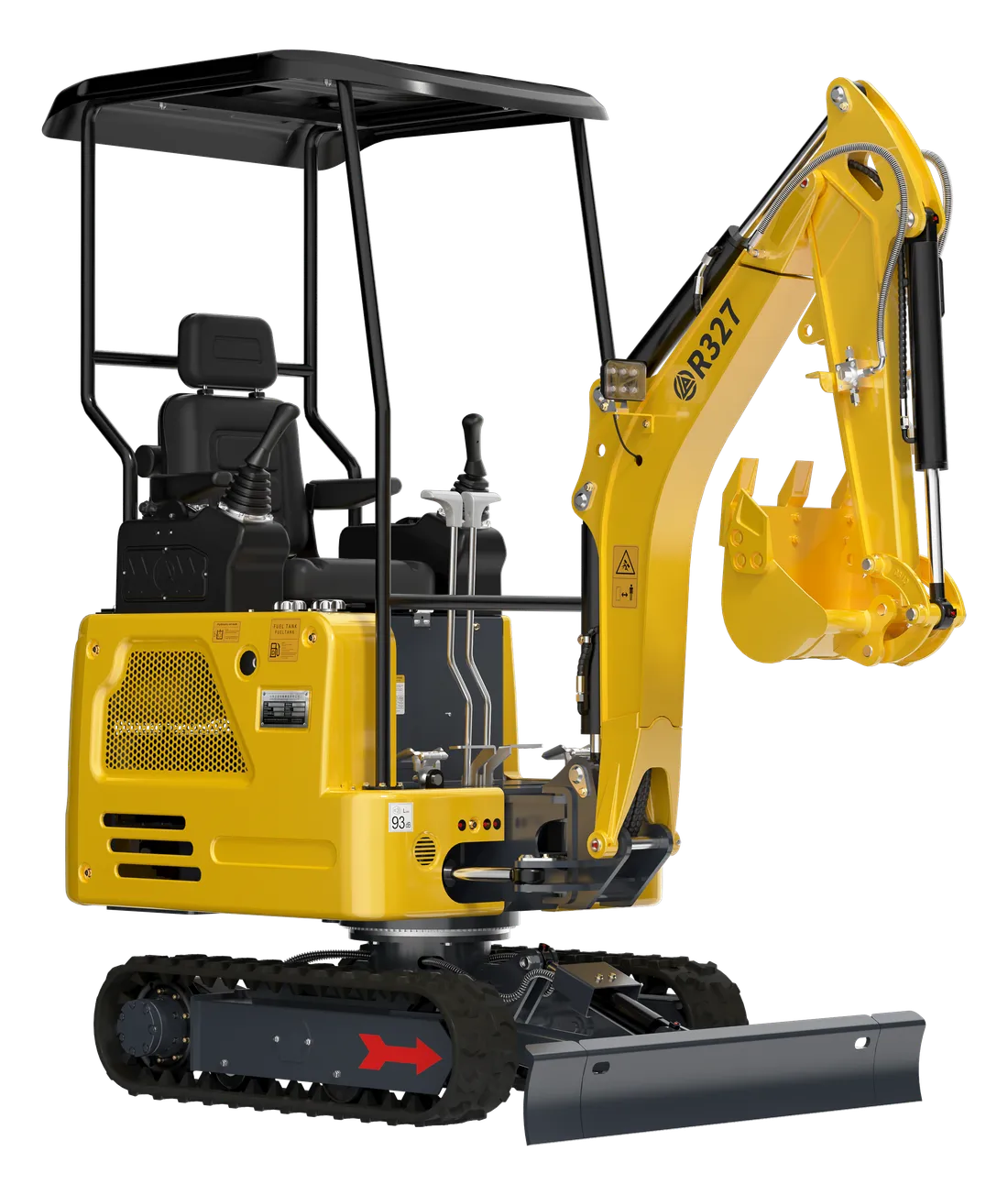
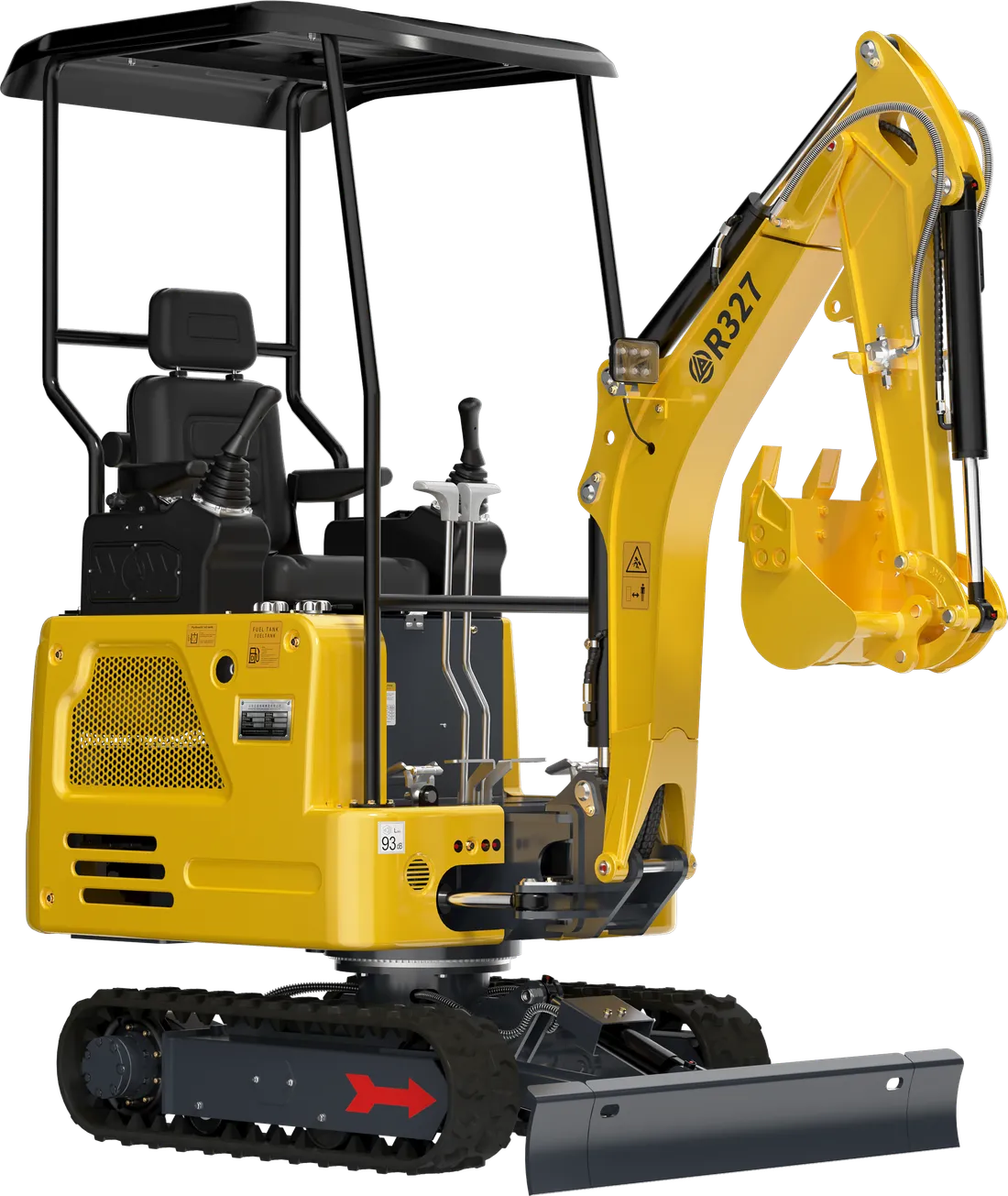
One of the most insidious problems during a long lay-up is water collecting in the fuel tank. The air in the tank condenses with the temperature difference between night and day, and the droplets sink beneath the diesel. Leaving the tank full reduces the air space and so limits condensation. On machines with small fuel tanks — 10 litres on the R327, for example, and 16 litres on the QD35 tracked tractor — filling the tank is an easy, cheap precaution.
Diesel doesn’t stay fresh for ever either; during long lay-ups, sediment and water can build up in the tank. Before restarting, drain the water separator on the fuel filter. If you see cloudiness or sediment in the fuel, change the filter and, if necessary, have the tank cleaned.
On water-cooled engines — such as the Kubota engines in the R327 and R350 and the QD35’s engine — the antifreeze ratio of the coolant must suit the lowest temperature expected during the lay-up. A cooling system that is not protected against freezing can crack the engine block and radiator in a hard frost. We explain winter preparation in detail in our using a mini excavator in winter guide.
The battery: a stored machine’s first casualty
A battery slowly discharges even if the machine never runs; small consumers left connected speed this up. A fully discharged lead-acid battery left that way for a long time can suffer permanent loss of capacity. A flat battery in the cold also risks freezing.
- Fully charge the battery before storage.
- Switch off the battery isolator; if there isn’t one, disconnect the negative (-) terminal.
- Measure the voltage once a month; if it has dropped, charge it with a suitable charger.
- In very cold regions, consider removing the battery and storing it somewhere dry and frost-free.
We explain how to measure the voltage of a starter battery and how to interpret the readings in our electrical faults guide.
On electric machines the situation is more critical, because the battery drives the machine itself. On a forklift with a gel battery such as the RF20E, or on battery-powered floor cleaning machines, leaving the battery flat can seriously shorten the life of the battery pack. Charging fully before storage, and at the intervals recommended by the manufacturer during the lay-up, is essential; you will find the details in our forklift battery maintenance guide.
Hydraulics, undercarriage and body
Hydraulic rods: Cylinder rods left exposed can rust from moisture and dust; a rusty rod cuts the seals once the machine is working again. When parking, lower the equipment to the ground and choose a position that keeps the rods retracted as far as possible. Keep the exposed parts of the rods clean; some users apply a thin protective film of oil to them. We explain how rod damage affects the seals in our hydraulic cylinder guide.
Tracks and ground: Store the machine on firm, dry ground rather than muddy or permanently wet ground. If possible, keep it indoors or in the shade; sunlight ages rubber and plastic parts over time.
Covers: If you cover the machine, use a breathable tarpaulin. Airtight plastic sheeting traps the moisture that condenses underneath and can speed up corrosion. Secure the tarpaulin so that it can’t rub against the body in the wind and wear through the paint.
Rodents: On machines that stand for a long time, mice and similar animals can nest in the engine compartment and gnaw cables and hoses. Cover the air intake and exhaust outlet, keep the area around the machine clean, and don’t leave feed scraps or sacks nearby.
Attachments: Clean and grease the bucket, auger, breaker and other attachments, and store them off the ground in a dry place. Close the hose and coupling ends of hydraulic attachments with dust caps; dirt that gets into an open coupling is carried into the machine’s hydraulic system when the attachment is refitted. For attachments such as hydraulic breakers, follow the manufacturer’s storage recommendations.
Security: Don’t leave the key in the machine, and store the machine where unauthorised people, especially children, cannot get to it. On machines with a cab door, lock the door.
A monthly routine during the lay-up
Even while the machine is standing, pay it a short visit once a month. A fifteen-minute walk-round prevents big surprises after the lay-up:
- Look around and under the machine for oil, fuel or coolant stains.
- Measure the battery voltage; charge it if needed.
- Look for nests and gnawed cables or hoses in the engine compartment.
- Check that the cover is in place and that no water has collected underneath it.
- Look for the first signs of rust on exposed rod surfaces.
Opinions differ on running the engine from time to time during a lay-up. The general rule is: if you are going to run it, don’t do so briefly — run it until the engine reaches normal operating temperature, and move the hydraulic functions through their full range a few times without load. Running it for only a few minutes can do more harm than good, as it cannot evaporate the moisture that forms inside the engine. If your operator’s manual gives a recommendation on this, follow it.
Restarting: step by step
After a long lay-up, don’t put the machine straight to work. Follow this sequence:
- Remove the covers and plugs. Make sure you have removed the covers from the air intake and exhaust. Hanging a reminder note on the ignition key when you put the machine away stops this step from being forgotten.
- Do a general check. Look for nests, gnawed cables, cracked hoses and signs of leaks.
- Check the fluid levels. Check the engine oil, hydraulic oil, coolant and fuel levels.
- Prepare the fuel system. Drain the water separator; if necessary, change the fuel filter and bleed the system as described in the manual.
- Connect the battery. Clean the terminals, connect them and check the voltage.
- Grease. Pump fresh grease into all the grease points.
- Start up and observe. Start the engine and let it idle; check that the oil pressure and charging warning lights go out. If a warning light stays on, stop the engine.
- Warm up the hydraulics and travel drive. While the engine warms up, slowly move the hydraulic functions through their full range a few times without load; test the travel drive over a short distance.
- Do a final check. Stop the engine, check for leaks again and recheck the levels.
- Keep the first job light. In the first few hours, work the machine without heavy loads, listening to how it sounds and behaves.
If something unexpected happens during any of these steps — for example a warning light stays on, there is an unusual noise or a leak — don’t force it; consult the service team.
Quick checklist
Before storage:
- Machine washed, dried and checked for leaks.
- Service that was nearly due carried out, all points greased.
- Fuel tank filled, water separator drained.
- Antifreeze ratio checked.
- Battery fully charged, battery isolator switched off.
- Equipment lowered, rods retracted as far as possible.
- Air intake and exhaust covered, reminder note hung on the ignition key.
When restarting: Covers removed; fluid levels, battery, cables and hoses checked; greasing done; first start carried out without load and with care.
Don’t forget to write the lay-up and restart dates in the maintenance log together with the operating hours; on machines under warranty in particular, this record is part of your service history.
You can browse engine parts you might need after a lay-up on our engine spare parts page. If anything unexpected happens when you restart, message our service line on WhatsApp.