The least discussed side of buying or renting a mini excavator is transport. Once the machine reaches the site everything seems easy; but every move from one job to the next means loading the machine onto a vehicle, tying it down, driving and unloading it. If not done correctly, each of these steps can cause harm to the machine, the vehicle and people on the road.
This volume explains step by step how to transport a mini excavator safely: first the weight calculation, then the choice of vehicle and trailer, followed by ramp loading, tie-down, the journey and unloading. At the end of each stage there are concrete points you can check with your own vehicle and your own machine.
A general rule from the start: the transport instructions in your machine’s operator’s manual always take priority. The recommendations below are meant to sit alongside the manual, not replace it.
First calculate the total weight
The first step of a transport plan is not the weighbridge but the calculator. The real load you will carry is more than the machine itself:
- Machine: Use whichever is greater of the operating weight and the machine weight in the spec sheet.
- Attachments: Besides the one fitted to the machine, any breaker, auger or spare bucket put on the deck is added to the load. Weigh any attachment whose weight you don’t know, or ask its seller.
- Other load: Fuel can, chains, ramps, toolbox.
- Trailer: If you are towing, the trailer’s own unladen weight is also part of the total weight the towing vehicle pulls.
The weight values of the EKSFORK models are as follows; you can find all the technical values on our mini excavator pages:
| Model | Operating weight | Machine / net weight | General transport approach |
|---|---|---|---|
| R10 | 1,200 kg | 900 kg | Trailer of suitable capacity |
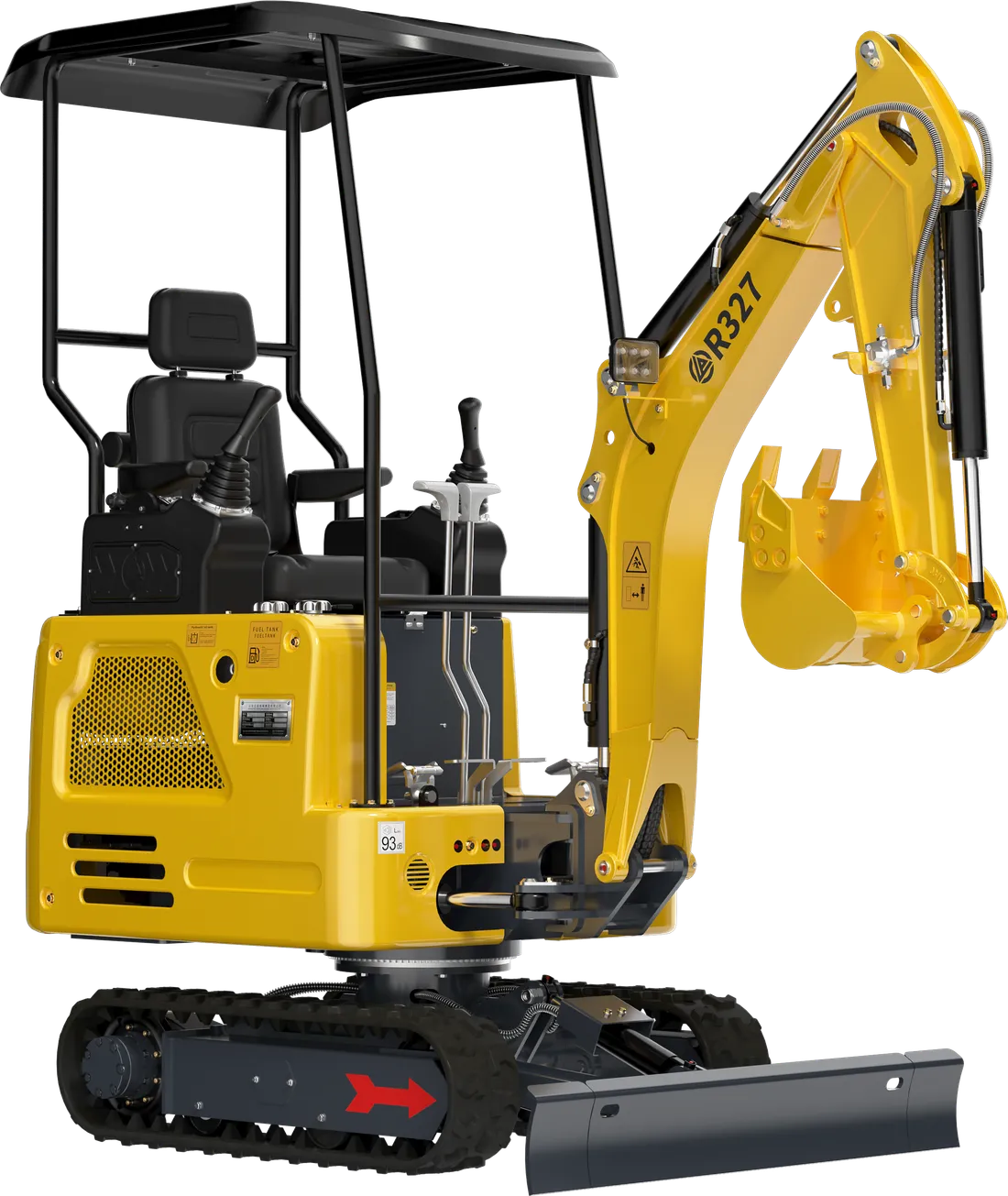
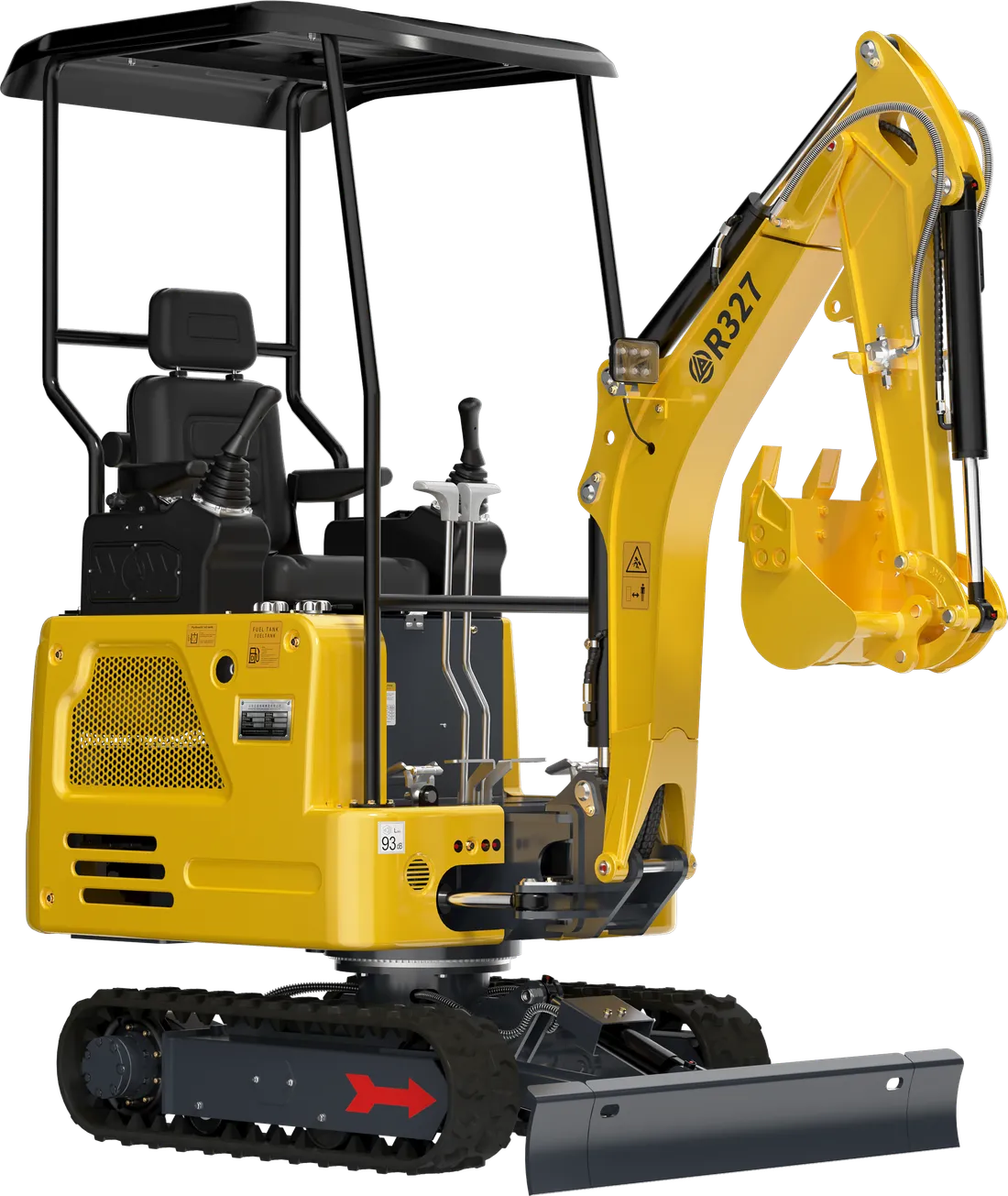
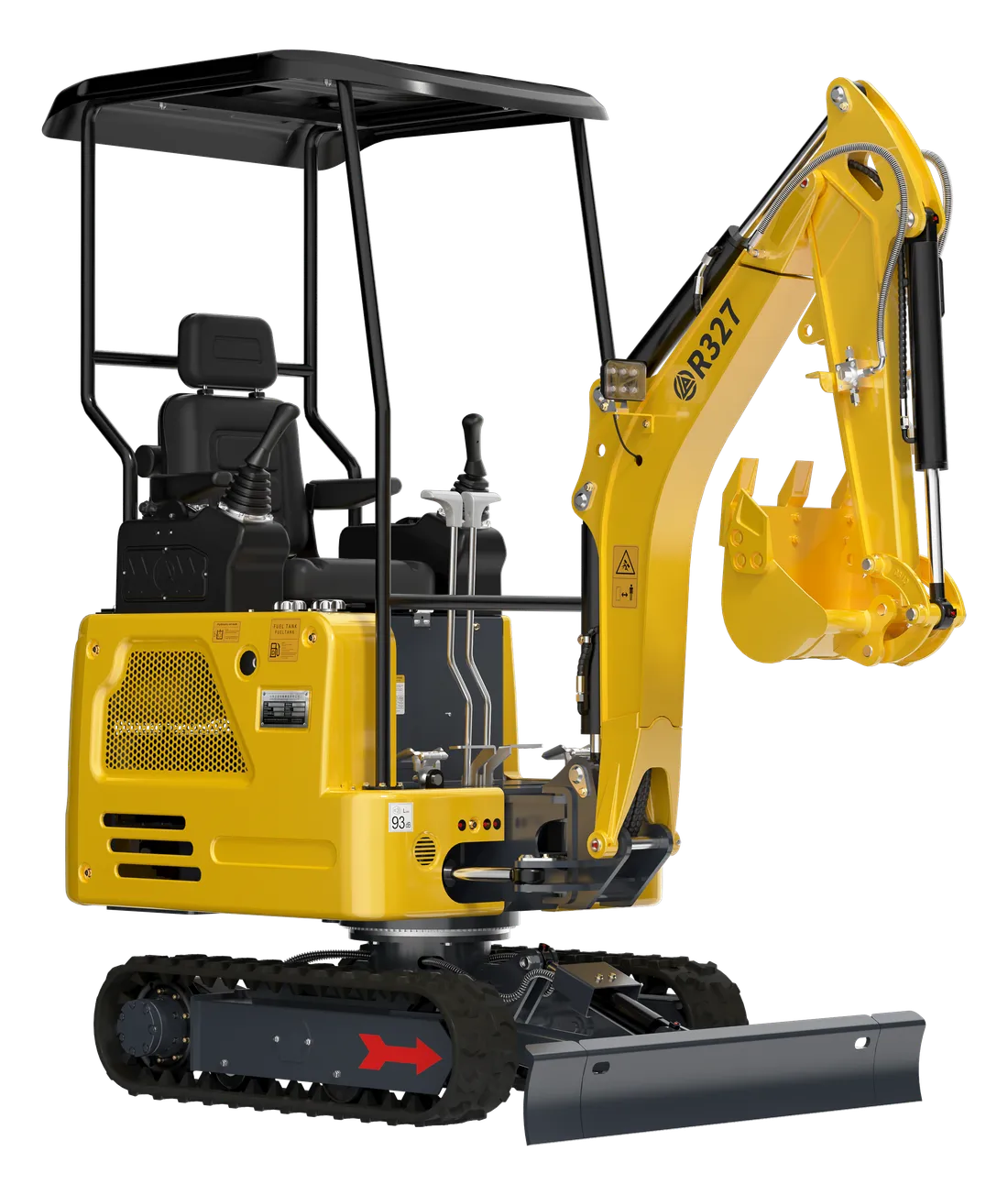
| R327 | 1,700 kg | 1,692 kg | Heavy-duty trailer or truck |
| R350 | 3,500 kg | — | Truck or professional haulage |
Example: Suppose you transport the R10 with a 60 kg attachment and 40 kg of chains, ramps and tools on the deck, on a trailer with an unladen weight of 600 kg. The total weight the towing vehicle will pull is 1,200 + 60 + 40 + 600 = 1,900 kg. This figure must stay below both the trailer’s permitted maximum laden weight and the towing limit in your vehicle’s registration documents. For mini diggers carried on trailers, the model difference feeds straight into this calculation: for the R327 the same calculation comes to 1,700 + 60 + 40 + 600 = 2,400 kg, that is, 500 kg more than the R10 example; this is why the table recommends a heavy-duty trailer or truck for the R327. The attachment and trailer weights are examples; do the calculation with the values of your own equipment.
Ease of transport is also an important measure when choosing a model. If you will move the machine often, do this calculation before buying; in the measurement form in the what size mini excavator to buy volume, your transport options have a row of their own.
Which vehicle should you use?
| Option | When is it suitable? | Point to watch |
|---|---|---|
| Pick-up load bed | Only if the bed’s capacity and dimensions are sufficient | Usually borderline; the ramp angle is steep |
| Trailer | Frequent transport of light and mid-class machines | Trailer capacity, brakes, towing vehicle’s towing limit |
| Truck | Heavy machines, long distances | Body height and loading ramp |
| Haulage service | Occasional transport, heavy machines, long journeys | Clarify responsibility for insurance and tie-down |
Whichever vehicle you choose, check three documents: the vehicle’s registration (maximum laden weight and trailer towing limits), the trailer’s registration (maximum laden weight) and your driving licence. Depending on the combined weight of the trailer and the towing vehicle, a different licence category may be required; if the load’s width or height exceeds road limits, a permit may be needed. As these rules can change, confirm the current requirements with the relevant authorities.
Even if you leave the transport to a haulage company, responsibility doesn’t disappear entirely. When getting a quote, ask: Is the capacity of the vehicle and trailer suitable for your machine? Who will do the loading and unloading? Who provides the tie-down equipment, and what condition is it in? Which insurance covers any damage during transport? Getting the answers to these questions in writing prevents any dispute at delivery from the outset.
What to look for when choosing a mini excavator trailer
- Maximum laden weight: The total of the machine and attachments must stay below this value, preferably with a comfortable margin.
- Braking system: A trailer carrying heavy loads having its own brakes reduces stopping distance and the risk of snaking.
- Deck: A sturdy deck with a non-slip surface, wide enough for the whole of the tracks to sit on.
- Ramps: Rated to carry the machine’s weight, with a surface the tracks won’t slip on and long enough. A short ramp means a steep angle, and a steep angle is the riskiest moment of loading.
- Lashing rings: Rings firmly welded to the deck, matching the machine’s four tie-down points in number and capacity.
- Lights, number plate and inspection: The trailer must be roadworthy, with its documents up to date.
Loading from a ramp: step by step
- Choose the ground: Load on level, firm and non-slippery ground. Don’t load on a sloping road or in mud.
- Secure the vehicle: Stop the towing vehicle’s engine, apply the handbrake and chock the wheels. If the trailer has a jockey wheel or stand, lower it.
- Align the ramps: Position the ramps to match the track spacing and secure their ends to the trailer; clean any wet, oily or muddy ramp.
- Prepare the machine: Clear mud and stones from the tracks; on a machine with telescopic tracks, set the tracks to the transport position given in the manual. We explain the idea behind this equipment in the telescopic tracks volume.
- Climb in a straight line: Approach the ramp square-on and in a straight line, at the lowest travel speed. Don’t correct your direction while on the ramp; if you are not aligned, come back down and approach again.
- Use a banksman: You can’t see whether the tracks are sitting fully on the ramps. Have a banksman standing to the side at a safe distance guide you; nobody should be in front of or behind the ramp.
- Position the machine: Stop the machine on the trailer so that its weight falls slightly ahead of the axle; the nose weight on the hitch must stay within the limit your vehicle allows.
- Shut down: Lower the bucket and blade onto the deck, stop the engine, release the hydraulic pressure using the method in the manual, engage the control lock and take the key with you.
Tie-down: the four-point rule
The thought that “a machine this heavy won’t move” is the most dangerous misconception in transport. Under sudden braking or on a sharp bend, the machine’s weight doesn’t hold it in place; on the contrary, it is the force pushing it forward. That is why the machine is secured at the tie-down points set by the manufacturer with at least four chains or straps, each pulling in a different direction.
On most machines the tie-down points are at the front and rear of the undercarriage and are shown in the operator’s manual. Ask where these points are on your machine at delivery, and see them with your own eyes before the first transport. Don’t confuse a ring designed for lifting with a point designed for tying down; their purpose and strength may differ.
| Practice | Right? |
|---|---|
| Attaching the chains at the machine’s tie-down points, in crossed directions | ✅ Right |
| Running a chain over a hydraulic cylinder, hose or the boom | ❌ Wrong |
| Lowering the bucket and blade to the deck and tying them down separately | ✅ Right |
| Using straps whose label can’t be read, or that are tangled or worn | ❌ Wrong |
| Securing attachments and cans on the deck separately | ✅ Right |
| Relying only on the handbrake or the friction of the tracks | ❌ Wrong |
The working load limit of chains and straps is written on their label. Don’t use equipment whose label can’t be read, that has been knotted or that shows cut marks. After tightening the tensioners, check each connection by hand; a single chain left slack increases the load on the others.
On the road: slow, careful, controlled
A loaded vehicle doesn’t behave like an empty one. Stopping distance increases, the tendency to sway on bends grows and crosswinds affect the vehicle more. Reduce your speed accordingly, and avoid sudden braking and sudden manoeuvres.
Before the journey, know the total height. Add the height of the trailer deck above the ground to the machine’s height, and assess the underpasses, bridges, cables and tree branches on your route accordingly.
Example: The R10’s machine height is 2,200 mm. On a trailer whose deck is 600 mm above the ground, the total height is about 2,800 mm. The trailer height is an example; measure your own trailer.
After the first few kilometres, stop somewhere safe and check the tension of the chains. On long journeys, repeat this check at every break; chains can loosen with vibration and the effects of the road. At breaks, also check the trailer lights, the condition of the tyres and the safety pin of the hitch. If possible, don’t set off with a heavy load at night or in bad weather; if you have to, make sure the trailer’s lights and reflectors are clean and working.
Short distances: driving the machine on its own tracks
Over short distances, such as between two neighbouring plots or from one end of the same land to the other, it is tempting to drive the machine on its own tracks instead of loading it. This is usually reasonable, but don’t overlook a few points:
- Going onto the road is a separate matter. A construction machine travelling on public roads on its own tracks may be subject to registration, permit and marking rules. Don’t take the machine into traffic without confirming the current requirements with the relevant authorities.
- Track wear: Long travel over asphalt, concrete and sharp gravel, and hard turns on the spot, wear the tracks quickly. Change direction in wide arcs.
- Kerbs and steps: A track climbing onto an edge and then dropping suddenly jolts the machine and increases the risk of tipping over. Use a timber ramp for crossings like this and approach the edge square-on.
- Slopes: On a sloping road, drive the machine in line with the slope, don’t stand sideways on it, and keep the bucket close to the ground.
Unloading and the delivery option
Unloading is the reverse of loading, but it has its own risks. Again, stop the vehicle on level, firm ground and position and secure the ramps. Be careful when removing the chains: a tensioned chain can whip as it is released. Start the engine and let it warm up briefly, lift the bucket and blade slightly off the deck and drive the machine down the ramp in a straight line, at the lowest speed. Never turn on the ramp.
If you are taking delivery of the machine for the first time, you don’t have to do the transport yourself. EKSFORK delivers to all 81 provinces, villages included; installation and basic operator training are provided at delivery. We explain how the order, haulage and delivery process works in the delivery to 81 provinces volume. And we have gathered what you need to check when the machine is delivered in the delivery acceptance checklist volume.
Short checklist: before setting off
- The total weight of the machine, attachments, equipment and trailer has been calculated
- The total is within the limits allowed by the vehicle, the trailer and the driving licence
- The ramps are sound, clean and secured to the trailer
- The machine is in the right position on the trailer; the bucket and blade are on the deck
- The engine has been stopped, hydraulic pressure released, controls locked and the key removed
- The machine has been secured crosswise at a minimum of four points, using the tie-down points
- Attachments and cans on the deck have been tied down separately
- The total height is known; the route has been checked accordingly
- A stop has been planned after the first few kilometres to check the chains
If you are looking for a light, compact machine that will be moved often, take a look at the R10; write to us on WhatsApp with your delivery address and transport questions to find out the delivery terms.