Everyone who decides to buy a mini excavator asks the same first question: “What size should I get?” Most people answer it with their budget, or with the thought “let’s get the bigger one, just in case”. Both approaches often end with the wrong machine. Whether you call it a mini excavator, a mini digger, a small digger or a compact excavator, what decides which one to buy is not the tonnage label but the dimensions of your work.
In this volume we treat tonnage not as a starting point but as the result of your measurable needs. We show step by step how to take five measurements, how each class responds to them, and how the decision is made in three example scenarios.
At the end of the article there is also a measurement form you can fill in. If you fill it in and send it to us, we can base our recommendation on your figures instead of guesswork.
What changes as tonnage grows?
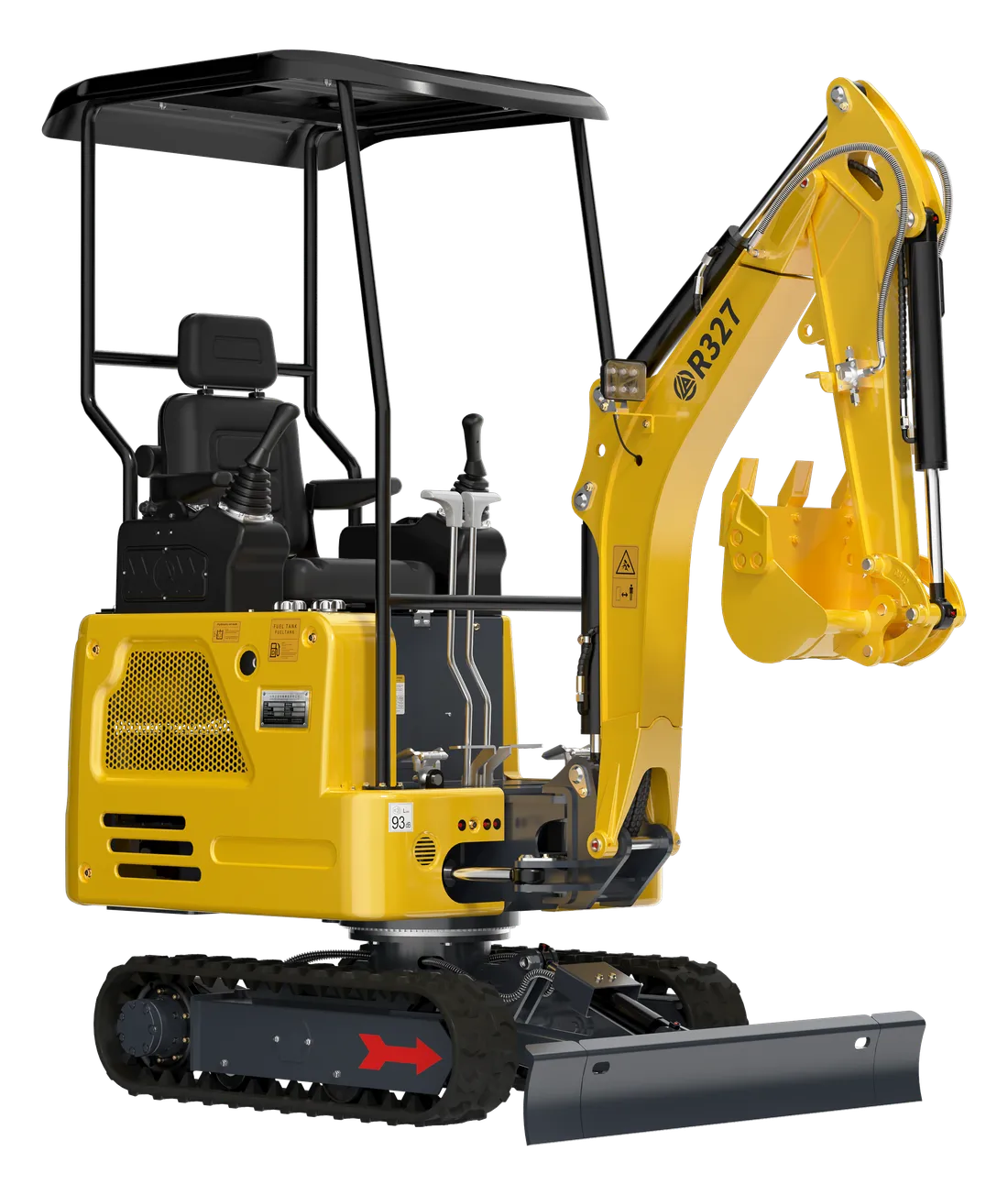
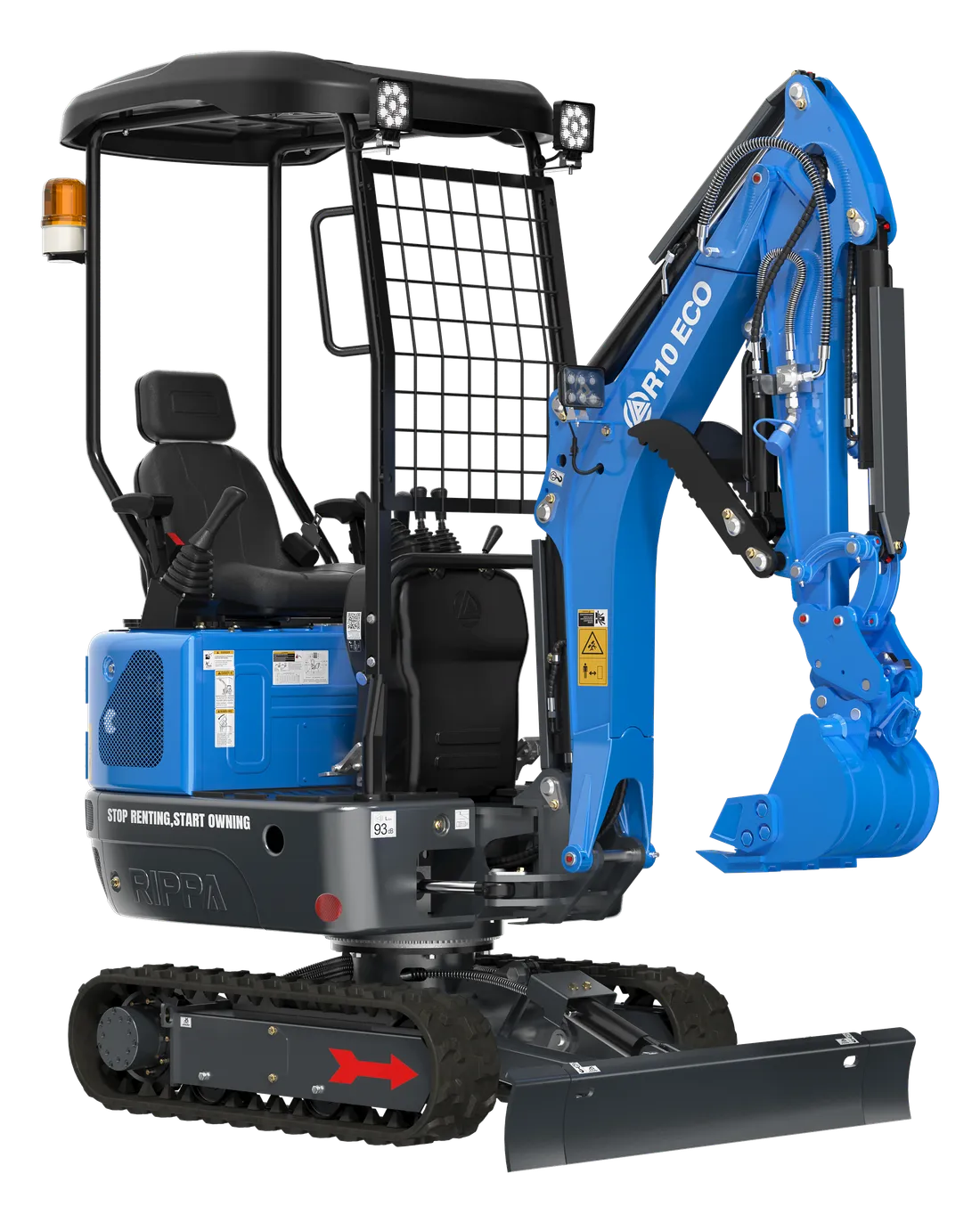
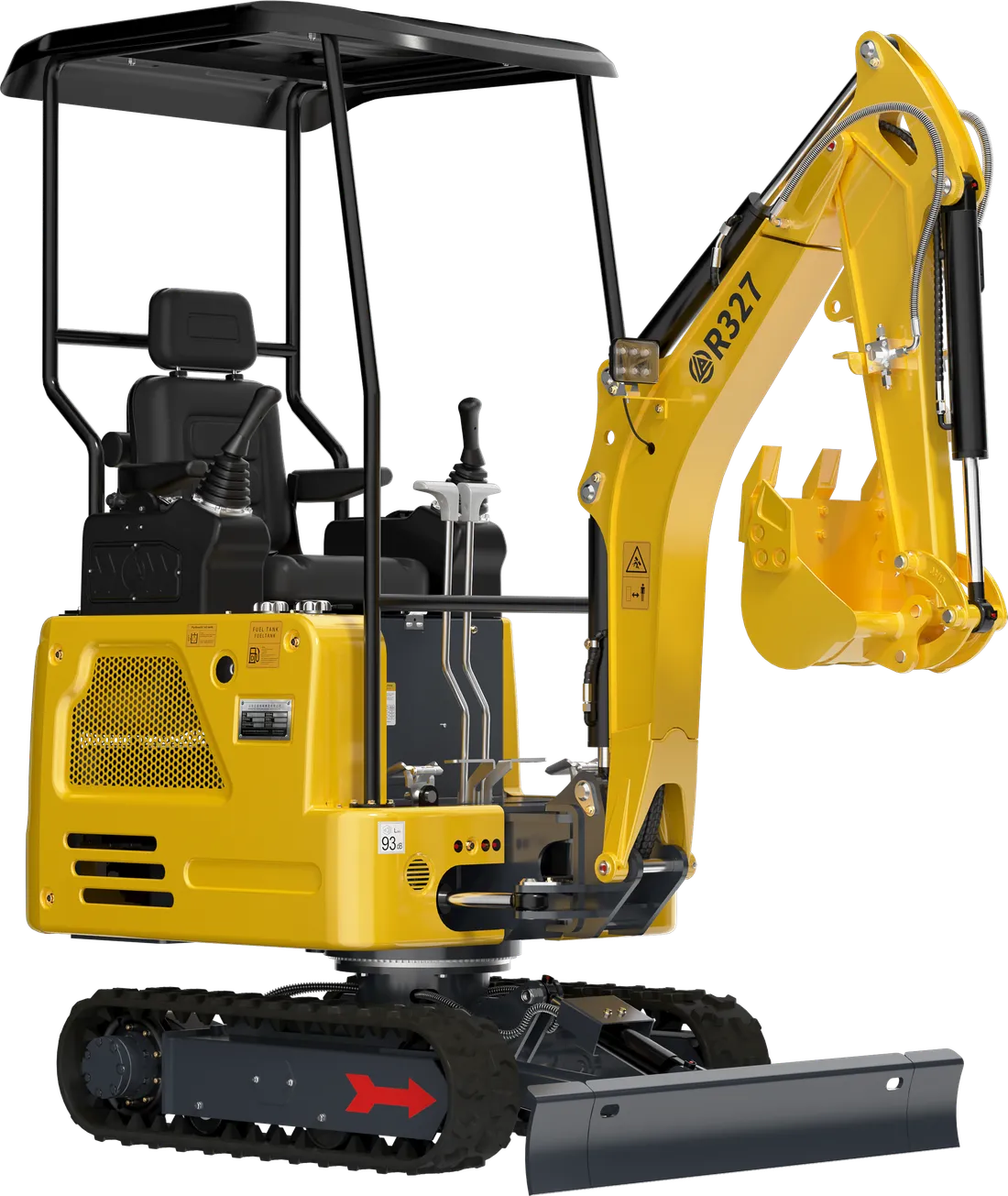
Tonnage is not just the machine’s weight; it is a package of features that grow together. Comparing the two ends of the three classes at EKSFORK makes the picture clear: the 1.2-tonne R10 has a digging depth of 1,650 mm and a digging force of 11 kN, while on the 3.5-tonne R350 these values rise to 2,927 mm and 22.5 kN. Digging force almost doubles. In the middle class, however, this rule does not apply: the 1.7-tonne R327 is about 500 kg heavier than the R10 (operating weight 1,700 kg), but its digging depth (1,580 mm) is slightly below the R10’s and its digging force is the same (11 kN). What sets the R327 apart is not depth but its heavier body, 21 HP Kubota engine, telescopic tracks and 120° boom swing.
But the other side of the coin grows too. According to the spec sheets, the R10 is 930 mm wide and the R350 1,350 mm. Operating weight rises from 1,200 kg to 3,500 kg, which means a more powerful transport vehicle, firmer ground and a bigger budget. In short, as tonnage increases, digging capability goes up, while access and ease of transport go down.
The right choice lies where these two curves cross: the smallest class that comfortably handles the great majority of your jobs but still fits into the places you need to go.
Five measurements that decide mini excavator size
Take the five measurements below on site, with a tape measure and a notebook. Deciding by measurement rather than guesswork is the main recommendation of this article.
1. Your deepest digging requirement
List the jobs you will do over the next year or two and write down the greatest depth each one needs: irrigation line, drainage pipe, sewer connection, foundation. Then add a margin to the deepest value on the list, because maximum digging depth is measured in ideal conditions and working constantly at that limit is both slow and tiring.
2. The narrowest access point
Measure the narrowest gate, garden entrance or gap between two buildings the machine will pass through to reach the work area. If there is a greenhouse, barn or indoor space, also note the ceiling or beam height. This measurement often decides the tonnage on its own: a 3.5-tonne machine will not fit through a 1-metre garden gate.
3. The character of the ground
Soft garden soil, clay, stony ground and fill compacted over years strain the same machine in very different ways. If your ground is hard and stony, you need more digging force, meaning a higher class or a suitable ripper. If the ground is very soft and marshy, also take into account the risk of a heavy machine sinking.
4. Workload and time pressure
How many metres of trench do you need to dig a day, or how many truckloads of soil? A small machine can do the same job, but with more cycles and over a longer time. If you are working against the clock, for example delivering daily work as a subcontractor, volume pushes the tonnage up.
Example: a trench 40 metres long, 40 cm wide and 1 metre deep means 40 × 0.4 × 1 = 16 m³ of soil in place; because excavated soil bulks up, the volume in the pile will be more than this. Divide this volume by the average amount you take per bucket to find how many cycles you need, and multiply by the length of a cycle to find the net digging time. The figures are an example; do the calculation with the dimensions of your own job.
5. Your transport options
How will you take the machine from one job to the next? Write down the payload and towing limits in the registration documents of your pick-up and trailer. If the machine will change location every day, ease of transport may be worth more than a few hundred kilos of digging advantage. We cover the details in our mini excavator transport guide.
A short profile of the three classes
1-tonne class (R10, 1,200 kg operating weight): If access matters above all, this class comes out on top. At 930 mm wide it fits through narrow gates, can be carried on a light trailer and leaves few marks on gardens and lawns. Its limits are depth and hard ground; it cannot go below 1,650 mm and slows down in stony ground.
1.7-tonne class (R327, 1,700 kg operating weight): This is the middle-ground class. Thanks to its Kubota D722 engine, telescopic tracks and 120° boom swing, it can get into a tight space and then gain stability by extending its tracks while working. For users with a mix of garden, greenhouse and small infrastructure jobs it is usually the most balanced option. At 1,580 mm its digging depth is slightly below the R10’s; if your depth requirement exceeds the 1-tonne class, the answer is not the R327 but the 3.5-tonne class. For transport it needs a higher-capacity trailer than the R10.
3.5-tonne class (R350, 3,500 kg operating weight): This is the class for jobs that need depth and power. With a 2,927 mm digging depth, 22.5 kN digging force and an air-conditioned enclosed cab, it suits foundations, infrastructure and long working days. You can see all the values in the R350’s technical specifications. In return, it needs a more powerful transport vehicle and wider access.
There is also a volume in which we compare the equipment differences of the three models one by one: R10, R327 and R350 comparison. This article focuses on choosing the class.
Which mini excavator should you buy for which job?
The table below gives a starting point for common jobs. If your own measurements differ from the table, your measurements take precedence.
| Job | Recommended class | Deciding measurement |
|---|---|---|
| Irrigation and drainage lines in gardens | 1 t | Access width, low ground damage |
| Digging and levelling inside greenhouses | 1 tonne or 1.7 tonnes | Door and ceiling dimensions, ventilation |
| Holes for saplings and fence posts | 1 tonne or 1.7 tonnes | Auger use, row spacing |
| Foundations for garden walls and outbuildings | 1 tonne or 1.7 tonnes; 3.5 tonnes for deep foundations | Foundation depth (R10 1,650 mm, R327 1,580 mm) and digging volume |
| Detached-house foundation | 3.5 t | Depth, volume, time |
| Roadside ditches and culverts on village roads | 3.5 t | Volume, hard ground, long working hours |
| Breaking concrete and rock with a breaker | 1.7 tonnes or 3.5 tonnes | Thickness of the material to be broken |
In rows of the table where two classes are listed together, the decision usually comes down to the second and third measurements, that is, access width and the character of the ground. We cover the specific details of greenhouse and tight-space work in the greenhouse and tight-space volume.
Three common mistakes: too big, too small and upsizing for a cab
Buying one class too big is the most common mistake. At first glance it looks safe, but if your main work is in narrow gardens the machine cannot get in, every move needs a bigger vehicle, and all running costs, fuel included, rise permanently. Hauling a big machine around every day for a deep job that comes up once a year makes no sense.
Buying one class too small is a quieter but more wearing mistake. The machine constantly works at its limit; the operator struggles to reach depth, and in hard ground the bucket teeth, pins and hydraulic system wear out early. The job gets done, but late, and the machine ages faster than its years.
Moving up a class for a cab is the third mistake. Those who will work long hours in winter and summer rightly want an enclosed cab; but moving up a tonnage class just for the cab also means giving up the access and transport advantages. Our attachment list also includes a cab option; before increasing the tonnage, ask about the cab option that fits the model you have chosen.
The middle way is often this: choose the machine for the great majority of your jobs, and for the rare extreme jobs hire a service or rent.
Tonnage, stability and safety
A heavy machine is generally more stable, but that does not mean a light machine is unsafe. Stability depends as much on track spread, whether the dozer blade is lowered to the ground, the slope of the ground and how far the arm is extended as it does on tonnage. In the light class these variables need a little more attention.
- If you will work on sloping ground, do not try to solve stability with tonnage alone; equipment that widens the base, such as telescopic tracks, also helps.
- If you plan to carry or lift loads on the bucket, think about it before choosing the tonnage and do it only within the limits the manufacturer allows.
- Always confirm that heavy attachments such as breakers suit the machine; an attachment that is heavy for its machine strains stability and the hydraulic system.
Three example scenarios
The scenarios below are examples; follow the same logic with your own measurements.
- Garden and vineyard owner: The deepest job is a 1.2-metre main irrigation line, the garden gate is 1 metre, and transport is by trailer behind a pick-up. Depth and access point to the 1-tonne class; the R10 fits this profile.
- Small contractor: Detached-house foundations, utility connections, hard fill ground; work is delivered daily. Depth, volume and ground point to the 3.5-tonne class; the R350 should be considered, and a vehicle of suitable capacity is essential for transport.
- Tree nursery: Narrow rows, digging holes with an auger, the occasional drainage trench. The machine needs to get into a tight space and then work stably; the R327 with telescopic tracks fits this dual need, and a service can be hired for the rare deep jobs.
Setting the budget correctly
The choice of class also sets the budget. At EKSFORK the R10 starts from 299.000 ₺ and the R327 from 549.000 ₺; with the current campaign the R327 is 479.000 ₺. Prices exclude VAT. You can ask for the current price of the R350 on WhatsApp. We explain in detail what makes up the price in the mini excavator prices volume.
As important as the purchase price are the side costs that come with the class. Compare this total with your own figures:
- Transport: a new trailer or a haulage service if your current vehicle isn’t enough
- Fuel: hourly consumption × annual operating hours × fuel price; the technical figure for the R350 is 1.3 L/hour
- Attachments: as the class grows, so do the bucket, breaker and auger
- Maintenance: annual filter, oil and consumables costs according to the intervals in the manual
If the machine’s main job is digging foundations, also read about sequencing and planning in the foundation digging volume; there you will see why depth is the most decisive measurement.
Short checklist: your measurement form
Fill in the blanks below; the answer to the tonnage question will largely emerge by itself:
- My deepest digging requirement: ___ m (did I add a margin?)
- The narrowest point the machine will pass through: ___ cm wide, ___ cm high
- My ground: soft soil / clay / stony / compacted fill
- My digging volume on a typical working day and my delivery pressure
- My transport vehicle and the payload and towing limits in its registration documents: ___ kg
- My estimated working days per year: ___
- Attachments I need besides the bucket: ___
Once you have filled in the form, you can look at our mini excavator models or send us your measurements on WhatsApp; we will tell you which class suits you, with our reasons.