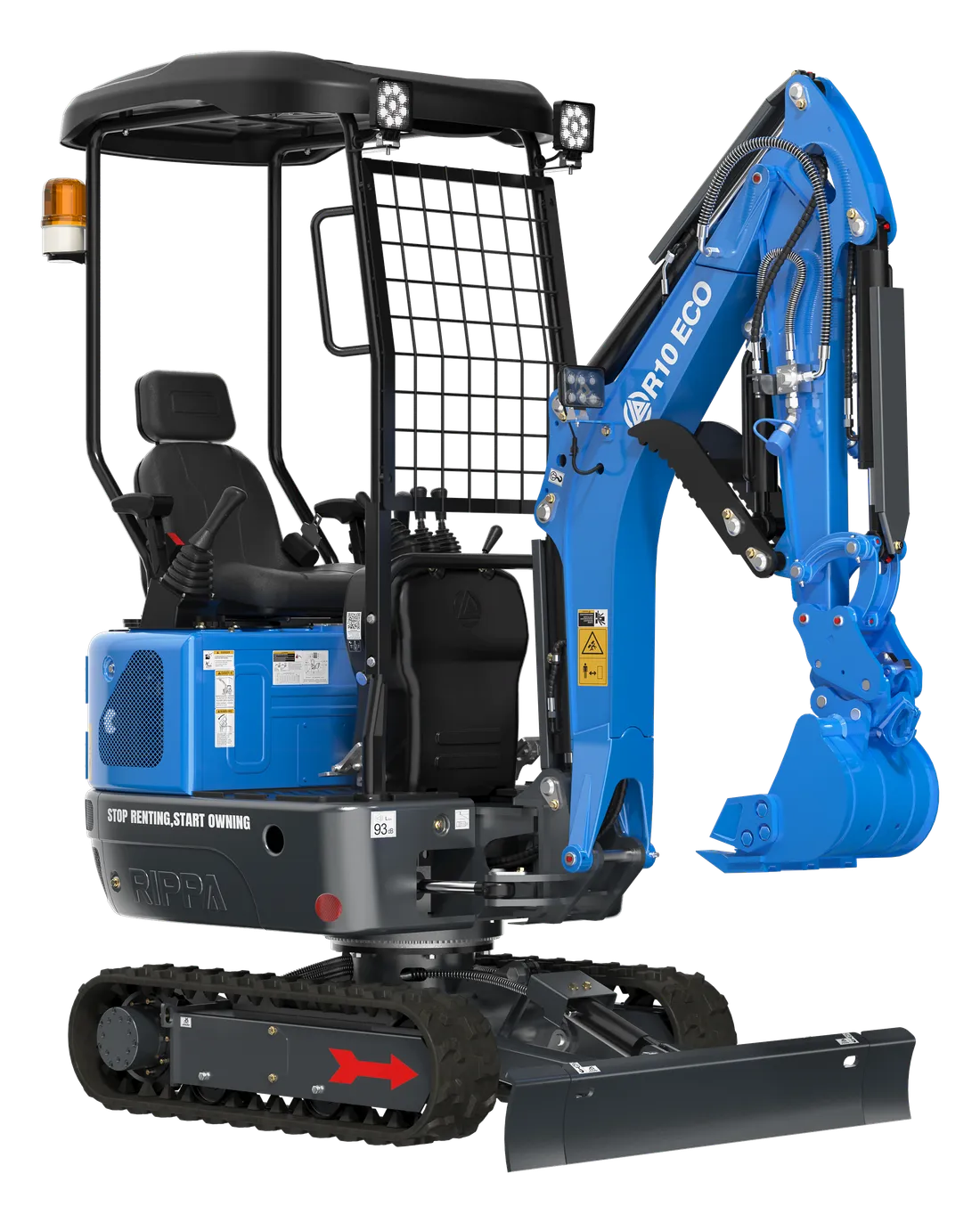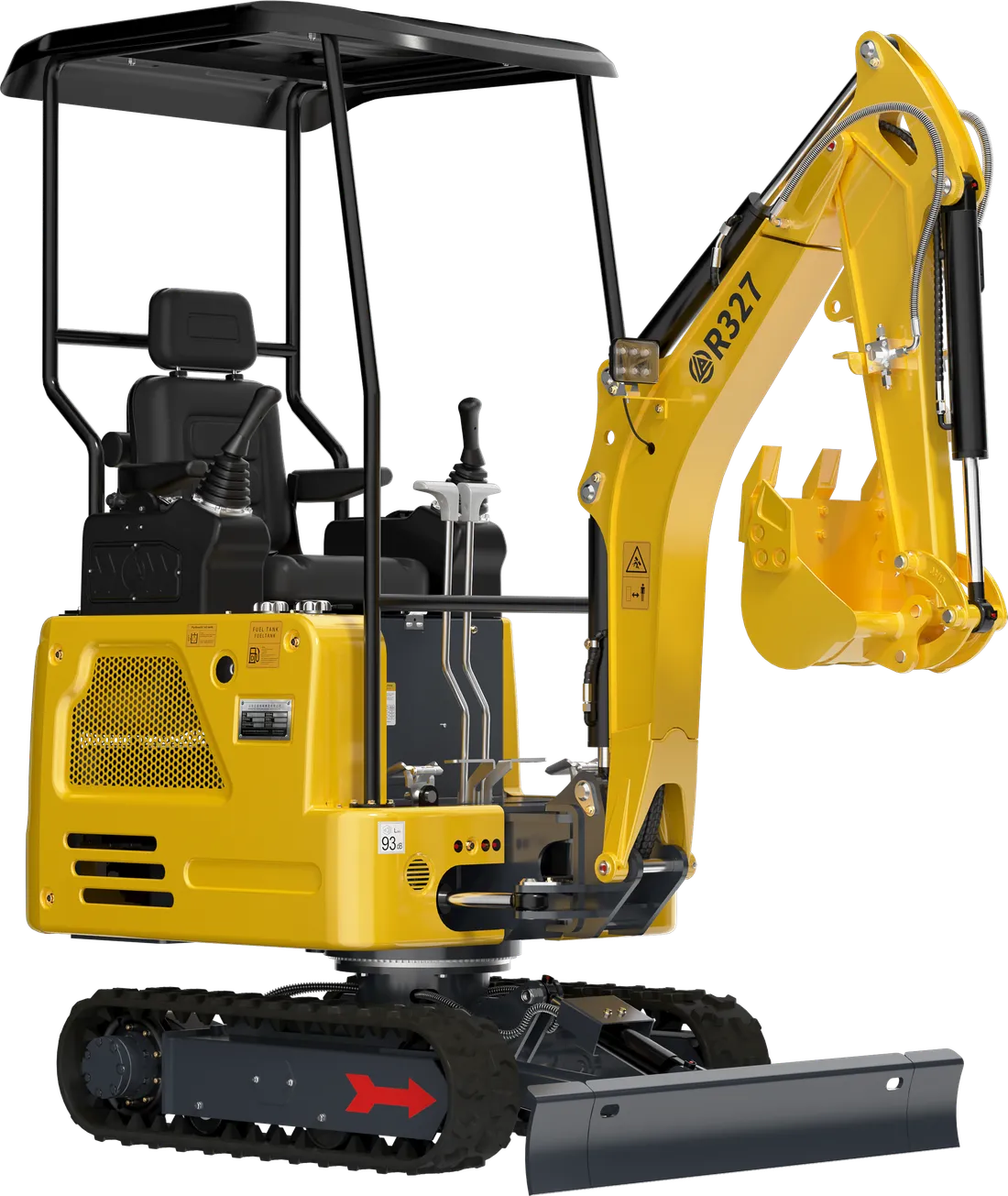
EKSFORK has three mini excavator models: the R10, R327 and R350. On paper the difference between these machines, also known on site as mini diggers, small diggers or compact excavators, looks like nothing more than tonnage; yet from the engine to the tracks and from the cab to the control equipment, each model has a character of its own.
This volume puts the three models side by side. First we gather the technical values in a single table, then we state plainly what each model does well on site and where it struggles. In the last section we show what the price difference actually buys and which user profile leans towards which model.
If you want to know the general method for choosing a class, that is, how to take your depth and access measurements, first take a look at the what size mini excavator to buy volume. This article focuses on the models themselves.
Mini excavator comparison table: the three models at a glance
| Feature | R10 | R327 | R350 |
|---|---|---|---|
| Operating weight | 1,200 kg | 1,700 kg | 3,500 kg |
| Engine | Koop 192F diesel, 10 HP | Kubota D722, 21 HP, 3-cylinder, water-cooled | Kubota D1703, 25 HP, 3-cylinder, water-cooled |
| Controls | Side-mounted pilot | Side-mounted pilot | Side-mounted pilot |
| Tracks | Thick, wear-resistant | Telescopic, extendable/retractable | — |
| Boom swing | — | 120° | 120° |
| Hydraulic thumb | Movable | Articulated | — |
| Operator station | — | — | Enclosed cab + air conditioning |
| Max. digging depth | 1,650 mm | 1,580 mm | 2,927 mm |
| Max. dumping height | 1,850 mm | 1,824 mm | 2,932 mm |
| Max. digging radius | 2,400 mm | 2,894 mm | 5,007 mm |
| Bucket digging force | 11 kN | 11 kN | 22.5 kN |
| Bucket width | 40 cm | 45 cm | 50 cm |
| Dozer blade | 100 cm | 110 cm, adjustable | 120 cm |
| Machine dimensions | 2,200 × 930 × 2,200 mm | 2,200 × 930 × 2,200 mm | 2,503 × 1,350 × 2,357 mm |
| Starting price (excl. VAT) | 299.000 ₺ | 549.000 ₺, 479.000 ₺ with the campaign | Ask on WhatsApp |
A “—” in the table means that the feature is not stated in the spec sheet; ask whether the equipment is included at the quotation stage. The R327 values are the manufacturer data on the product page. Note that although the R327 is about 500 kg heavier than the R10, it does not dig deeper (1,580 mm versus 1,650 mm) and its bucket digging force is the same (11 kN); its difference lies not in depth but in access and equipment. For deep foundations and infrastructure work we recommend the R350, with its 2,927 mm digging depth.
What they share: whichever you choose
Before moving on to the differences between the models, knowing what stays the same simplifies the decision:
- Pilot controls: All three models have side-mounted pilot controls; the levers are light and fine movements are easy. The control habits you learn on one model largely carry over to the others.
- Diesel engine: All three are diesel; the R327 and R350 use Kubota engines and the R10 a Koop 192F.
- Warranty and certification: The machines are CE certified and come with a 2-year or 2,000-operating-hour warranty.
- After-sales: 14 authorised sales and service points in 12 provinces, a contracted service network in 81 provinces and 382 spare parts shipped from stock the same day apply to all three models.
R10: access and economy
The R10 is the lightest and narrowest of the three models. With a width of 930 mm and an operating weight of 1,200 kg it can pass through garden gates, greenhouse entrances and narrow passages between two walls, and can be carried on a light trailer. A machine weight of 900 kg means fewer marks on lawns and landscaped gardens.
Its equipment is simple but functional: a movable hydraulic thumb, a 40 cm bucket and a 100 cm dozer blade. A digging depth of 1,650 mm covers most jobs such as irrigation lines, drainage pipes and tree-planting holes.
Let’s be honest: the R10 was not designed for deep digging and hard ground. A digging force of 11 kN will slow you down in stony, compacted ground. Its spec sheet does not list boom swing either; if you do a lot of work next to walls, ask about this equipment separately at the quotation stage. If you are planning a daily, intensive work pace, look at the Kubota-powered R327; if deep digging and hard-ground jobs are regular, look at the R350. The R327’s digging force is also 11 kN, and it does not outdo the R10 on depth.
R327: the flexible mid-class model
With an operating weight of 1,700 kg (net 1,692 kg), the R327 is about 500 kg heavier than the R10, and in terms of equipment it is a class of its own. Its Kubota D722 engine delivers 21 HP and is 3-cylinder and water-cooled; being a widely known engine also makes service and parts easier.
Two pieces of equipment really set the R327 apart. Telescopic tracks let you enter through a narrow passage with the tracks retracted and then extend them in the work area for a wider footprint; we explain the idea in detail in the telescopic tracks volume. 120° boom swing lets you shift the digging line to the right or left without moving the machine, and in particular work right next to walls; we show this technique step by step in the boom swing volume.
Add to these an articulated hydraulic thumb, an adjustable 110 cm dozer blade and a 45 cm bucket. A practical note: the R327’s fuel tank holds 10 litres. On long working days it is a good habit to plan a top-up during the day and keep a suitable fuel can on site.
R350: depth, power and a cab
The R350 comes in where the work gets heavy. Its 3,500 kg operating weight, Kubota D1703 engine, 2,927 mm digging depth and 22.5 kN digging force make a clear difference in foundation digging, utility lines and hard ground. Its 5,007 mm digging radius lets you dig a wider area while moving the machine less.
A dumping height of 2,932 mm makes it easier to load the soil you dig onto vehicles with high bodies. An air-conditioned enclosed cab is standard; for an operator working long shifts in summer heat, in winter and on dusty sites, this is not a luxury but a matter of productivity. We discuss the pros and cons of a cab in the enclosed cab or open canopy volume. The technical data give an hourly fuel consumption of 1.3 litres.
Let’s be honest: the R350 doesn’t go everywhere. The 1,350 mm width and 3,500 kg operating weight in the spec sheet are too much for narrow garden gates, greenhouses and light transport vehicles. For transport you need a more powerful vehicle or a haulage service.
What does the price difference buy?
It is more accurate to read the price difference between models not as “overpaying” but as the cost of specific equipment.
Moving from the R10 to the R327: The R10 starts from 299.000 ₺ and the R327 from 549.000 ₺; with the current campaign the R327 is 479.000 ₺ (excluding VAT). With the difference you buy a Kubota engine, telescopic tracks, 120° boom swing, an articulated thumb, an adjustable blade and a wider bucket. Think about how many hours this equipment will save in your work; don’t pay for equipment you won’t use.
Example: Suppose you work 100 days a year and save half an hour of manoeuvring a day on jobs next to walls or in tight spaces thanks to the boom swing and telescopic tracks. That makes 50 hours a year. Multiply these 50 hours by your own hourly rate and you will see in how many years the equipment difference pays for itself. The figures are an example; do the calculation with your own days and hours.
Moving from the R327 to the R350: We give the R350’s price in a quote tailored to you. What you are mainly buying here is depth, digging force and an enclosed cab. If most of your jobs don’t require the depth of the 3-tonne class, this difference may not pay back for you.
Attachment compatibility and operator experience
Attachments are chosen to suit the model
Attachments such as breakers, augers, rippers and grabs are chosen according to the machine’s weight, hydraulic flow and coupling dimensions. That is why a breaker suited to the R10 is inefficient on the R350, while one suited to the R350 strains the R10 and upsets its balance. When deciding on the model, also list the attachments you will use and ask for the version of each that fits your model.
Standard bucket widths also differ: 40 cm on the R10, 45 cm on the R327 and 50 cm on the R350. If you do a lot of narrow trenching, factor in a 20 or 30 cm bucket from the start. If you will change attachments often, also ask about the version of the quick-coupler system that fits your model; on jobs with several changes a day it saves a lot of time.
Differences from the operator’s point of view
The control logic is the same on all three models, but the feel on site is different. Because the R10 is light and nimble, it is easier for a beginner to get to know the machine; on the other hand, on a light machine you need to pay more attention to stability when extending the arm far out. On the R327, adjusting the telescopic tracks and using the boom swing take a few hours of practice; once learned, these are the features that save the most time.
On the R350 the enclosed cab protects the operator from dust, noise and the weather; on long-shift jobs the operator gets less tired. Whichever model you choose, we recommend that the person who will use the machine personally attends the basic operator training given at delivery.
Mini excavator recommendation by profile
The table below shows the general tendency; your own measurements always make the final decision.
| User profile | R10 | R327 | R350 |
|---|---|---|---|
| Hobby gardener, small landowner | ✅ Suitable | May be more than you need | ❌ Bigger than needed |
| Greenhouse and nursery business | ✅ Suitable | ✅ Suitable | ❌ Access problem |
| Landscaping company | As a second machine | ✅ Suitable | On large projects |
| Renovation tradesperson, small subcontractor | On tight jobs | ✅ Suitable | On foundation work |
| Subcontractor doing infrastructure and foundation work | ❌ Insufficient depth | ❌ Insufficient depth | ✅ Suitable |
| Municipal and village services | In parks and gardens | ✅ Suitable | ✅ Suitable |
In rows where two models both look suitable, three questions usually decide:
- What share of the jobs is in tight spaces? If most are in tight spaces the light model comes out ahead; if most are on open sites, the heavy model.
- How often does the deepest job come up? If deep jobs are the exception, hiring a service for them may be cheaper than hauling a heavy machine around every day.
- Who will transport the machine, and with what vehicle? If your transport options can’t handle the heavy model, you won’t be able to use its on-paper advantages on site.
A common solution in municipal and village services, instead of trying to meet both needs with one machine, is to plan the light model for tight-space jobs such as parks, gardens and cemeteries, and the heavy model for roadside ditches and utility repairs. If the budget only allows one machine, list the year’s jobs and start with the model that covers the majority.
Summary
- R10: if tight spaces, light transport and a low budget are your priorities, and deep or hard-ground work is rare.
- R327: if you want to get into tight spaces and work stably, dig next to walls and use a Kubota engine for the long term, and you do garden, greenhouse and light infrastructure work together.
- R350: if your work requires depth, digging force and an enclosed cab, and you have powerful transport.
- Read the price difference together with the equipment list and pay only for equipment you will use.
- Choose the R350 for deep foundations and infrastructure work; ask for its current price in writing at the quotation stage.
To look at the three models side by side, browse our mini excavator category, or write to us on WhatsApp with your job and measurements to find out which model suits you, with our reasons.