In a battery-powered floor cleaning machine, most people think of the battery as a “fuel tank”: it fills, empties and fills again. Yet the battery is one of the most expensive parts of the machine, and the battery type you choose determines not only the run time but also your charging routine, your shift plan and your replacement cost a few years down the line.
The two most common options in cleaning machines are lithium and gel batteries. Both have strengths and weaknesses; generalisations such as “lithium is always better” or “gel is more economical” can steer the decision the wrong way. The right answer depends on how the machine will be used.
In this guide we first explain the basic concepts, then compare the two battery types separately and in a table. After that we describe how to decide by usage profile, how to calculate the total cost and the right charging habits for both types.
Concepts first: V, Ah, Wh and cycles
Knowing four concepts is enough to compare batteries:
- Volt (V): The battery’s voltage. It must suit the machine’s system; on its own it isn’t a measure of quality.
- Ampere-hour (Ah): The battery’s capacity, i.e. how much charge it can store.
- Watt-hour (Wh): The energy the battery holds. It is found with the formula Wh = V × Ah. Example: a 24V 100Ah battery holds 24 × 100 = 2,400 Wh of energy. When comparing batteries of different voltages, look at the Wh value, not Ah.
- Cycle: One full discharge and recharge. Battery life is usually expressed as how many cycles it will last, and this figure also depends on how deeply the battery is discharged.
The last concept matters: even if two batteries have the same Wh value, the usable energy can differ. Draining lead-based batteries completely shortens their life, so in practice not all of the capacity on the label is used. Lithium batteries generally tolerate deeper discharge.
Gel batteries: what they like and what they don’t
A gel battery is a sealed lead-based battery whose electrolyte has been turned into a gel. It doesn’t need topping up with water, and the electrolyte doesn’t leak if it tips over. It is a familiar technology that has long been used in cleaning machines.
Strengths:
- The initial investment is usually lower than for lithium.
- It doesn’t need regular maintenance such as topping up with water.
- Thanks to its sealed design, there is no risk of spills.
- It is a familiar technology; the charging and usage rules are well known.
Points that need care:
- It likes a full charge cycle. An uninterrupted full charge at the end of the day is preferred to frequent short top-up charges.
- It doesn’t like being left flat. A lead-based battery left discharged can suffer a permanent loss of capacity.
- It needs the right charging profile. A gel battery can be damaged if charged with an unsuitable charger; the charger must suit the gel profile.
- It is heavy. For the same energy it is heavier than lithium.
Where do AGM and flooded batteries fit in?
There are two more members of the lead-based family. An AGM battery is a sealed battery whose electrolyte is absorbed into a glass-fibre separator; in use it is similar to a gel battery and also needs no topping up. A flooded (serviceable) battery needs regular topping up with distilled water and good ventilation while charging; if its maintenance is neglected, its life shortens quickly. Batteries described in the catalogue as “maintenance-free” are usually sealed types; but confirm the exact type from the data sheet or the seller, because the choice of charger depends on it.
Lithium batteries: what do they change?
Lithium batteries have a management system (BMS) that monitors each cell. This system controls overcharging, over-discharging and imbalance between cells. The reason they are increasingly chosen for cleaning machines is that they make daily use more flexible.
Strengths:
- Usually suitable for opportunity charging. Short charges at lunchtime or between two jobs are not a problem for most lithium batteries. This makes the shift plan more flexible.
- Lighter. Moving the machine and getting it over ramps becomes easier.
- Maintenance-free, and the usable capacity is usually higher.
- Cycle life is usually longer. The real figure varies by manufacturer; read it together with the depth of discharge stated on the data sheet.
Points that need care:
- The initial investment is usually higher.
- Charging is restricted at low temperatures; most lithium batteries should not be charged below freezing, and the BMS may not allow it.
- It is charged only with a charger suitable for lithium and approved by the manufacturer.
- A lithium battery that has taken a knock, swollen or been damaged must never be charged; consult technical service.
Comparison table
| Feature | Lithium | Gel |
|---|---|---|
| Initial cost | Usually higher | ✅ Usually lower |
| Opportunity charging | ✅ Usually suitable | A full charge cycle is preferred |
| Deep discharge | ✅ Usually well tolerated, protected by the BMS | ❌ Shortens its life |
| Weight | ✅ Lighter | Heavier |
| Maintenance | ✅ Not required | ✅ No topping up; terminal checks |
| Charging in the cold | ❌ Restricted below freezing | Performance drops, charging takes longer |
| Cycle life | ✅ Usually longer | Shorter; check the manufacturer’s data |
| Charger | Lithium-specific | Suited to the gel profile |
The table shows general trends. There can be differences in quality and specifications even between two batteries of the same type; when deciding, look at the machine’s data sheet and the battery manufacturer’s data.
Deciding by usage profile
The choice of battery depends on what the machine’s day looks like. The questions below go a long way towards settling the decision:
- How many hours a day will the machine work? If the working time exceeds what the battery gives on a single charge, it will need charging during the day; this makes lithium’s opportunity-charging flexibility stand out.
- Single shift or multiple shifts? On a machine that works a single shift and is fully charged overnight, a gel battery is often enough.
- Will the machine be moved between sites? At cleaning companies, machines are loaded onto and unloaded from vehicles; a lighter battery and the option to charge during breaks are valuable here.
- Is the charging area heated? If charging will be done in an unheated warehouse or a cold store, take lithium’s low-temperature restriction into account.
- How many days a year will the machine work? On a machine that is used little, lithium’s long cycle life advantage may not be fully used.
To be honest — setting aside extra budget for lithium doesn’t always make sense for a machine that works a few days a week, for an hour or two a day. On the other hand, on a machine that works every day, across several shifts and at different sites, lithium’s flexibility quickly proves itself. You can check whether your time window fits within the battery run time with the method in our m²/h calculation guide.
Two options for multiple shifts: a spare battery or opportunity charging?
If the machine’s daily work exceeds a single charge, there are two solutions. The first is a spare battery: the full battery is swapped for the flat one. This works with every battery type, but it means a second battery and a second charging spot; on large machines the battery pack is heavy, so swapping requires a safe procedure and suitable equipment. The second is opportunity charging: the machine is put on charge during breaks and between jobs. This is usually trouble-free with lithium batteries, but it is not recommended for lead-based batteries because it disrupts the full charge cycle. Which one suits you depends on your break pattern and how far the charging point is from the work area.
Total cost: calculating per cycle
Comparing the two battery types on purchase price alone is misleading. A more accurate measure is what each charge cycle costs you:
Battery cost per cycle = Battery price / Expected number of cycles
Example: Suppose battery A costs 100 units and lasts 500 cycles: 0.2 units per cycle. Battery B costs 250 units and lasts 2,000 cycles: 0.125 units per cycle. Under these assumptions, battery B, which looks expensive, is cheaper per cycle. The figures are purely illustrative; take the real prices and cycle figures from the quote and the data sheet.
Add three more items to this calculation: the time the machine stands idle during a battery change, the cost of a spare battery or an extra charger if needed, and the time the operator spends on charging. To assess the machine investment as a whole, see our payback calculation guide.
The right charging habits
For gel batteries
- Put it on charge at the end of the day and wait for the charge to finish; avoid frequently interrupted charging.
- Don’t leave the battery flat; during long periods of standing, follow the top-up charging instructions in the manual.
- Only use a charger suited to the gel profile.
- Charge in a dry, well-ventilated place and keep the terminals clean.
For lithium batteries
- You can do short opportunity charges during breaks; unless the manual says otherwise, this is usually not a problem.
- Don’t put a battery that has come from a very cold environment straight on charge; wait for it to reach room temperature.
- If it won’t be used for a long time, store the battery at the state of charge recommended in the manual.
- Protect the battery case from impacts; never charge a damaged battery.
Set up the charging area properly
Whatever the battery type, the charging area directly affects battery life and safety. Set aside a dry, well-ventilated corner for charging, away from flammable materials and not blocking escape routes. Plug each charger into its own suitable socket; avoid feeding several chargers from the same circuit through multi-way extension leads. Keep cables away from walkways and don’t cover the charger; a charger that warms up while charging needs ventilation.
The same principles apply to forklifts; if you use a forklift with a gel battery, you will find more detailed information in our forklift battery guide. We describe the general maintenance of the machine in our maintenance guide. Batteries that have reached the end of their life aren’t thrown away; they are handed in at authorised waste battery collection points.
Batteries in EKSFORK models
According to the catalogue values, the batteries and run times of our floor cleaning machines are as follows:
- K1: 24V 60Ah lithium battery, 3–4 hours of run time.
- K2: 2 × 12V 100Ah batteries, 2–3 hours of run time.
- HY660: Maintenance-free battery, 3–5 hours of run time.
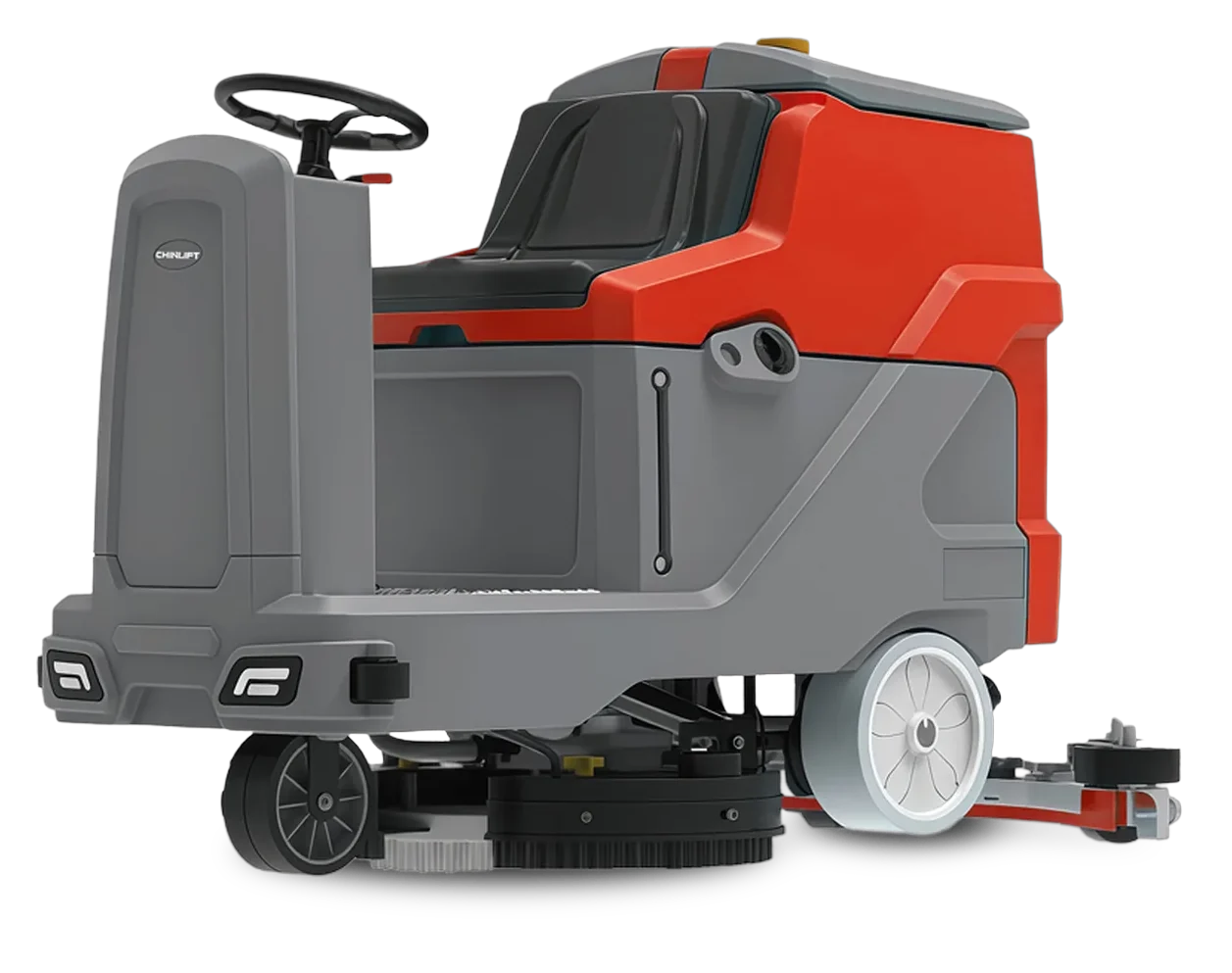
- KL860: 4 × 6V/200Ah batteries, 4–5 hours of run time.
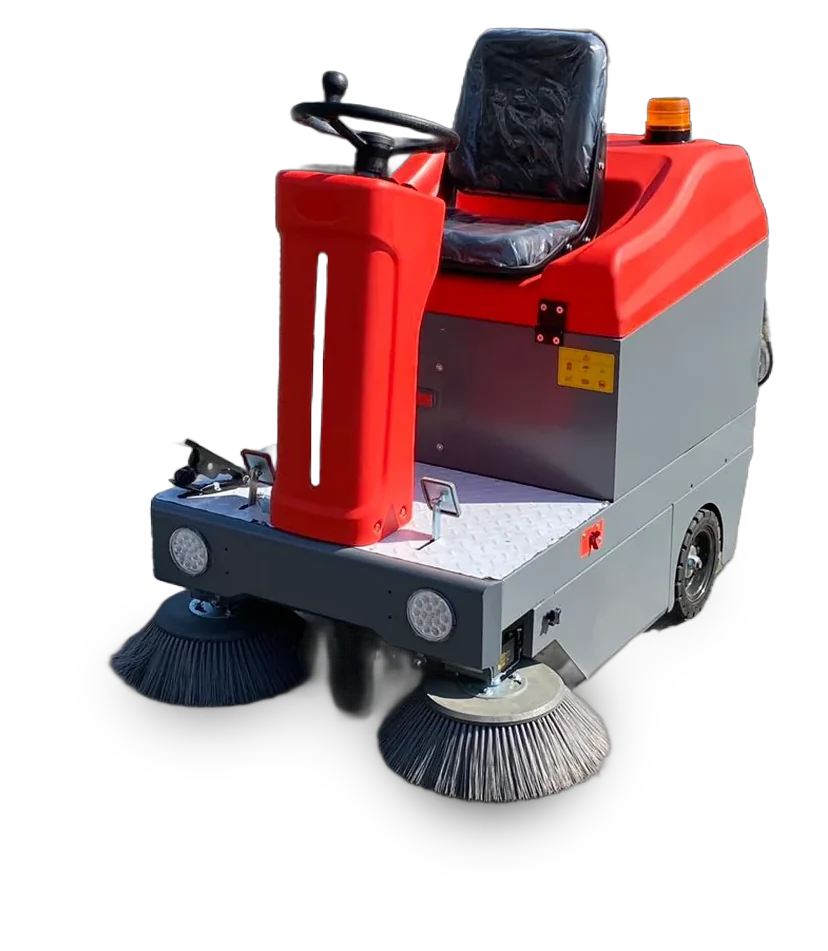
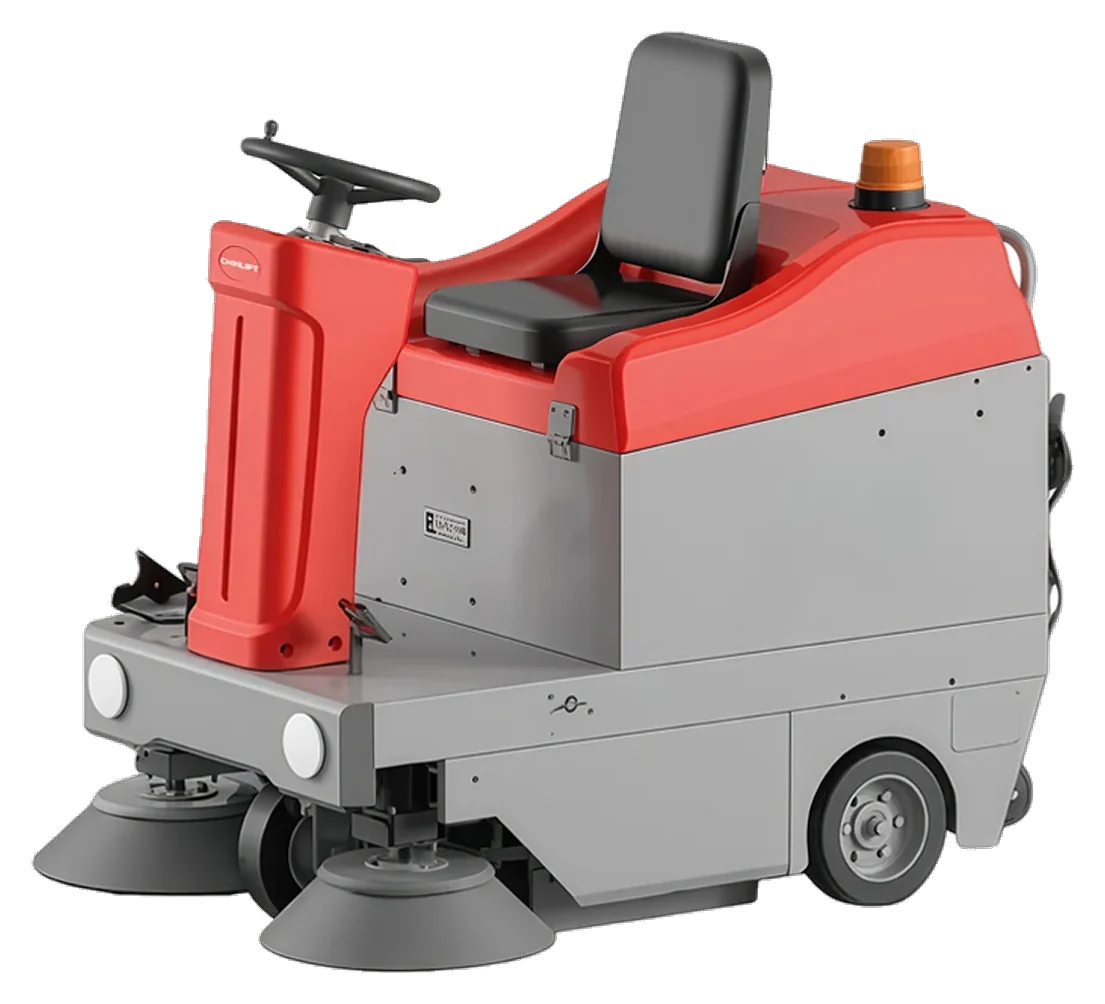
- S1 (sweeper): 48 V battery system, 4–5 hours of run time.
The catalogue explicitly states a lithium battery for the K1. For the other models, ask in writing at the quotation stage for the battery type, the charger supplied with it and the battery’s warranty cover; let’s assess together which option suits your usage profile.
Summary
- Compare batteries not by Ah but by Wh (V × Ah) and usable capacity.
- A gel battery is an economical and reliable option for a single shift with full overnight charging; it must not be left flat.
- A lithium battery offers opportunity-charging flexibility, lighter weight and usually a longer cycle life; its initial cost is higher.
- The decision is made not by the purchase price but by the cost per cycle and the usage profile.
- With both types, only a suitable charger is used and the charging routine in the manual is followed.
Take a look at the K1 walk-behind floor scrubber, with its 24V 60Ah lithium battery and 3–4 hours of run time. For the battery option that suits your usage profile and current prices, message us on WhatsApp.