Residential site managers, shopping centres, factories and logistics centres all face the same question: “Should we have the car park swept or scrubbed?” At first glance both look like cleaning, but they solve different problems. Sweeping collects loose dirt; scrubbing brushes off the layer stuck to the surface and picks it back up with the water.
When the wrong method is chosen, one of two things happens: either an oily, blackened floor is swept and counted as “clean”, or water, detergent and labour are wasted every week. In this guide we explain how to choose the right method by type of dirt, surface type, ramps and waste water, and give a cleaning plan that uses both together.
How do you clean a car park? First identify the type of dirt
In car parks and outdoor areas, dirt falls into two main groups. Knowing which group dominates is half the decision.
- Loose dirt: Dust, sand, leaves, cigarette ends, paper and small bits of packaging. It sits on the surface; this is a job for a sweeper.
- Stuck-on dirt: Oil dripping from vehicles, tyre marks on ramps and bends, dried mud layers, spilt drink stains and, in indoor car parks, the soot layer from exhaust fumes. It doesn’t come off with sweeping; scrubbing with brushes and suction is needed.
Do a simple test: wipe the floor at several different points with a white cloth. If the cloth shows only grey dust and sand, loose dirt dominates. If the cloth turns dark and leaves an oily mark, there is a stuck-on layer on the surface and sweeping alone won’t do. Do the test separately in the middle of parking bays, at the entrance and on ramp bends; it is normal to get different results in different zones of the same car park.
How does the surface type change the method?
The same dirt behaves differently on asphalt, concrete and block paving. Before choosing a machine, assess your surface with this table:
| Surface | Sweeping | Scrubbing | Watch out for |
|---|---|---|---|
| Asphalt (open car park) | ✅ Main method | Locally, in oily zones | On a rough surface the squeegee may not pick up all the water |
| Concrete (indoor car park, ramps) | ✅ | ✅ Periodic | Check the gradient limit on ramps |
| Epoxy or similar coated deck | ✅ | ✅ Regular | Soft pad, neutral cleaner |
| Block paving | ✅ With care | Limited | Brushes and suction can pull out the jointing sand |
| Gravel, hardcore roads | ❌ | ❌ | Not suitable for machine cleaning |
In block-paved areas, the sand in the joints is the filler that holds the blocks in place. Strong brush pressure and suction can gradually empty out this sand, so keep the brush pressure low and check the joints periodically. We explain pad and chemical choice for epoxy-coated car park decks in our epoxy floor cleaning guide.
When is a sweeper enough?
Most of the daily dirt in open car parks, squares and factory yards is loose dirt. In these areas regular sweeping keeps the surface clean with far fewer resources than scrubbing. A sweeper uses no water or very little; the surface doesn’t get wet and the area can often be cleaned without closing it to traffic.
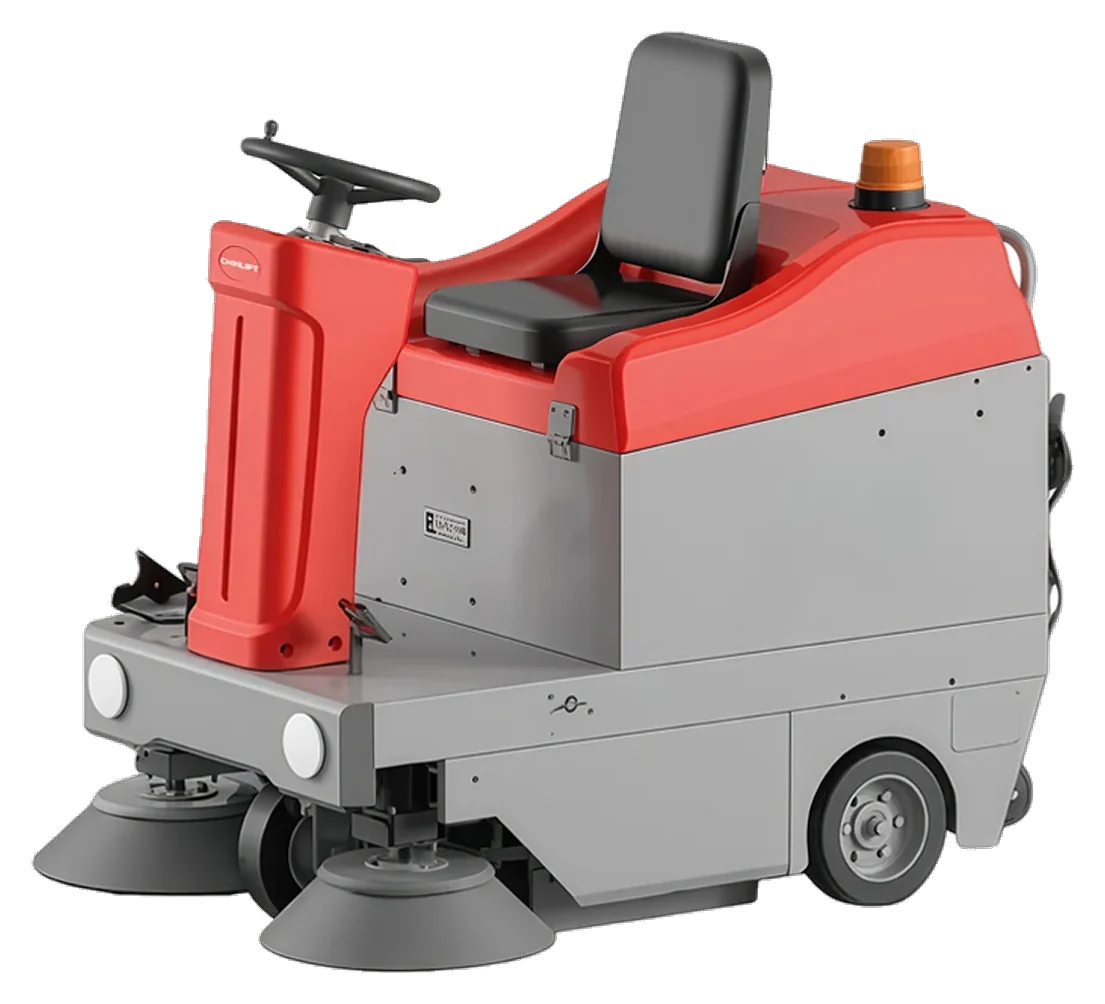
For example, the S1 ride-on sweeper is designed for large areas, with a 1,250 mm sweeping width and a catalogue output of 6,300 m²/h. Its 400 mm diameter side brush pulls dirt from kerbs and column bases in front of the main brush; its 1,050 mm turning radius makes manoeuvring between rows of parking bays easier. It runs for 4–5 hours on a 48 V battery and produces no exhaust fumes, which is a big advantage in indoor car parks.
Don’t forget gratings and gully openings
Cleaning a car park isn’t just about appearance. Sand and leaves that aren’t swept up collect in front of rainwater gratings and gully openings; in the first downpour the water ponds. When planning the sweeping route, mark the areas around gratings, the bottoms of ramps and the kerb edges separately. These points are usually where dirt collects most.
Plan the route around the hopper emptying point too. In a multi-storey car park without a waste container on each level, the machine has to go down and back up the ramps each time the hopper is full, and much of the time is spent travelling. Choosing the emptying point and planning the round to finish there lets you sweep more area per day with the same machine.
To be honest — sweepers have their limits too. Wet leaves and mud stick to the brush and fill the hopper quickly, and they don’t remove oil stains or tyre marks at all. In autumn, plan to empty the hopper often and, if possible, to sweep while the surface is dry. We explain how sweepers work in detail in our what is a floor sweeper guide.
When is scrubbing essential?
Indoor car parks differ from outdoor areas: rain never washes the floor, and soot from exhausts and rubber dust gradually form a dark layer stuck to the surface. Oil drips in the middle of parking bays mix into this layer too. This layer spoils the appearance and makes the surface slippery when wet.
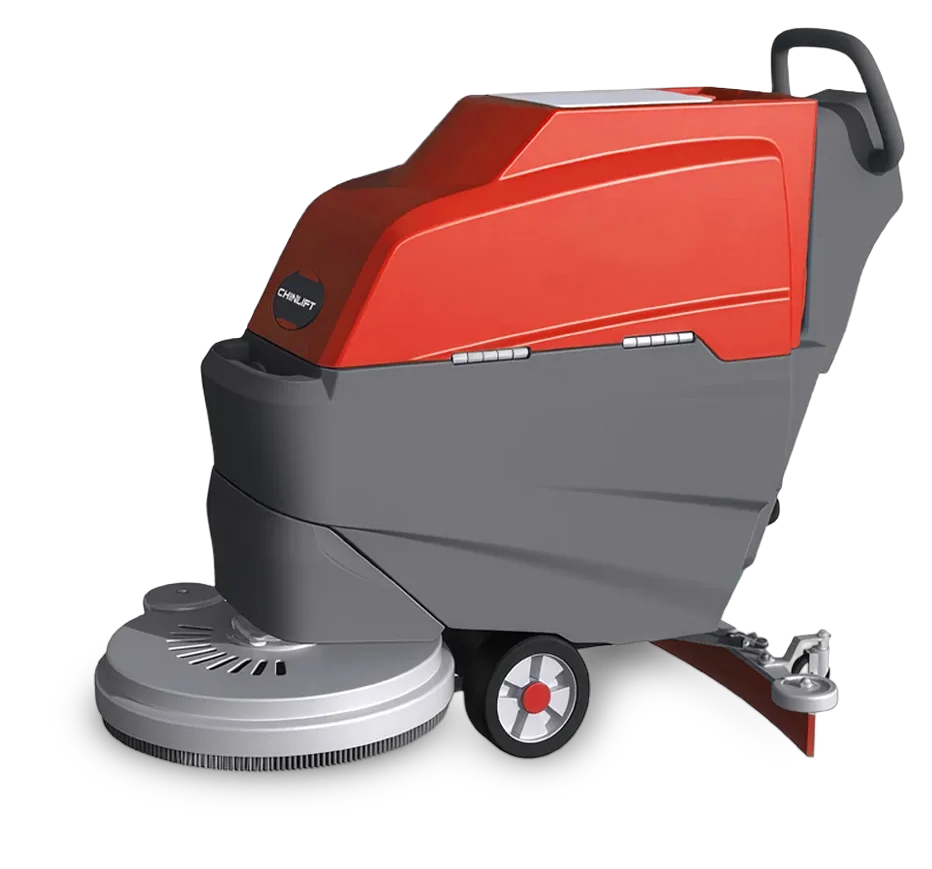
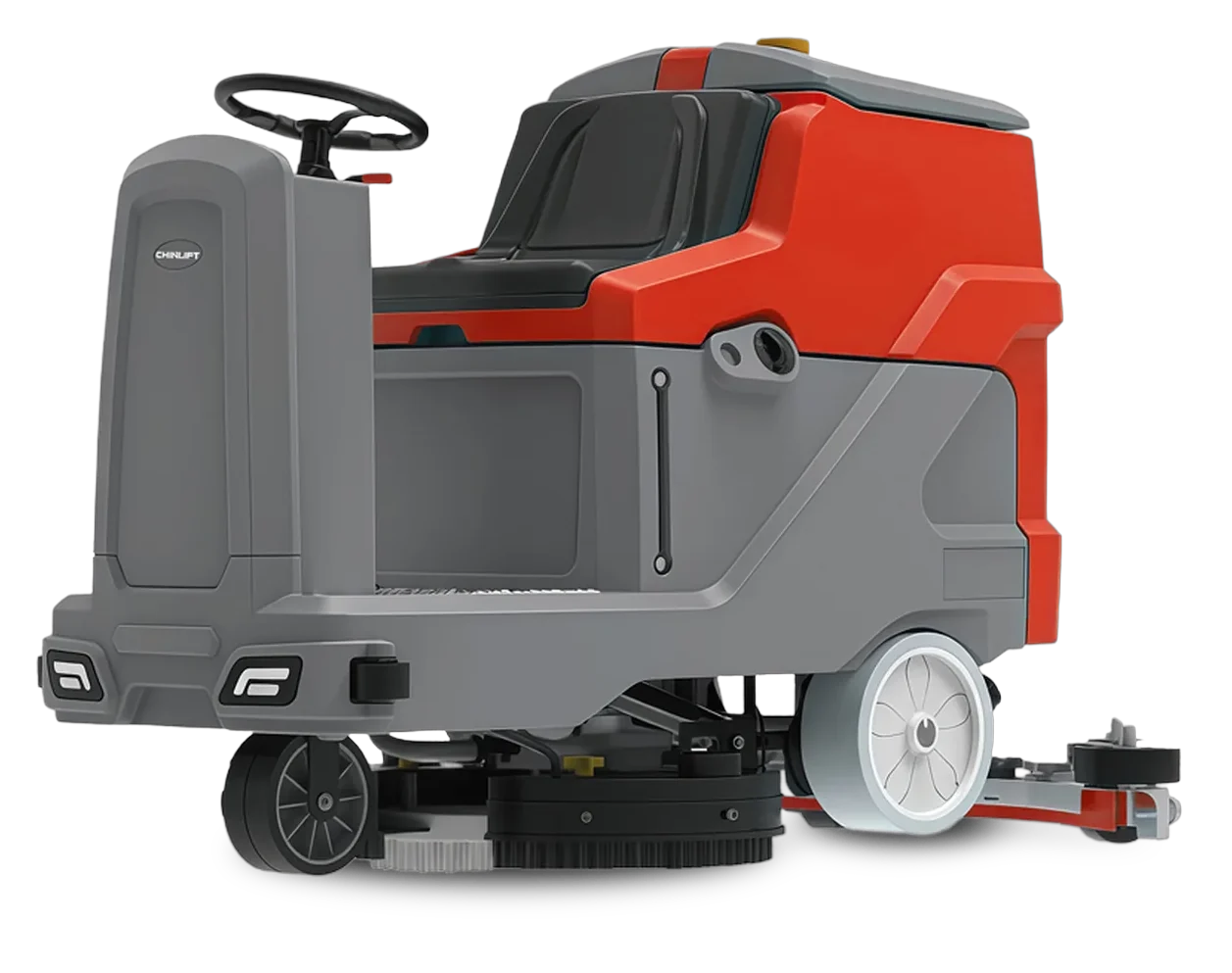
In areas like these, periodic scrubbing with brushes and suction is essential. On large decks a ride-on machine speeds up the job: the KL860’s 1,200 mm squeegee and 155 L clean water tank let it work along long strips without frequent breaks. For small areas between ramps and tight corners, walk-behind models are more practical.
Deal with oil drip spots before the machine. Apply a suitable degreaser to the dark stains in the middle of parking bays at the dose on the label and leave it to work; when the machine passes, it collects the dissolved oil with the water. Without this pre-treatment, you have to go over the same spot two or three times.
Why hosing down isn’t a good idea
When washing with a hose or pressure washer, dirty, oily water flows across the floor, often ends up in rainwater gratings, and the area stays wet for a long time. A machine with brushes and suction collects the dirty water in its own tank. Ask your facility management and your local council where to empty the collected water, especially if it is oily waste water; don’t pour dirty water into a rainwater grating.
Outdoor areas are different: loading areas, factory yards and squares
“Outdoor area” isn’t one type; each has its own kind of dirt and its own trap. Choose the method not by car park habits but by the area’s real dirt.
- Loading and dispatch areas: Bits of pallet, stretch film, strapping and cardboard scraps build up. Strapping and stretch film wind round the brush, so they should be picked up by hand before sweeping. Periodic scrubbing is needed for oil drips left by forklifts and lorries.
- Factory yards: Dust from production and mud carried in on lorry wheels dominate. Sweeping the strips near the yard entrance more often also reduces the dirt carried into the building.
- Squares and pedestrian areas: Cigarette ends, paper and leaves are easily collected by sweeping. Chewing gum stuck to the ground, however, comes off neither with sweeping nor with machine scrubbing; it needs a separate method and equipment.
- Estate roads and block-paved areas: Under trees, leaves and resin stains increase with the season; keep the brush pressure low to protect the jointing sand.
Whatever the area, sweeping output drops in windy weather and dust gets redistributed. Choose calm hours where possible; on dry, dusty days, machines that can spray water to suppress dust give a cleaner result.
Ramps, gradients and traffic safety
The most overlooked issue in car park cleaning is ramps. Machine catalogues sometimes give climbing ability as a percentage and sometimes in degrees, and the two are not the same thing. The S1’s climbing capacity is given as 25%, the KL860’s maximum climbing angle as 18°. A 25% gradient corresponds to about 14 degrees, and 18 degrees to a gradient of about 32%.
You can calculate your ramp’s gradient yourself: gradient (%) = rise ÷ horizontal length × 100. Example: a ramp that rises 1.8 metres over a horizontal distance of 12 metres has a gradient of 15%. The catalogue value is usually given for a dry, clean surface; on a wet, oily surface and with a full tank, the safe limit is lower. Always go straight up and down the ramp, don’t turn on the slope, and follow the ramp warnings in the user manual.
- Plan cleaning for the hours with the least traffic, often at night or early in the morning.
- Mark off the strip being cleaned with cones and warning signs; the operator should wear a high-visibility vest.
- Slow down when passing behind parked vehicles; they may manoeuvre at any moment.
- Don’t work on poorly lit levels until adequate lighting has been provided.
A sample plan combining both
For most car parks and outdoor areas the right answer isn’t “one or the other” but planning frequent sweeping together with less frequent but regular scrubbing. The plan below is an example for a moderately busy indoor car park; adjust the frequencies to your own traffic.
| Period | Task | Focus |
|---|---|---|
| Daily or at night | Sweeping | Entrances, ramps, pedestrian walkways |
| Weekly | Spot pre-treatment of oil stains | Middle of parking bays |
| Monthly or periodic | Scrubbing all levels with brushes and suction | Soot layer, tyre marks |
| Autumn | Sweeping more often | Leaf build-up, grating openings |
| Winter | More frequent wet cleaning at entrances | Mud and salt carried in by vehicles |
In an open car park the picture is different. Because rain washes the surface by itself at intervals, sweeping carries almost the whole load; scrubbing is reserved for spots such as entrance and exit lanes, the areas in front of pay stations and the rows of bays where oil stains are concentrated. If the same business has both an indoor and an open car park, setting separate frequencies for the two areas directs resources to the right place.
To work out how many hours of work your area needs, you can use the m²/h calculation in our choosing a machine by floor area guide.
Checklist before you decide
- Total area: How many m², including levels and ramps?
- Surface type: Asphalt, concrete, coating or block paving?
- Dominant dirt: What did the white cloth test show?
- Ramp gradient: Has it been calculated as a percentage and compared with the machine’s figure?
- Water and waste water: Where will clean water come from, and where will dirty water be emptied?
- Charging and parking spot: Is there a dry place near a socket where the machine can stand overnight?
- Time window: At what times will cleaning be done, and with or without closing to traffic?
- Obstacles: How many columns, barriers, speed bumps and parked vehicles are there?
- Operator: Who will use the machine, and who will train them?
Summary
- Loose dirt calls for sweeping; a stuck-on layer calls for scrubbing with brushes and suction.
- In open car parks sweeping is the main method; in indoor car parks periodic scrubbing is essential.
- Mind the jointing sand on block paving and the gradient limit on ramps.
- Collect dirty water in the machine’s tank instead of hosing it into gratings.
- The most efficient routine plans frequent sweeping and regular scrubbing together.
Send us your area’s dimensions, surface type and ramp gradient, and we’ll choose the right machine together for a routine of sweeping, scrubbing or both. Take a look at our floor cleaning machines or, for current prices, message us on WhatsApp.