On a tracked machine an engine or hydraulic fault is noticed immediately, while wear in the undercarriage advances silently. A roller gets a little stiffer, the sprocket tips get a little thinner, the track goes slack a little more often. One day the track comes off or jumps the sprocket — and at that point it is usually not one part that gets replaced, but several parts that have worn each other out.
In this guide we take the metal parts that make up the undercarriage one by one: track rollers, carrier rollers, the idler, the tensioning mechanism and the drive sprocket. We explain, in a way you can apply on site, how each one wears, how to catch the wear by eye and with simple measurements, and when a single part or a whole set needs replacing.
The track itself, tension adjustment and track life are a separate subject; we cover them in detail in our track maintenance guide. Here we focus on the parts the track runs over and that carry the machine’s weight.
What parts make up the undercarriage?
The undercarriage is all the parts that transfer the machine’s weight to the ground and drive the track. These parts work like the links of a chain: when one fails, the others start carrying its load and wear accelerates in a chain reaction.
| Part | Function | Typical sign of wear |
|---|---|---|
| Drive sprocket | Transfers the travel motor’s movement to the track | Thinning, pointed or hooked teeth |
| Track roller (bottom roller) | Spreads the machine’s weight over the track | Oil leak, not turning, flattened surface |
| Carrier roller (top roller) | Supports the upper run of the track, prevents sagging | Seizing, flat spot, one-sided wear |
| Idler | Guides the track at the front, transmits tension to the track | Flange wear, wobbling |
| Tensioning mechanism | Keeps the track at the correct tension | Track going slack often, grease leak |
| Travel motor | Converts hydraulic power into rotation | Oil leak, loss of power, pulling to one side |
The number and layout of parts vary from machine to machine. For example, the track system of the QD35 tracked tractor has 1 drive sprocket, 5 rollers, 1 top wheel and 1 tensioner. The logic is the same on mini excavators; check the layout on your own machine in the diagram in the operator’s manual.
Seven habits that speed up wear
Undercarriage life is determined as much by how the machine is used as by the materials. Two machines of the same model can wear out over very different periods in the hands of two different operators. The most common causes on site are:
- Abrasive ground. Sand, grit and crushed stone get between the rollers and the track and work like sandpaper. You can’t stop the wear on this kind of ground, but you can slow it down with regular cleaning.
- Drying mud. Mud that isn’t cleaned off at the end of the day hardens around the rollers. The next morning, instead of turning, the rollers skid with friction and their surfaces start to flatten.
- Wrong track tension. An over-tight track puts constant extra load on the rollers, idler and sprocket; an over-slack track jumps off the sprocket and eats into the flanges.
- Counter-rotation turns on hard ground. Sharp turns made by driving the tracks in opposite directions strain both the track and the sprocket on concrete and asphalt. Turn in a wide arc whenever possible.
- Unnecessary long-distance travel. A tracked machine is designed to change position within the work area. Moving the machine on a trailer or lorry over long distances protects the undercarriage.
- Always turning the same way. If the layout of the job means constantly turning to the same side, the parts on that side wear faster. Change the working direction whenever you get the chance.
- Long periods working across a slope. Working for a long time on a side slope loads the weight onto the rollers and flanges on the downhill side. This means both wear and a tipping risk; be sure to read our safety rules for sloping ground.
Track roller wear and carrier rollers: a roller that doesn’t turn goes flat
Track rollers carry the machine’s weight; the oil inside them is protected by seals. When a seal fails, oil first seeps out, then the bearing runs dry and the roller starts to turn stiffly. A roller that seizes completely skids along the track instead of turning; one side soon goes flat, and it wears the inside of the track as well.
You don’t need a special tool to check:
- Stop the machine on level, hard ground, lower the working equipment to the ground, switch off the engine and remove the key.
- Look around the hub of each roller. A wet trace of oil, mixed with dust and turned dark, is a sign of a seal leak.
- Check the roller surface for one-sided shine, stepping or flattening.
- Drive the machine slowly for a short distance; have a helper watch from a safe distance to see whether all the rollers are turning.
The carrier roller is checked in the same way. When a carrier roller seizes, the track slides over it; this leaves a flat spot on the roller and line-shaped wear on the inside of the track.
Let’s be honest — a roller that is losing oil won’t fix itself. Replacing the roller when the leak is noticed is, in most cases, much cheaper than waiting for it to go flat and wear the track as well.
The idler and tensioning mechanism
The idler guides the track at the front and transmits the force of the tensioning mechanism to the track. The most common problem is wear on the flanges that the track’s guide lugs rub against. An idler with thinned flanges can’t hold the track properly; the risk of the track coming off increases, especially on slopes and in turns.
Look for three things on the idler: sharpened edges or nicks on the flanges, wobbling as it turns (a sign of bearing play) and oil leaking around the hub.
The tensioning mechanism’s job is to keep the track at the correct tension. On many mini excavators, tension is adjusted with a cylinder that is pumped full of grease. If the track goes slack again within a few days of adjusting it, the problem may not be track stretch but the tensioning cylinder not holding its grease. In that case the cylinder seal and grease valve should be checked.
Safety warning: In grease-tensioned systems, the inside of the cylinder is under high pressure. When releasing tension, don’t open the valve further than described in the manual and don’t stand directly in front of the valve; if you’re not sure, leave this job to service.
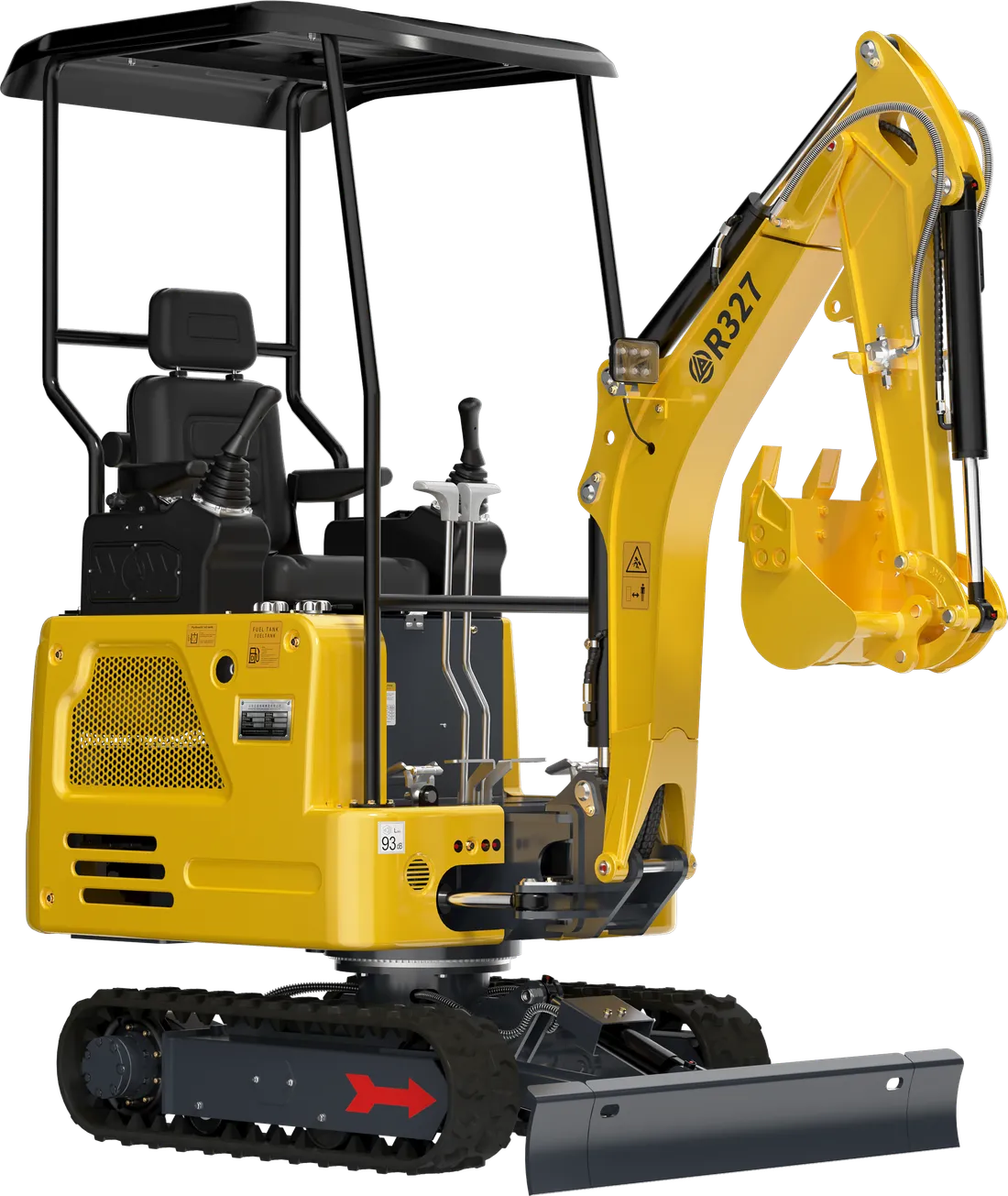
On machines with telescopic (retractable) tracks, such as the R327, it is also important that the sliding sections that change the track width don’t fill up with mud and stones. We explain how this system works in our telescopic tracks guide.
The drive sprocket and travel motor
The drive sprocket is the part that meshes directly with the track and transfers the most force. On a new sprocket the teeth are full and their tips rounded. As it wears, the tooth flanks thin, the tips become pointed and, at an advanced stage, the teeth take on a hooked shape. Hooked teeth can’t release the track cleanly; the track can jump the sprocket, and clicking and knocking noises begin.
The most practical way to assess the sprocket is by comparison:
- Take a photo of the sprocket when the machine is new; at later checks, take it again from the same angle and compare.
- Measure the tooth thickness with calipers at the same point each time and note it down. Find out the acceptable wear limit from the operator’s manual or from service; here we are recommending a tracking method, not a limit value.
- Check the bolts that fix the sprocket to the hub. A loose bolt quickly damages both the sprocket and the bolt holes.
The travel motor behind the sprocket is the most expensive part of the undercarriage. Oil traces around the motor, the machine pulling to one side or one track turning more slowly than the other show that the motor, or the hydraulic line feeding it, needs checking. Rather than carrying on working with these symptoms, consult service.
Noises and behaviour: what is the undercarriage telling you?
Some wear reaches your ears and the way the machine drives before it reaches your eyes. When you notice the following signs, stop the machine and check the relevant part:
- A clicking noise at regular intervals: This can indicate that the track isn’t seating properly on the sprocket. A stone jammed in the track makes a similar noise.
- The track jumping when reversing: Usually a sign of a slack track or a sprocket with hooked teeth.
- Squeaking or squealing: This can point to a roller that is running dry or about to seize.
- Pulling to one side on a straight run: This can come from a difference in tension between the two tracks, loss of power in a travel motor or a seizing roller on one side.
- The track constantly running out to one side: This may be the result of a worn idler flange or a slack track.
Noises are hard to describe; if you are going to consult service, a short video gives far more information than a long description. Have a second person film the video from a safe distance while the machine is running.
A single part or a set? The replacement decision
In the undercarriage, parts wear in step with each other. Fitting a new part next to a badly worn one can shorten the life of the new part. When deciding, you can use this general logic:
| Situation | General approach |
|---|---|
| One roller leaking oil, the others sound | Replace only that roller |
| Sprocket teeth hooked and the track at the end of its life | Replace the sprocket and the track together |
| Track to be renewed, sprocket noticeably worn | Renew the sprocket too; a worn sprocket quickly wears out a new track |
| Track to be renewed, sprocket slightly worn | The sprocket can stay; keep monitoring it with measurements and photos |
| Idler flange worn, track sound | Replace the idler and check the tensioning mechanism too |
| Track goes slack again soon after adjustment | First have the tensioning cylinder and its valve checked |
Another question is whether both sides should be renewed at the same time. If both sides have worn similarly, replacing them together makes sense so that the machine travels straight and the load is spread evenly. If one side is in noticeably better condition, you can renew only the side that needs it.
Information to prepare before ordering
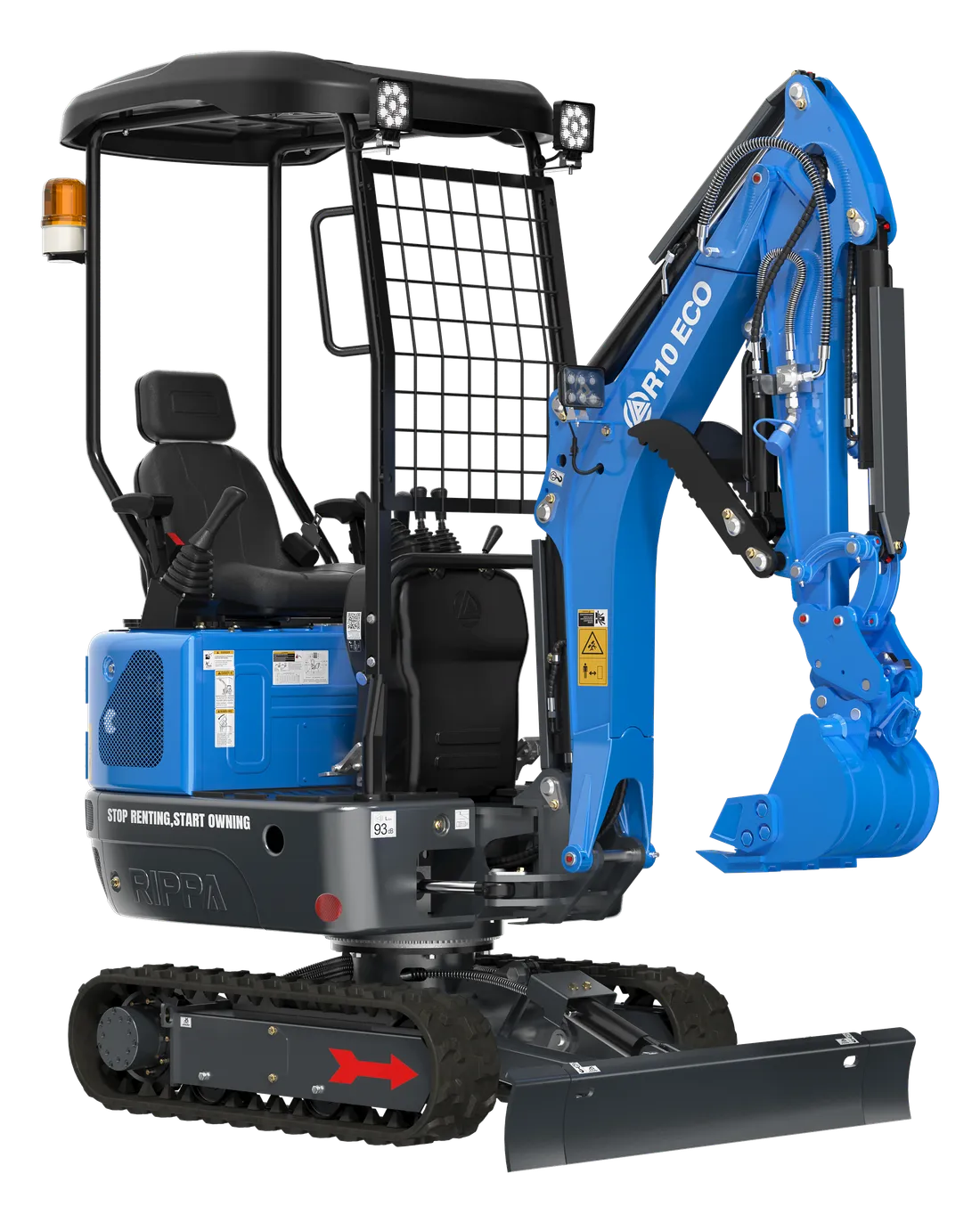
Although undercarriage parts look alike from the outside, their dimensions vary by model. Names in our spare parts list such as “R10/R13/R15 Mini Excavator Track Roller Assembly” show which models the part is compatible with. Before ordering, prepare the following:
- The machine model and the serial number on the product label
- Where the part is: right or left, front or rear (think of the direction as if you were sitting in the operator’s seat)
- Clear photos of the old part and any code on it
- If needed, basic dimensions: diameter, width, number of teeth
We explain how to gather this information step by step in our guide to finding the right spare part. At EKSFORK, 382 spare parts are kept in stock, and parts in stock are shipped the same day.
Quick checklist
You can add the list below to the machine’s maintenance log. The intervals are a general framework; the intervals in your machine’s operator’s manual take precedence.
Every day at the end of work:
- Clean the mud, stones and plant debris from between the rollers.
- Check the roller and idler hubs for traces of oil.
- Check the track for cuts, breaks or noticeable sagging.
Every week:
- Check the track tension using the method in the manual.
- Look over the drive sprocket bolts and tooth tips.
- Check for leaks around the travel motor.
At every periodic service:
- Photograph the sprocket and idler from the same angle and compare them with previous records.
- Write the tooth thickness measurement in the maintenance log.
- Confirm that the tensioning cylinder is holding its grease and that the track isn’t going slack quickly.
Summary
- Undercarriage parts wear together; a problem in one speeds up the wear of the others.
- Replacing a leaking or seized roller early protects the track.
- A track that keeps going slack is often a warning sign from the tensioning mechanism.
- Using a new track with a hook-toothed sprocket shortens the new track’s life.
- Daily cleaning and a regular photo record are the cheapest ways to extend undercarriage life.
You can explore the undercarriage parts for your machine on the undercarriage spare parts page. If you’re not sure which part needs replacing, send photos and videos to our service line on WhatsApp or fill in the service request form.