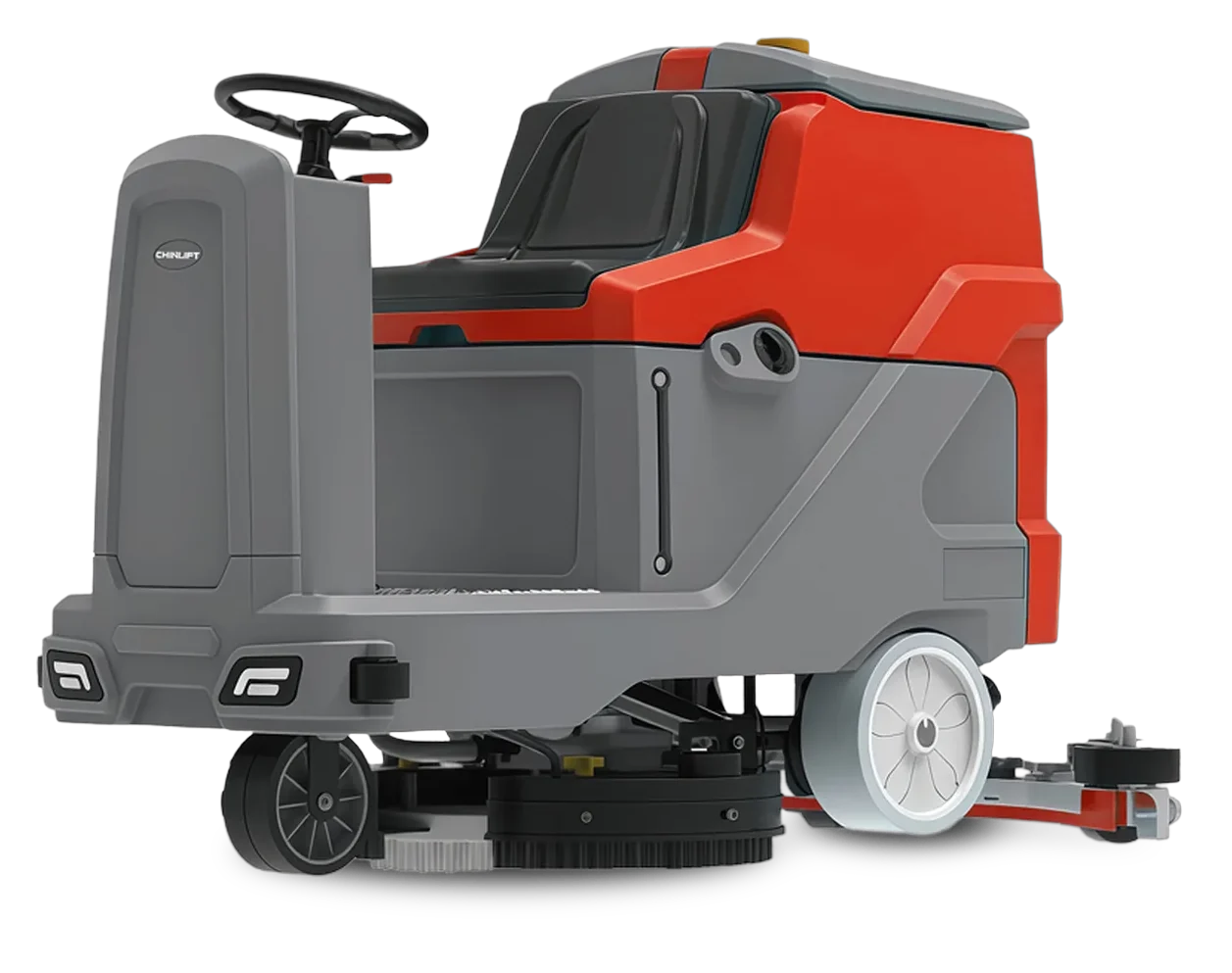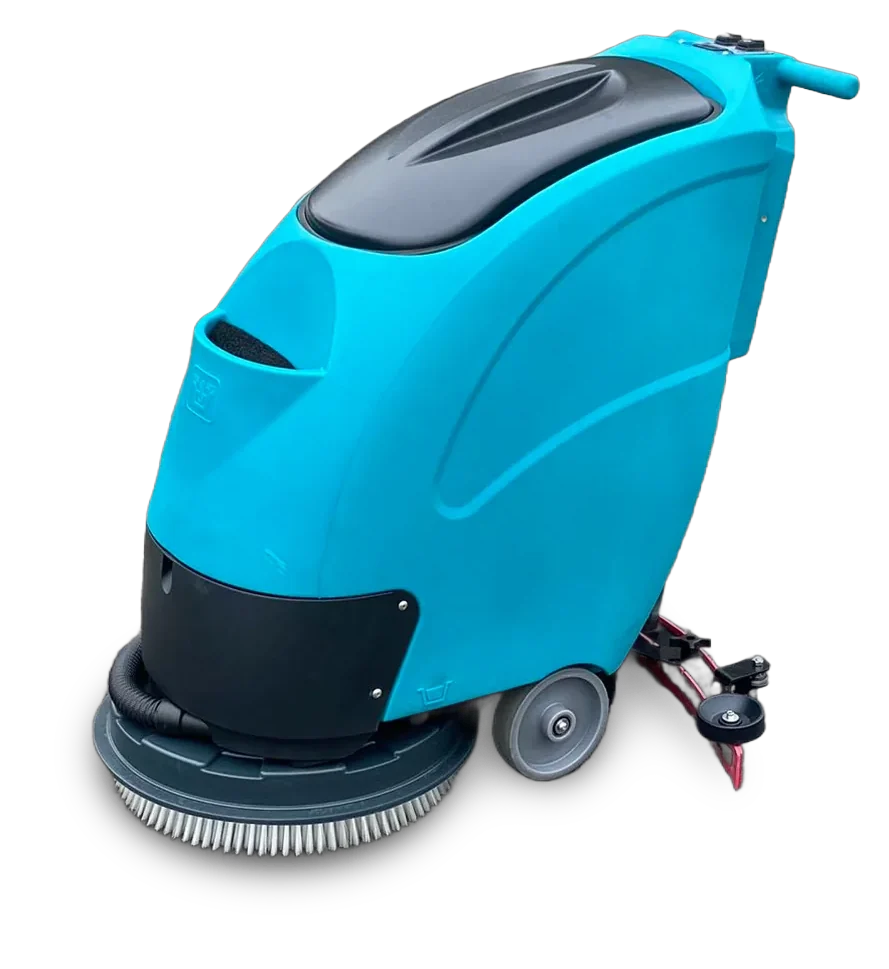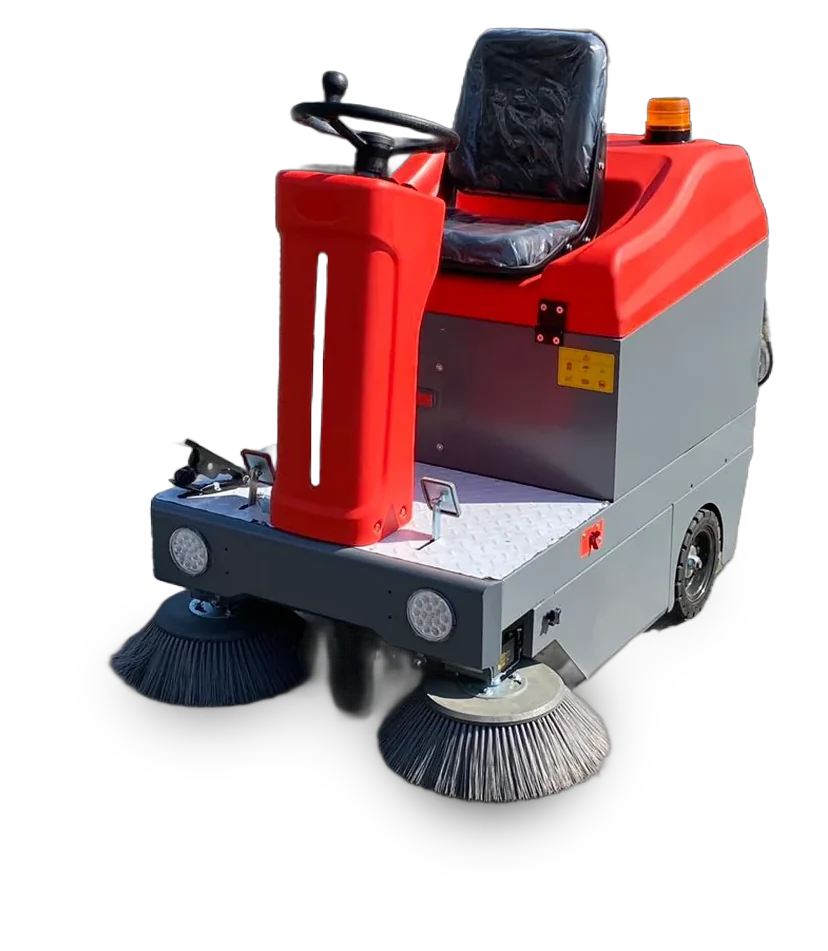
With a bucket and mop, the idea that “a bit of extra detergent does no harm” is widespread. In a floor cleaning machine, though, too much detergent turns straight into a problem: foam fills the dirty water tank, residue leaves the floor sticky, and the wrong product wears out the machine’s seals and hoses. Too little detergent isn’t the answer either; the dirt stays put and the machine gets blamed for “not cleaning”.
The good news is that in machine cleaning, choosing the chemical comes down to a few simple rules, and dosing to a single multiplication. A team that knows the rules gets both a cleaner floor and lower consumable costs from the same machine.
In this guide we explain the requirements a product for the machine must meet, the difference between neutral, alkaline and acidic products, the foam problem, calculating the dose by tank volume, the signs of a wrong dose and chemical safety.
Floor scrubber detergent: four requirements
A cleaning product that cleans the floor isn’t necessarily usable in a machine. The product you put in the machine must meet all four of these requirements:
- It must be low-foam. The machine sucks up the dirty water with a vacuum; foam both fills the tank quickly and can reach the vacuum side. Choose products whose label says they are suitable for use in machines.
- It must be compatible with the machine. It must be compatible with the tank, seals, hoses and valves. Solvent-based or flammable products don’t go in the machine’s tank.
- It must suit the floor. Marble is affected by acids, polished floors by strong alkalis, and some coatings by certain solvents.
- It must not leave residue. Used at the right dose, it should leave no stickiness or film once the floor has dried.
Household washing-up liquids and surface cleaners mostly foam heavily and fail the first of these requirements; they should not be put in the machine.
Neutral, alkaline, acidic: which product for what?
Cleaning products are roughly grouped by pH value. Around pH 7 is considered neutral; above that is the alkaline side, below it the acidic side. Each group has a type of dirt it is strong against and a floor to be careful with:
| Product type | What for? | Where to take care? | Note for machines |
|---|---|---|---|
| Neutral cleaner | Daily maintenance cleaning, light soiling, dust | Not enough for heavy grease | First choice on polished and delicate floors |
| Alkaline cleaner, degreaser | Oil, grease, organic dirt; kitchens and workshops | Can soften polish; harmful to skin | Test on a small area first on coated floors |
| Acidic cleaner | Limescale, cement residue, mineral stains | Not used on marble or natural stone | Confirm with the supplier that it is suitable for machines |
| Disinfectant | Against micro-organisms | Less effective on a dirty surface | Not mixed with detergent in the same tank |
Polished floors need particular care: strong alkaline products soften and strip polish. Polish strippers work on exactly this principle. If you want to protect the polish in daily cleaning, work with a neutral product, and do stripping as a separate, planned job.
Disinfectant and detergent are not the same thing. Detergent dissolves and removes dirt; disinfectant acts against micro-organisms on a surface that has been cleaned. That is why the general principle is cleaning first, then disinfection. In places such as hospitals, the institution’s own protocol determines which product is used in which order; for details, see our shopping centre, supermarket and hospital guide.
We explain separately how to use alkaline products on oily factory floors in our factory floor guide, and product choice for coated floors such as epoxy in our epoxy floor guide.
Foam: the machine’s silent enemy
As the machine sucks up dirty water, it draws in air along with it. A foaming solution multiplies its volume in this mix; the dirty water tank becomes full while holding very little water. On many machines, the float that shuts off suction when the tank is full may not detect foam the way it detects water. The result: foam moves towards the vacuum side and puts the motor at risk. We explain why the dirty water tank is designed larger than the clean water tank in our guide to how it works.
Foam has three common causes:
- The wrong product: A heavily foaming cleaner that isn’t suitable for machines.
- Overdosing: Even a suitable product can foam if too much is used.
- Old residue on the floor: In places newly switched to machine cleaning, detergent residue built up by years of mopping can cause foam in the first few washes. In that case keep the dose low for several washes; as the residue decreases, so does the foam.
Defoamers suppress foam when added to the dirty water tank in the amount on their label. But a defoamer is a temporary measure, not a solution; if you need it all the time, review your product or your dose.
Detergent dosing in machine cleaning: a single multiplication
The dose is usually given on the product label in millilitres per litre (ml/L), as a percentage or as a ratio. All of them can be converted to the same calculation:
- ml/L: Used directly.
- Percentage: 1 per cent means 10 ml per litre.
- Ratio (such as 1:100): 1 part product to 100 parts water; equivalent to roughly 10 ml per litre.
Product to add to the tank (ml) = Water in the tank (L) × Ratio on the label (ml/L)
The table below shows the calculation for the clean water tank volumes of the models. The ratios are examples; use the ratio on your own product’s label.
| Model (clean water tank) | Example 5 ml/L | Example 10 ml/L | Example 20 ml/L |
|---|---|---|---|
| K1 (40 L) | 200 ml | 400 ml | 800 ml |
| K2 (55 L) | 275 ml | 550 ml | 1,100 ml |
| HY660 (90 L) | 450 ml | 900 ml | 1,800 ml |
| KL860 (155 L) | 775 ml | 1,550 ml | 3,100 ml |
If you only fill the tank halfway, halve the product too; the calculation is always made with the actual amount of water in the tank. A practical method: mark the levels you use most often on the tank and stick a small label on the machine showing the amount of product needed for each level. Use a measuring jug or a dosing pump; pouring by eye is the biggest source of dosing errors.
Water first, then product. Putting the product in an empty tank and running water quickly on top of it creates foam inside the tank. Fill the tank and add the product last.
Too little or too much? Signs of a wrong dose
The floor tells you whether the dose is right. Once it has dried, look at the floor and walk on it:
- Overdose: The floor is sticky and shoe soles squeak; the floor gets dirty again quickly because the residue holds on to dust; there is foam in the dirty water tank; cloudy rings and marks are left on glossy floors.
- Underdose: Dirt and oil film stay put; a grey, dirty water trail is visible behind the squeegee; you have to go over the same area twice.
To remove overdose residue, do a rinse pass with plain water and lower the dose in subsequent cleans. With underdosing, first check the ratio on the label; if the ratio is right but the result is weak, the problem lies with the product type, the brush or the speed.
Water, concentrates and switching products
Water hardness and temperature
Hard water reduces the effectiveness of many cleaning products and can leave whitish marks or a thin film on the floor as it dries. If your water is noticeably hard, ask your supplier; some products are formulated for hard water. Always put clean water in the clean water tank: sand and sediment clog the valve and filter. If you want to use hot water, don’t exceed the temperature limit in your machine’s manual.
Concentrate or ready to use?
Ready-to-use products are mostly for spray and manual cleaning. In machines, concentrated products diluted with water are generally used. A concentrate is more economical per litre, but that advantage only materialises when it is measured; a concentrate used without a measuring jug can become the most expensive product of all.
When switching products
When switching to a new product, empty the tank completely and rinse it with clean water. Any of the previous product left in the tank, hose and valve can mix with the new one; this can cause foam and is a risk if the two products are incompatible. Test the new product on a small area on the first day and check the result once it has dried.
Is detergent needed every day?
Not always. On a lightly dusty, coated floor that is cleaned regularly, plain water is sometimes enough. If you have residue problems on the floor, a pass with plain water at regular intervals removes built-up detergent and helps the floor stay clean for longer. Decide how much detergent each area needs by looking at your own results, using the logging method we describe below.
Chemical safety: a checklist
Cleaning chemicals look like everyday products, but misused they can have serious consequences. Apply this list for every chemical:
- Read the product’s Safety Data Sheet (SDS) and keep it where the team can reach it.
- Use the protective equipment specified on the sheet; at the very least gloves, and safety goggles with concentrates.
- Never mix two different products. For example, chlorine-based products can release toxic gas when mixed with acidic or ammonia-based products.
- Dilute concentrates in a well-ventilated place.
- Keep products in their original, labelled packaging; don’t decant them into drinks bottles or unlabelled containers.
- Keep chemicals away from food, drink and places children can reach.
- Wipe up any drips after putting detergent in the tank; a slippery spot can turn into an accident.
- When the job is done, don’t leave the remaining solution in the tank; rinse the tank with clean water.
Confirm the current obligations for using and storing chemicals with your health and safety adviser.
The right dose is also a saving
Detergent is one of the biggest consumable costs in machine cleaning, and overdosing is money straight down the drain. Use this calculation to see your costs:
Chemical cost per m² = (Amount of product per tank × Unit price of the product) / Area cleaned per tank (m²)
For a month, log the date, area, product, dose and result for every tank. Only then will you see which product gives the best result at which dose. This log will also help when you calculate the payback on a machine investment; we explain that calculation step by step in our payback guide. You can find tank and filter cleaning in our maintenance guide.
Summary
- The product put in the machine must be low-foam, suitable for the machine and the floor, and leave no residue.
- Neutral for daily maintenance, alkaline for grease, acidic for limescale; no acid on marble.
- The dose is a single multiplication: water in the tank (L) × ratio on the label (ml/L). Don’t pour by eye.
- Water first, then product; see a defoamer as a stopgap, not a solution.
- Never mix products, and use the protective equipment listed on the SDS.
With its 55 L clean water tank, water level indicator and wide filling opening, the K2 walk-behind floor scrubber is designed to make measuring the dose easy. For advice on the right use for your machine and floor, message us on WhatsApp.