If you are planning work on a plot of land and hear the phrase “we need a mini excavator here” for the first time, you probably have a few questions: what exactly is this machine, how does it differ from big construction machines, will it do my job, or would it be a bigger investment than I need?
This volume was written for someone who has never worked with the machine. It introduces the machine part by part, explains in plain language how the hydraulics work, shows what the figures on the spec sheet mean on site and, most importantly, states openly the jobs a mini excavator can’t do.
By the time you finish reading, you will be able to speak the same language as the seller, the rental company or the operator, and decide for yourself whether this machine is really what you need.
What exactly is a mini excavator?
A mini excavator is a compact hydraulic construction machine that runs on tracks, has an upper body that can rotate on its own axis, and digs with an articulated arm at the front. It works on the same principle as large excavators; the difference is its size. It can pass through a narrow garden gate, be moved on a trailer and cause less damage to its surroundings on delicate jobs.
In everyday language many people call this machine a “mini digger”; small digger, small excavator and compact excavator describe the same machine too. This isn’t wrong, but it can cause confusion, because the difference between an excavator and a backhoe loader is often not known: wheeled machines with a loading bucket at the front and a digging arm at the back are also popularly called diggers. The machine we are talking about in this article is the single-arm, tracked excavator with a rotating upper structure.
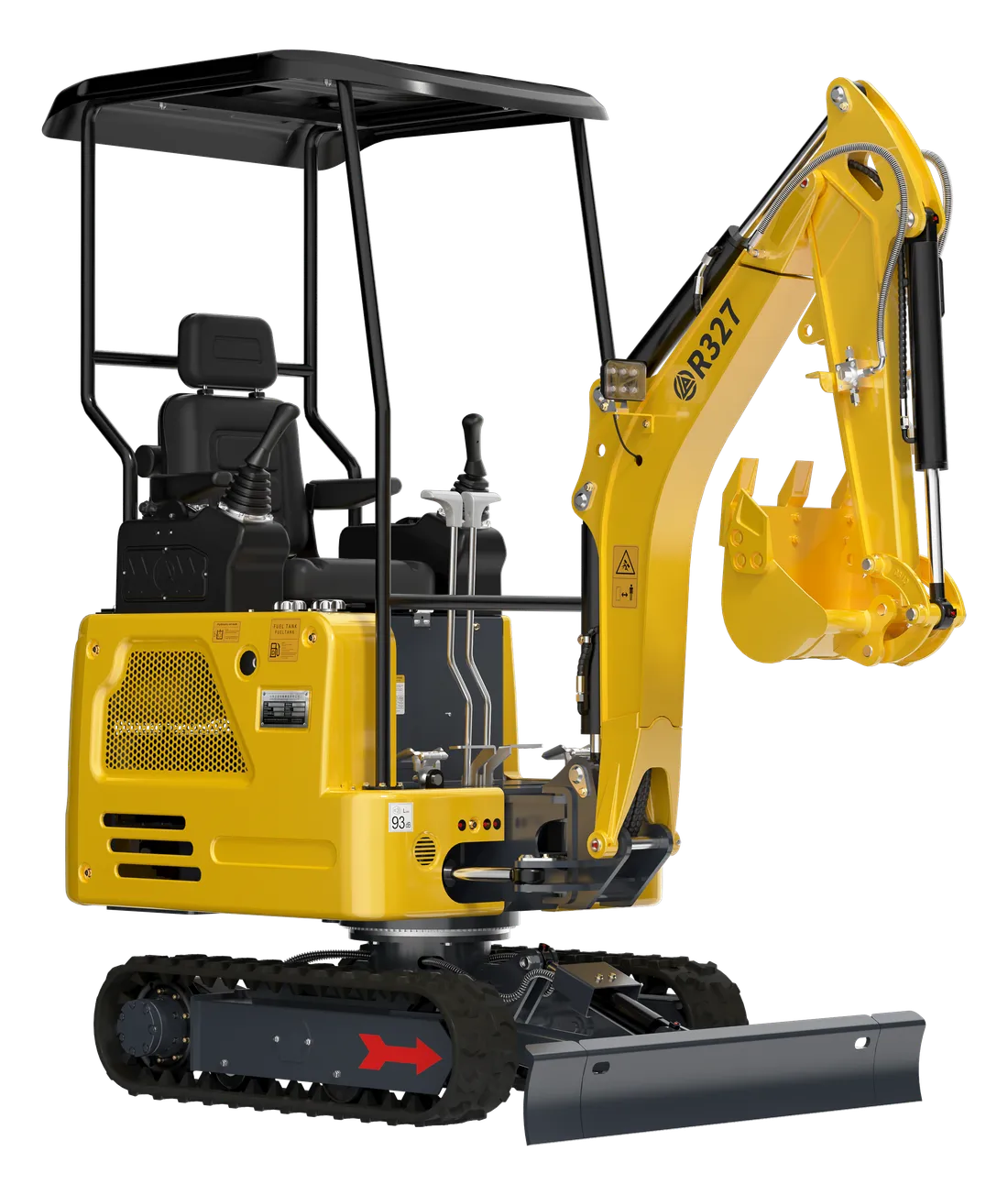
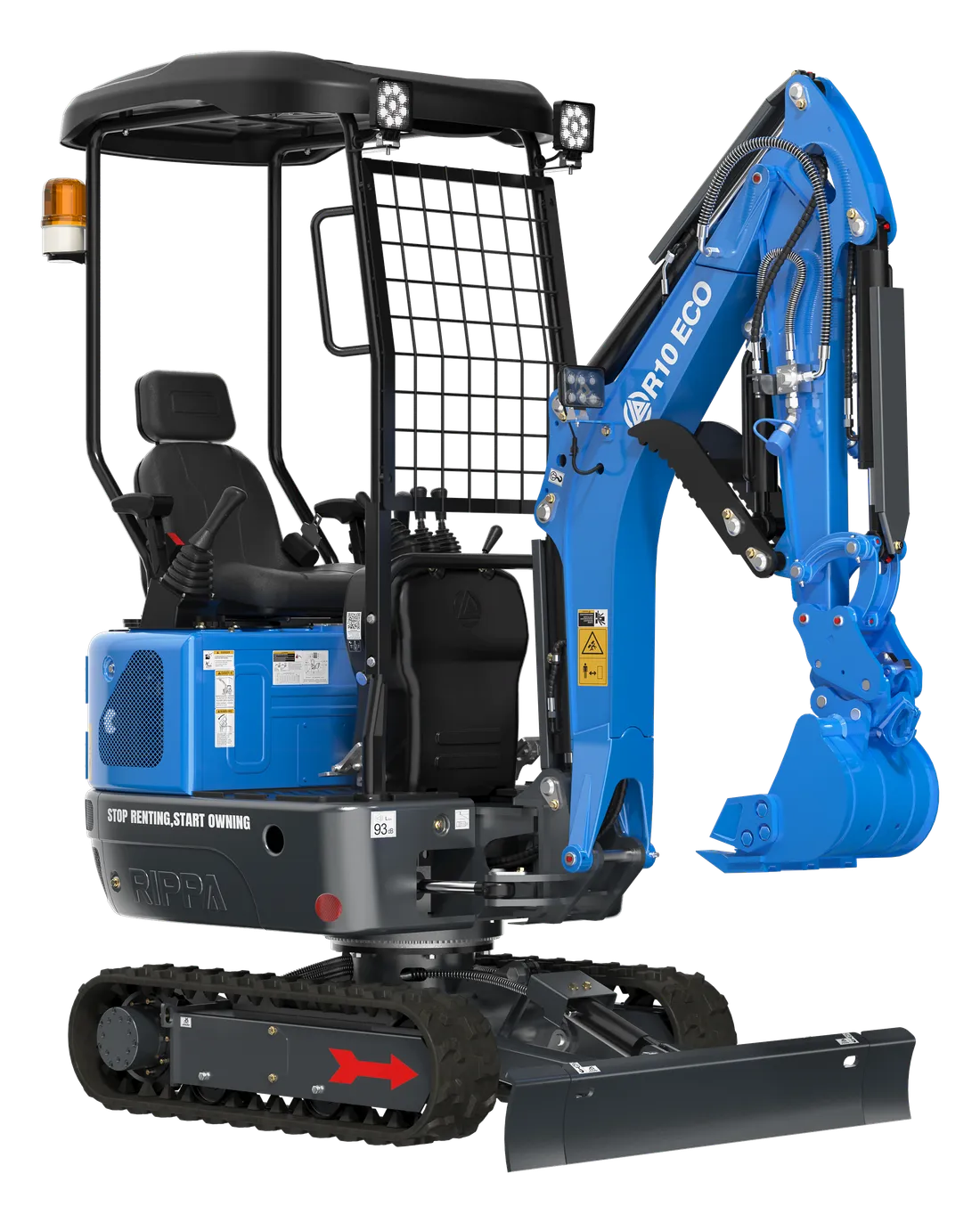
There is no exact weight limit for the “mini” class; the name is given to compact excavators of roughly a few tonnes. The three models at EKSFORK sum up this range well: the 1.2-tonne R10, the 1.7-tonne R327 and the 3.5-tonne R350. Which of them suits you is explained in detail in the volume where we tackle the question of what size mini excavator to buy.
What are the parts of a mini excavator?
It helps to think of a mini excavator in three main sections: the undercarriage at the bottom, the rotating upper structure in the middle and the digging equipment at the front. Most of the names you will come across in spare parts lists belong to one of these three sections.
Undercarriage and dozer blade
There are two tracks under the machine. Each track is turned by a travel motor and the drive sprocket connected to it; the idler at the other end of the track and the rollers underneath carry the track, and the tensioning mechanism stops the track from sagging. Because the tracks spread the machine’s weight over a large area, it sinks less into soft ground than a wheeled vehicle.
At the front there is a dozer blade attached to the undercarriage. This blade isn’t only for pushing soil and smoothing surfaces; it is also lowered to the ground during digging to stabilise the machine and improve balance.
Upper structure
The engine, hydraulic oil tank, pump, control valves and operator’s seat are in the upper structure. On excavators the upper structure usually rotates fully on the lower chassis, so you can drop the soil you dig beside or behind you without moving the machine. The structure protecting the operator is either an open protective roof (canopy) or an enclosed cab; on the R350 an air-conditioned enclosed cab is standard.
Digging equipment
The first large arm coming out of the upper structure is the boom, the second arm at its end is the dipper arm (on site often just called the “arm”), and the part at the very end is the bucket. The bucket isn’t a fixed part but an attachment mounted on the end of the arm; a breaker, auger or grapple can be fitted in its place.
A hydraulic thumb mounted opposite the bucket works together with it to let you grip items such as stones, stumps and pipes; the R10 has a movable thumb and the R327 an articulated hydraulic thumb. The R327 and R350 also have a 120° boom swing: the boom can be turned left and right independently of the upper structure, which makes digging along walls easier.
How does the hydraulic system work?
A mini excavator’s power doesn’t come directly from the engine but from pressurised hydraulic oil. The diesel engine turns a hydraulic pump; the pump pressurises the oil it draws from the tank. When you move a control lever, the control valve directs this oil to the relevant cylinder or hydraulic motor.
- Cylinders produce a linear push-pull movement: they raise the boom, open and close the arm, curl the bucket and lower the blade.
- Hydraulic motors produce rotary movement: they drive the tracks and rotate the upper structure.
- The rotary joint lets the oil reach the travel motors below even while the upper structure is rotating.
- The oil cooler keeps oil that heats up during long work at the right temperature.
All three models at EKSFORK use pilot controls. In a pilot system the control lever doesn’t push the main valve directly; it sends a signal to the valve through a low-pressure auxiliary line. The result is lighter control levers and movements that can be adjusted more finely. Over a long working day this difference shows directly in operator fatigue.
What the hydraulics mean in practice: the machine’s health depends largely on the cleanliness of the oil. Dirty oil, a loose fitting or a chafing hose can start as a small leak and turn into a failure that reaches all the way to the pump. That is why a large part of the daily check is looking at the hydraulic lines.
What is a mini excavator used for?
In short, if you ask what a mini excavator does: it digs, loads and levels; with the right attachment it breaks, drills and pulls out. By changing buckets and attachments, the same machine can do very different jobs. The table below shows the most common uses and which tool is usually fitted for them:
| Area | Typical jobs | Common attachment |
|---|---|---|
| Farming and gardens | Irrigation and drainage trenches, planting holes, removing stones | 30–40 cm bucket, auger, screening bucket |
| Landscaping | Levelling, paths and road beds, tree planting | Grading bucket, rake, auger |
| Infrastructure | Digging for water, sewer and cable lines | 20–30 cm bucket |
| Construction and renovation | Foundations for small buildings and garden walls, backfilling | Digging bucket, standard bucket |
| Demolition | Breaking concrete floors, old walls and foundations | Hydraulic breaker, grapple |
| Land clearing | Removing roots and stumps, collecting stones | Ripper, grapple, thumb |
If you want to see one by one which attachment makes which job easier, have a look at the guide where we explain 14 attachments. What makes a machine valuable is often not the machine itself but the variety of jobs it can do with the right attachment.
How to read a spec sheet: the R10 as an example
The technical tables that sellers share look like a jumble of numbers to a beginner. Yet every row has a meaning on site. As an example, let’s read the R10’s technical data together:
| Value | On the R10 | What does it mean on site? |
|---|---|---|
| Operating weight | 1,200 kg | Plan your transport vehicle and the ground’s bearing capacity around this figure |
| Machine weight | 900 kg | What the difference from operating weight covers varies by manufacturer |
| Max. digging depth | 1,650 mm | The deepest point you can reach; keep your plan a little below this |
| Max. digging radius | 2,400 mm | The furthest distance you can reach without moving the machine |
| Max. dumping height | 1,850 mm | The highest point at which you can empty the bucket; decisive when loading a trailer |
| Bucket digging force | 11 kN | The force with which the bucket breaks out the ground; shows how hard it will work in tough ground |
| Machine dimensions | 2,200 × 930 × 2,200 mm | The 930 mm width determines whether it fits through narrow doors and passages |
Note two points here. First, maximum values are measured in ideal conditions; on sloping ground, in loose soil or next to a wall you may not reach them fully. Second, weight definitions can vary from manufacturer to manufacturer; if you are calculating transport or ground load, always go by the larger figure.
What can’t a mini excavator do?
Let’s be honest — a mini excavator is a versatile machine, but it isn’t the machine for every job. Knowing its limits before you buy or rent is much cheaper than setting out with the wrong expectations.
- Its depth is limited. Digging depths of 1,650 mm for the R10, 1,580 mm for the R327 and 2,927 mm for the R350 are for small and medium-scale jobs. A basement or deep infrastructure excavation needs a bigger class of machine.
- It doesn’t move soil far. An excavator digs and loads beside itself; to take soil a hundred metres away you need a tractor and trailer, a dumper or a truck.
- It isn’t a crane. Hanging a load from the bucket is only possible under conditions permitted by the manufacturer and within the lifting limits. Using a mini excavator like a crane creates a serious risk of tipping over.
- A bucket isn’t enough for rock. Rock and concrete need a hydraulic breaker, and compacted hard ground needs a ripper; forcing the bucket wears the teeth and pins quickly.
- It doesn’t cultivate fields. For tillage over large areas, such as hoeing, ploughing or weeding, a tracked tractor is the better tool; we explain this distinction in the excavator or tractor volume.
First steps: hiring a service, renting or buying
If you have decided you need a mini excavator, the next question is how to get one. There are three ways, and each suits a different workload:
- Hiring with an operator: The least hassle for one-off jobs of a few days a year. The machine, operator and transport are provided by the other party; you just describe the job.
- Renting: Suitable for a project lasting a few weeks or for trying out the machine. Compare rental fees, transport and deposit terms from several quotes in your area.
- Buying: Makes sense if you will use the machine for most of the year or plan to offer services to others. At EKSFORK the R10 starts from 299.000 ₺ and the R327 from 479.000 ₺ on campaign (list price 549.000 ₺); prices exclude VAT. You can ask for the current price of the R350 on WhatsApp.
Your number of usage days per year determines which option is cheapest for you. In the volume rent or buy, where we calculate the break-even point step by step, you can do the sums with your own figures.
If you will operate the machine yourself, don’t skip training. Occupational safety legislation makes operator training mandatory; confirm which certificate is required for your type of work with your health and safety specialist or the relevant authority. For machines bought from EKSFORK we provide set-up and basic operator training on delivery; we have collected what to watch in the first hours in the first-use guide.
Common mistakes beginners make
- Digging without asking about underground lines. Don’t lift a single bucket of soil before finding out from the relevant authorities where electricity, gas, water and telecom lines run.
- Leaving the dozer blade in the air. Lowering the blade to the ground while digging stabilises the machine and gives balance on the digging side.
- Having people in the swing area. As the upper structure rotates, the rear body and bucket can move out of your field of view; don’t swing until you are sure nobody is around.
- Standing sideways on a slope. As far as possible, position the machine in line with the slope, don’t work tilted sideways across it, and keep the bucket close to the ground when moving.
- Skipping the daily check. Engine oil, hydraulic oil, coolant, track tension and greasing points take a five-minute walk-round; five minutes skipped can turn into hours of downtime.
Quick checklist: is a mini excavator the right tool for you?
- Is most of your work digging, trenching, pits or loading? If so, you are looking at the right machine.
- Have you measured the maximum depth you need? The digging depth of the model you choose should be above it.
- How many centimetres wide is the narrowest gate or passage to the work area? Choose the machine width accordingly.
- Do you know how you will transport the machine? The operating weight must stay below the carrying limit of your vehicle and trailer.
- How many days a year will you use it? With light use, consider hiring a service or renting; with regular use, consider buying.
- Which attachments will you need besides the bucket? If any, add them to the budget from the start.
- Who will operate the machine, and how will their training and the required certificate be arranged?
To see the models side by side, you can explore our mini excavator models and ask us on WhatsApp which model suits you by briefly describing your work.