Forklift operation is a sought-after skill in warehousing, logistics, manufacturing and almost every branch of trade. From the outside it may look as simple as “turn the wheel, lift the forks”, but a good operator is someone who manages the balance of the load, the limits of the machine and the people around them all at once.
This guide is written for two readers: people who want to become forklift operators and businesses that use forklifts. We explain what training should cover, what to watch for in the certification process, what has to be learnt on site after certification and what the employer’s responsibilities are.
Important note: Certificate types, training requirements and obligations may change as legislation is updated. Here we give the general framework; confirm the current, binding requirements with your health and safety adviser, an authorised training provider or the relevant authority.
What does a forklift operator do, and what skills are needed?
An operator’s job isn’t just moving loads. A typical shift includes:
- Carrying out the machine’s daily check at the start of the shift and recording the result
- Unloading trucks and containers at goods-in and loading them for dispatch
- Putting pallets into racks, taking them out and moving them around the warehouse
- Spotting and reporting risks such as damaged pallets, unstable loads or faults
- Parking the machine correctly at the end of the shift and putting it on charge
The skills these tasks require follow naturally: judgement of distance and depth, composure, respect for the rules, attention that keeps constant track of pedestrians nearby, and the habit of reporting problems rather than hiding them. Employers usually ask for a pre-employment medical; the occupational physician assesses the health requirements for the role.
A roadmap for aspiring operators
- Research the demand: Look at job adverts in your area to see which certificate, and experience with which type of forklift, employers are asking for.
- Choose a training provider: Find an authorised, hands-on forklift course by asking the questions in the certificate section below.
- Complete the training and get your certificate. Don’t skip the practical lessons; that is the part that will help you most on the job.
- Build up machine hours: In your first job, practise alongside an experienced operator, at quiet times and in safe areas.
- Describe your experience concretely: Add to your CV which types of forklift you have operated (electric, diesel), at which rack heights and on which tasks (truck loading, containers, rack stacking).
- Be ready for a practical test: Many employers ask for a short driving and stacking test on their own machine before hiring; you may also be expected to demonstrate the daily check.
What should the training cover?
Good operator training has two parts: theory and practice. The theory part should cover at least the following topics:
- Knowing the machine: Controls, gauges, warning systems and safety equipment
- Stability and capacity: The stability triangle, load centre, capacity plate and reading the load chart
- Safe driving: Speed, cornering, ramps, load travel height and loads that block the view
- Stacking and racking: The sequence for placing and retrieving loads, damaged pallets and damaged racking
- Workplace and pedestrian safety: Pedestrian traffic, blind corners, floor markings
- Energy: Safety when charging the battery or refuelling
- Daily checks and fault reporting
- Emergencies: What to do in a tip-over, fires and injuries
In the practical part, the trainee should work on slalom and tight-space manoeuvring, placing and retrieving loads at different rack heights, driving on ramps loaded and empty, loading a truck bed if required, and parking correctly. However solid the theory, training with few practical hours falls short on the job.
We cover the safety rules taught in training separately in our guide library; for details, take a look at our forklift safety guide.
How can you tell good training?
When comparing courses, look less at the list of lessons in the brochure and more at these signs: Does each trainee really spend enough time on the machine? Is the practice done with real pallets and racks? Does the instructor explain not only what the rules are but also why? Does the assessment include a practical part? If there are many trainees and few machines, the practical time may exist only on paper.
Forklift operator certificate: what to look for and how to verify it
What people call a “forklift licence” in everyday language is usually this operator certificate. It is issued at the end of training and assessment by an authorised provider. In practice you may come across different types of certificate, and which one counts as valid for your job, sector and employer can vary. So follow these steps before you enrol:
- Find out from the employer or the health and safety adviser which certificate is required in the sector or workplace where you want to work.
- Ask whether the training provider is authorised to deliver this training and who issues the certificate.
- Ask in writing for the number of theory and practical hours, which machine is used for the practical sessions and what form the exam takes.
- Find out whether the certificate has a period of validity or a renewal requirement.
- Keep the original of your certificate and give your employer a copy.
Be wary of offers promising a certificate in a very short time, without practice or without an exam. A certificate like that leaves you unprepared on the job, and it may not stand up in an inspection or an accident investigation either.
A certificate isn’t enough: site- and machine-specific familiarisation
A certificate shows an operator’s general competence; it doesn’t mean they know every workplace and every machine. An operator starting at a new workplace or on a new machine should also be briefed on the following:
- Site layout: Routes, speed limits, pedestrian walkways, ramps and doors, no-go zones
- Loads: Load types specific to the business, fragile goods, long or unstable loads
- The machine itself: Control layout, capacity plate, equipment such as a side shifter and fork positioner where fitted, the battery gauge and the charging routine
- Workplace rules: Key handover, fault reporting, parking and charging area
In the first few days, pairing the new operator with an experienced colleague helps this knowledge sink in on the job. Hazardous or busy areas should come only after the operator has learnt the routes and rules.
A sample first-week plan (adapt it to your own business):
- Day 1: Warehouse tour; routes, no-go zones, parking and charging area. An unladen introduction to the machine and doing the daily check together.
- Days 2 and 3: Working with light loads under the supervision of an experienced operator, at quiet times and at the lower rack levels.
- Days 4 and 5: Moving into the normal workflow; difficult tasks such as truck loading and the upper levels under supervision.
- End of the week: A short review with the shift supervisor and a decision on authorisation.
At EKSFORK, when we deliver a machine we provide set-up and basic operator training: the machine’s controls, the charging routine, daily checks and the basic rules of safe use. To be clear: this is a machine-specific introduction; it does not replace formal operator training and certification. The two complement each other.
The employer’s responsibilities
Every business that uses forklifts needs a system that actually works on the floor. Occupational safety legislation makes operator training compulsory; clarify the details and the obligations specific to your business with your health and safety adviser. In general terms, the employer’s checklist looks like this:
- Only trained and authorised people drive forklifts; a list of authorised operators is kept.
- Forklift risks are included in the business’s risk assessment.
- Routes, speed limits, pedestrian walkways and parking and charging areas are defined and marked.
- A daily check system is set up; forms are kept, and a faulty machine is taken out of service.
- The machine is serviced according to the user manual and service records are kept.
- Lifting equipment is inspected by competent people at regular intervals; confirm with your health and safety adviser how often and by whom this may be done.
- The operator is given suitable personal protective equipment, and its use is monitored.
- Refresher training is planned and near misses are recorded.
- Key control prevents unauthorised use.
A short practical assessment on top of the certificate is one of the most practical tools an employer has when hiring. Watch how the candidate does the daily check, manoeuvres in a tight space, places a load in the rack and behaves around pedestrians — on your own machine, in your own warehouse. A few minutes of observation show what the paper certificate can’t.
The operator’s responsibilities
Safety isn’t only the employer’s job. The operator must do their part too:
- Checking the machine at the start of every shift and filling in the form honestly; you can find the steps in our daily checklist guide
- Not using a faulty or doubtful machine, and reporting the problem at once
- Wearing the seat belt and following the speed and route rules
- Using all the required personal protective equipment
- Never lifting a load above capacity or a doubtful load
- Never letting anyone else, especially unauthorised people, use the machine
- Sharing near misses rather than hiding them
You recognise a good operator not by their speed but by years of work without accidents or damage.
How to use an electric forklift: what operators need to know
Driving an electric forklift isn’t very different from driving a diesel one, but some habits change:
- Silence: Pedestrians can’t hear the machine, so the horn and eye contact become even more important.
- Battery management: Watching the gauge, not running the battery completely flat, not interrupting a charge halfway.
- Charging safety: Plugging in with the machine switched off, not using damaged sockets and cables, keeping sources of sparks out of the charging area.
- Cleaning: Never washing the machine with a pressure washer; water damages the electrical components.
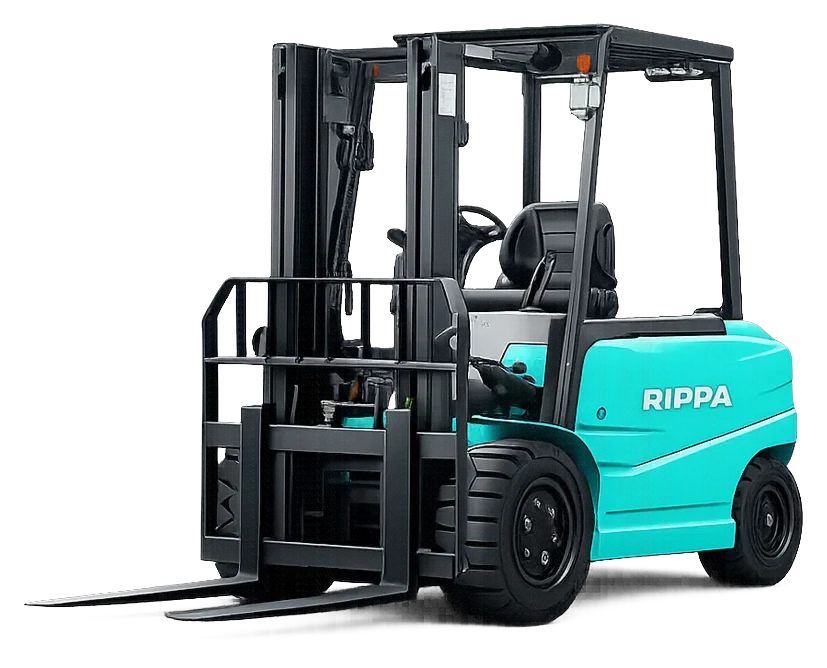
- Extra hydraulic controls: Machines with a side shifter and fork positioner, such as the RF20E, have extra controls next to the lift and tilt levers. Which lever does what should be learnt in the first few days by trying them out without a load; the wrong lever can drop the load.
- Low battery warning: When the battery level drops very low, the machine may restrict some functions. The operator should not mistake this for a fault and force the machine, but finish the job in hand safely and take the machine to the charging point.
We cover batteries and charging in detail in our forklift battery guide.
When is refresher training needed?
Operator training isn’t something you do once and forget. Your health and safety plan sets the regular intervals for refresher training; beyond that, additional training should be considered in these situations:
- After an accident or a near miss
- When unsafe behaviour by an operator has been observed
- When moving to a different type of machine or new equipment (such as a side shifter, fork positioner or fork extensions)
- When the warehouse layout, rack height or load type changes
- When an operator hasn’t used a forklift for a long time
Back up training with observation on the floor. The shift supervisor watches operators at work at regular intervals, notes unsafe habits and gives one-to-one feedback. This is the most natural way to refresh, on the job, rules that were learnt in the classroom and gradually forgotten.
We cover how the different types of forklift differ in use in our types of forklift guide.
Summary
Operator competence isn’t built with a single certificate but in five stages that complement each other:
| Stage | Content | Who provides it? |
|---|---|---|
| Basic operator training | Theory, practice and assessment | Authorised training provider |
| Certificate | Issued at the end of training and assessment | The authorised body that issues the certificate |
| Site-specific training | Routes, rules, loads, no-go zones | Employer, health and safety adviser, experienced operator |
| Machine-specific introduction | Controls, charging, daily checks | Seller or service provider; at EKSFORK, on delivery |
| Refresher | Periodic and post-incident training | Employer and training provider |
If you are thinking of buying a new forklift, take a look at the RF20E’s technical specifications; you can ask about the scope of the set-up and basic operator training we provide on delivery on WhatsApp.