When people think of machine safety, most think only of the operator. Yet on site, the worker walking around the machine, the lorry driver delivering materials, the tradesman taking measurements and the employer who comes to check the work are all exposed to the same risk. Even the most experienced operator can’t prevent an accident alone if the people around them don’t know the rules.
This guide is not an operator course; it sets out the common rules everyone on site should know. Our examples are based on the mini excavator, but most of the rules also apply to tracked tractors, forklifts and other machines.
A note on legislation: occupational health and safety legislation places obligations on employers, such as risk assessment, operator training and personal protective equipment. Here we explain the general principles; for rules specific to your site and the current requirements, get support from your health and safety adviser.
The danger zone: the invisible circle around the machine
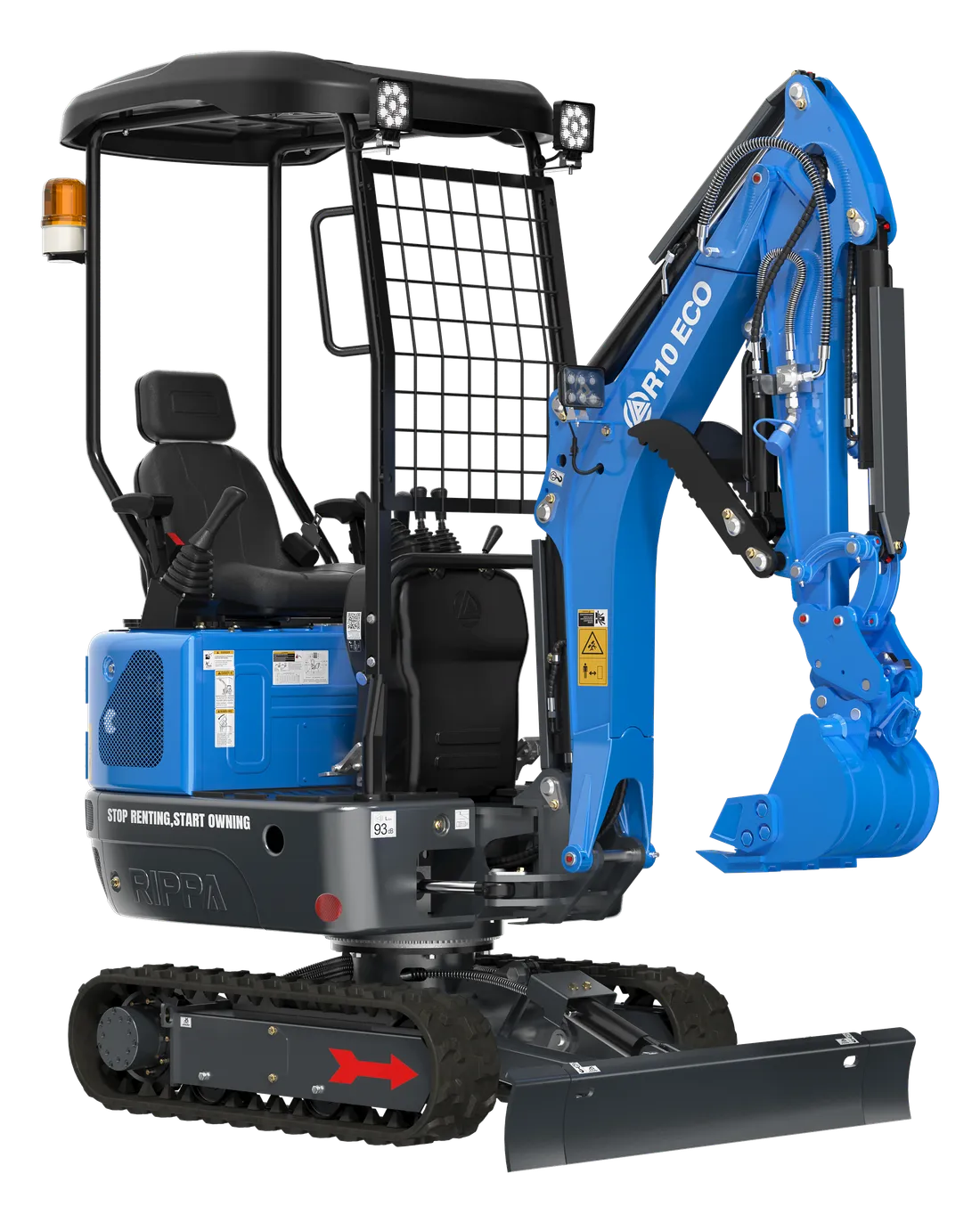
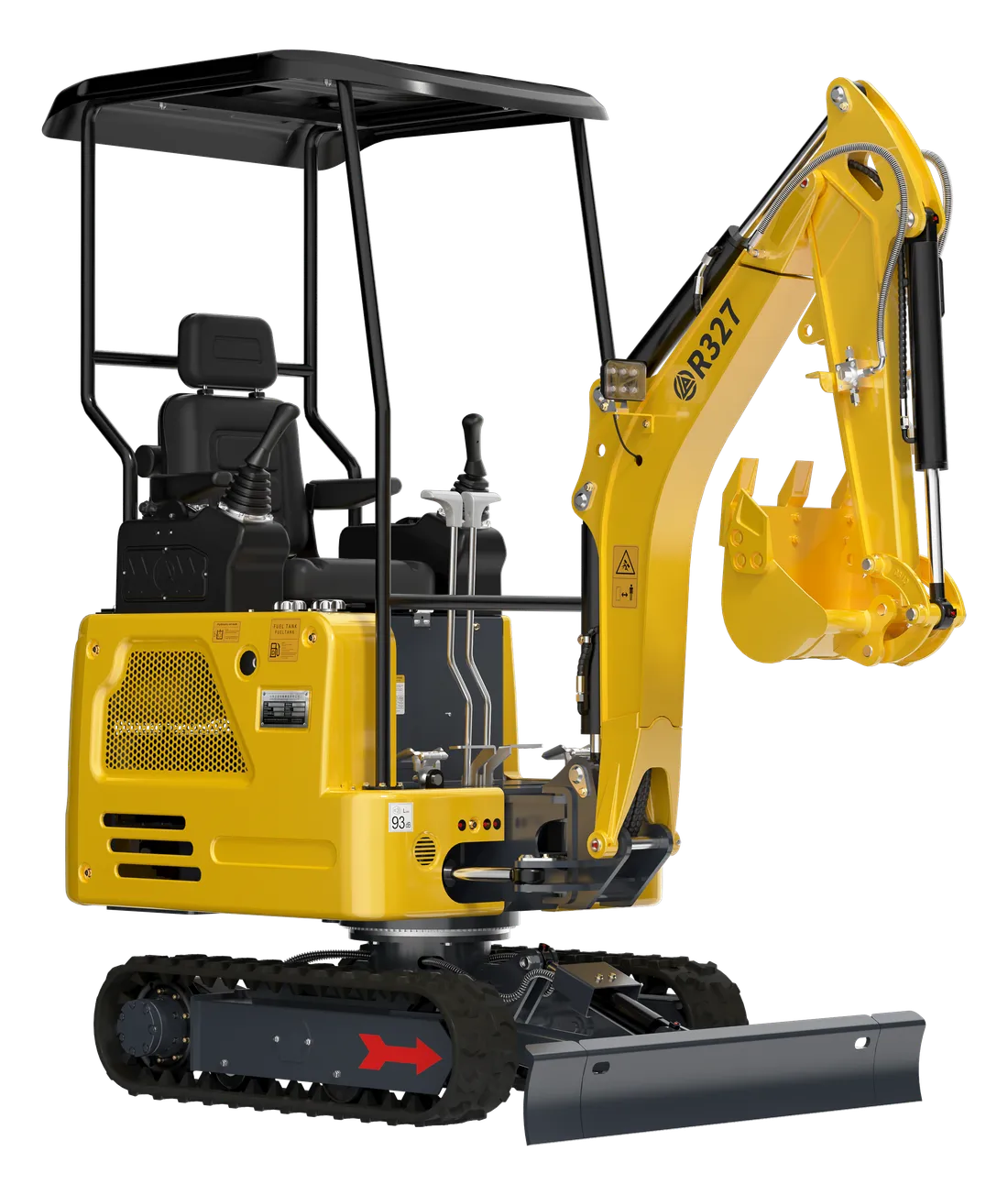
Every working machine has an area around it that nobody should enter without permission. Three movements define this area: the reach of the arm, the slew of the upper structure and the travel of the machine. When an attachment is fitted, the area grows; when a breaker is working, flying fragments also come into play.
A concrete example: the R350’s spec sheet gives its maximum digging radius as 5,007 mm. In other words, the arm can reach about five metres from the slew centre. When the operator wants to slew to the left, the arm can pass through any point in this circle. For someone standing inside it, “the machine was facing the other way” is no defence.
The second, often forgotten movement is the slew of the rear body. The back of a digging excavator turns too; anyone caught between the rear body and a wall, a vehicle or another machine can be crushed. In tight spaces this risk is even greater.
Practical rules:
- Mark the danger zone with tape, cones or barriers, especially where pedestrians pass.
- If you need to approach the machine, first make eye contact with the operator and see that they have stopped work.
- Don’t enter the zone until the operator has lowered the arms and engaged the hydraulic lock.
- Never pass under the arm of a working machine or close to its rear body.
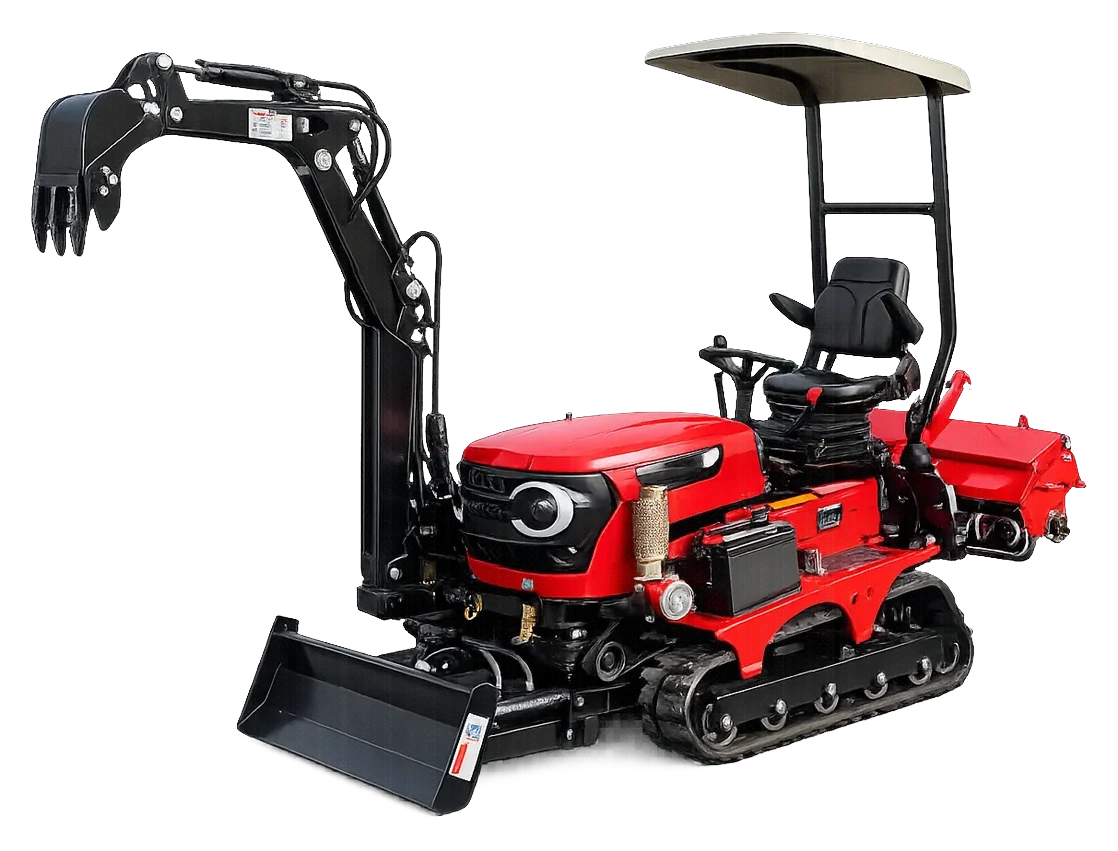
The shape of the danger zone varies from machine to machine. With a tracked tractor, the risk is the rotating parts of the rotary tiller or trencher attachment at the rear; nobody approaches the rear while the attachment is running, and a caught root or stone is never removed by hand without stopping the engine. A forklift, on the other hand, sweeps a wide arc with its rear end when turning; the RF20E’s turning radius is given as 1,700 mm. Standing behind a forklift in a narrow aisle is as risky as standing beside an excavator’s rear body.
Blind spots and communication
The operator can’t see every part of the machine. The boom and arm block the right front, and the cab pillars and rear body block the rear corners. In machines with an enclosed cab, such as the R350 with its air-conditioned cab, shouting from outside doesn’t work either, because of the sound insulation. The rule is simple: if you can’t see the operator’s face, the operator can’t see you.
A few principles for communication:
- One banksman: In crowded or tight areas, a single person directs the operator. Two people waving at once causes confusion.
- Signals agreed in advance: Hand signals such as stop, slow, raise, lower and slew are discussed before work begins.
- Everyone obeys “stop”: Whichever banksman it comes from, the operator stops work at the stop signal.
- Standing in view: The banksman stands where the operator can see them but the machine can’t reach them.
- Phones and headphones: Walking near the machine while looking at your phone or wearing headphones doubles the blind spot.
Give everyone who comes to the site for the first time — whether a day worker or a supplier — a five-minute induction: where the machines are working, which is the pedestrian route, who the banksman is and where the assembly point is. This short talk stops a newcomer from taking a shortcut through the most dangerous spot.
Excavation edges, slopes and underground and overhead services
The most important job before digging starts is finding out about underground services. Find out the location of electricity, gas, water and telecom lines from the relevant authorities and utility companies; for older buildings, look at project drawings too. Where you suspect a line may be, expose it carefully by hand, not with the machine.
If you come across an unexpected pipe, cable or warning tape while digging, stop immediately. Don’t try to pull, lift or move the line with the bucket. If you smell gas, clear the area, stop the engine and anything that could produce a spark, and call the relevant emergency line. Keep everyone away from a damaged electrical cable; work resumes only after the authority that owns the line has given approval.
The excavation edge is a separate risk zone. If spoil from the excavation, a pile of material or the machine itself stands too close to the edge, the edge can collapse. In deep trenches and pits, battering the sides or installing shoring (support) may be needed to stop the edge caving in; the type of ground and the depth determine when this is needed. Nobody should enter the trench until the edge has been made safe. We cover depth and side slopes in trench digging in detail in our channel and trench digging guide.
Don’t forget overhead lines either. The R350’s maximum digging height is 4,295 mm; when the arm is raised it can reach a height of more than four metres. If you need to work under or near a power line, talk to the electricity distribution company before starting work. Contact with a live line may not even require the arm to touch it; getting close is dangerous in itself.
Slopes, ground and rollovers
Rollovers usually result not from one big mistake but from small mistakes piling up: standing sideways on a slope, reaching out with a load on the downhill side, driving onto soft fill or getting too close to an excavation edge. The basic rules:
- On slopes, move up and down the slope as far as possible; don’t work tilted sideways.
- When travelling, carry the bucket close to the ground; don’t slew with the load held high.
- Reassess the ground after rain; ground that was firm yesterday may have softened today.
- Wear your seat belt even for short jobs. In a rollover, the belt keeps the operator inside the protective cab or canopy; trying to jump is usually more dangerous. Follow the instructions in the manual.
We explain the detailed rules for working on sloping ground in our slope safety guide.
Lifting loads and using attachments
A mini excavator is not a crane. If loads are to be lifted with the machine, this must only be done in the way the manufacturer permits, using the lifting point and within the capacity limits given in the manual. Tying a chain or sling to a bucket tooth, raising the load while slewing and having anyone under the load are unacceptable risks.
Points to watch with attachments:
- Quick coupler: Don’t lift or dig until you have confirmed that the attachment is fully locked in. We explain the locking steps in our quick coupler guide.
- Hydraulic breaker: Because of flying fragments, dust and high noise, close off the surrounding area with barriers; people working nearby should wear safety glasses and ear protection.
- Changing attachments: The engine must be off, the attachment on the ground and the hydraulic pressure released using the method in the manual. Don’t put your fingers into the hole when fitting a pin; do the aligning with a bar.
- Loading lorries: Don’t pass the bucket over the lorry cab; the driver should wait at the designated spot outside the slewing area during loading.
Site traffic plan: separate machine, lorry and pedestrian routes
Even on small sites there are times when machines, lorries and pedestrians share the same tight space. A traffic plan — written, or at least known to everyone — noticeably reduces the risk at these times. The basic elements of the plan:
- Separate routes: Keep the pedestrian route separate from the machine and lorry route as far as possible; mark the places where they cross.
- Reduce reversing: Set up a layout where lorries can turn round to leave; if reversing is needed, a banksman should guide it.
- Loading area: Fix the place where lorries will be loaded and keep it away from the pedestrian route.
- Parking area: Choose a flat, firm place where the machines will be left at the end of the day; an excavation edge or a slope is not a parking place.
- Lighting: If work goes on early in the morning or in the evening, the area around the machine and the pedestrian routes must be adequately lit.
Who is responsible for what? A table of roles
Safety works by itself on a site where everyone knows their role. The table below summarises the main responsibility of each role and what must never be done:
| Role | Main responsibility | Must never |
|---|---|---|
| Operator | Start-of-shift check, seat belt, constantly watching the danger zone | Leave the machine to an untrained person, or carry passengers in the bucket or cab |
| Banksman | Clear signals agreed in advance, standing within the operator’s view | Direct from behind the machine or within the arm’s reach |
| Pedestrian worker | Hi-vis vest and hard hat, eye contact, using the marked routes | Walk under the arm of a working machine or behind it |
| Site manager / employer | Risk assessment, traffic plan, trained operator | Bend the rules under time pressure |
| Lorry driver | Waiting at the designated safe spot during loading | Climb onto the body to straighten the load by hand while the machine is working |
The basics of personal protective equipment are the same for every role: a hard hat, a high-visibility vest, steel-toe-capped safety boots and gloves. For breaker work, stone cutting or dusty jobs, add safety glasses and ear protection.
Safety during maintenance, refuelling and breaks
Some accidents happen not while the machine is working but while it is stopped. Every time you leave the machine, follow the same sequence: bucket and dozer blade on the ground, hydraulic lock engaged, engine off, key with you. Avoid parking on a slope.
- Maintenance: Don’t work under a raised boom or arm without mechanical support. Don’t open the radiator cap while the engine is hot; the exhaust and the area around the engine stay hot for a long time.
- Refuelling: Do it with the engine off; no smoking while refuelling, and any spilt fuel is cleaned up immediately.
- Hydraulic leaks: Don’t feel for a leak with your bare hand; pressurised oil can penetrate the skin. Use a piece of cardboard or wood.
- Forklift charging area: It must be ventilated, tidy and away from flammable materials. We have collected the rules specific to forklifts in our forklift safety guide.
Quick checklist: 10 minutes at the start of the shift
- What has changed in the work area since yesterday: a new hole, softened ground, a new pile of material?
- Are the underground and overhead service markers in place?
- Is the danger zone marked with tape or barriers?
- Are the machine’s levels, leak check, tracks, mirrors, lights and horn all in order?
- Are the attachment lock and pins in place?
- Is the seat belt sound and being used?
- Does everyone have full personal protective equipment?
- Is the banksman named, and have the hand signals been discussed?
- Where are the first aid kit and fire extinguisher, and who does what in an emergency?
- What is the riskiest job of the day, and have extra precautions been taken for it?
Safe working starts with choosing the machine: you can compare visibility, cab and equipment differences across our mini excavator models, look at the features of the R350 with its enclosed cab, and ask us on WhatsApp which machine suits your site. During the basic operator training we give on delivery, we put these rules into practice together on site.