When a fault occurs, the question that causes the most tension is often this one: “Is this covered by the warranty?” Knowing the answer not on the day of the fault but on the day you take delivery of the machine makes things easier for both you and the service team. An owner who knows in advance which parts are wear parts, and which damage counts as caused by use or by external factors, plans maintenance accordingly and makes proper use of the warranty.
In this volume we explain what the EKSFORK warranty covers, which situations fall outside its scope and how the decision is made when a fault is a borderline case. The four topics machine owners ask about most often, namely hydraulic hoses, oil that runs low, broken parts and torn tracks, are covered under separate headings.
A note to begin with: what determines the scope and conditions of the warranty is the warranty certificate supplied with your machine. This page does not replace that document; it is a general guide to help you read the certificate correctly and take the right step when a fault occurs.
What does the warranty cover?
New machines sold by EKSFORK come with a warranty of 2 years or 2,000 operating hours. The warranty is provided against defects arising from the machine’s manufacture or assembly. A material or workmanship defect that appears on a machine that is used normally and serviced on time, with no sign of an external impact or incorrect use, is what the warranty is fundamentally about.
How the calendar period and the operating hours limit apply together is set out in the warranty certificate. We explain in detail why tracking operating hours matters in our warranty guide.
In short, the warranty is a safeguard against a defect that originates in the machine itself. Materials that are used up as the machine works, parts that wear over time and damage caused by external factors fall outside this safeguard. The sections below explain this distinction with concrete examples.
The four cases we are asked about most
Hydraulic hoses
Hydraulic hoses are wear parts; bursts and leaks caused by chafing, crushing, cutting or incorrect use are not covered by the warranty. A hose rubbing against an edge or another hose, attachment hoses getting pinched between two parts, being struck by stones or branches, and pressure spikes such as blank-firing with a breaker are typical causes of this damage.
On the other hand, a hose being a wear part doesn’t mean a hose can never have a defect. A leak from the crimped fitting area when there are no signs of chafing, cuts or crushing on the hose may originate in manufacturing or assembly. When you report a case like this, the service team assesses it through a technical inspection. We explain why hoses burst and the signs they give before they do in our hydraulic hose guide.
Oil that runs low or runs out
Engine oil, hydraulic oil, coolant and grease are consumables. Topping up or changing oil that has gone down with use, is due for a change or has run low because its level wasn’t monitored is not covered by the warranty. Checking the levels and topping up with oil of the specification given in the manual is a daily task for the machine owner.
Carrying on working with a low oil level is a separate risk. Damage to an engine or pump that has been pushed despite an oil pressure warning or a falling hydraulic oil level is generally assessed as damage caused by use. We explain why you should stop the machine immediately when a warning light comes on in our fault symptoms guide.
The situation is different if the oil is going down because of a leak. If the source of the leak is a manufacturing or assembly defect, for example if it is coming from a gasket or connection that has not been damaged from outside, this defect is examined under the warranty. So don’t just quietly top up oil that is going down quickly and carry on; note how much has been lost over how long, and report the location of the leak to the service team.
Broken parts
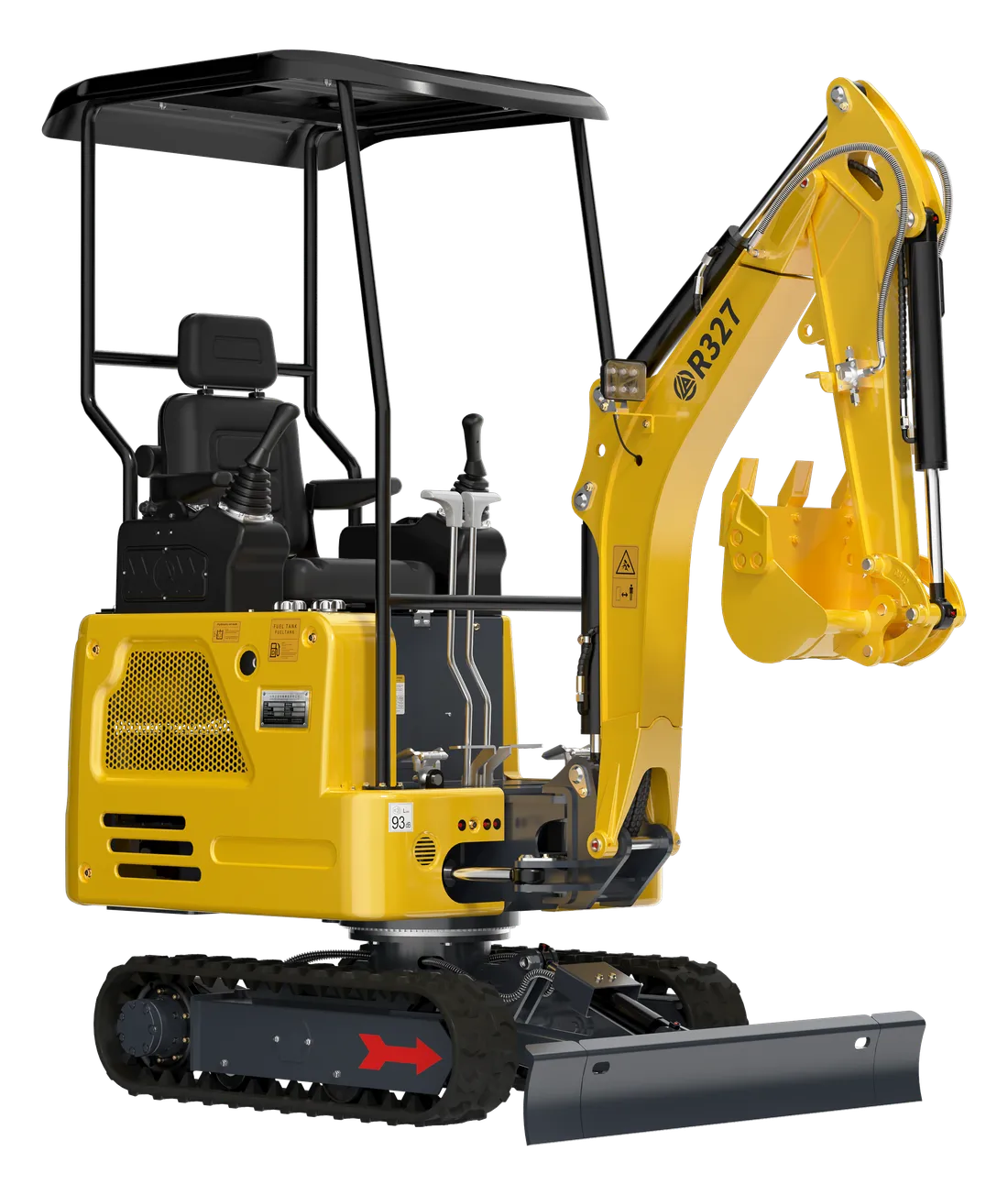
Parts that break, bend or crack as a result of impacts, collisions, tipping over, falls, overloading or incorrect use are not covered by the warranty. The bucket and bucket teeth, the dozer blade, body panels, glass, mirrors and lights, control levers and forklift forks are the parts where this kind of damage is seen most often. Trying to break rock with the bucket or pounding the ground with the bucket like a sledgehammer are among the typical causes of breakage.
A casting, welding or material defect that appears under normal use, with no sign of an external impact, is assessed differently; photograph a break like this and report it, and the decision will be made through a technical inspection. Don’t throw the broken part away or try to repair it: the fracture surface is the most important clue to what caused the break.
Torn tracks
Rubber tracks are wear parts. Cuts and tears caused by external factors such as sharp stones, broken concrete, protruding rebar, demolition debris or kerb edges; tracks coming off and damage caused by working with tracks that are too slack or too tight; and wear accelerated by constant turning on the spot on hard ground are not covered by the warranty.
A manufacturing defect, however, such as the steel reinforcement or the metal cores inside the track coming away prematurely without external damage and under normal use, is assessed through a technical inspection. We explain the habits that extend track life and how to adjust tension in our track maintenance guide, and wear on the drive sprocket and rollers in our undercarriage guide.
Consumables and wear parts
The items below are used up as the machine works or wear out over time. Replacing them is part of scheduled maintenance and normal running costs, so they are not covered by the warranty.
| Item | Why isn’t it covered? |
|---|---|
| Engine oil, hydraulic oil, coolant, grease and filters | Consumables replaced at scheduled services |
| Bucket teeth and cutting edges | In direct contact with the ground when digging, they wear away |
| Wear that develops in pins and bushings over time | Play develops in the joints over time; the greasing routine determines how quickly |
| Rubber tracks | Wear depending on the ground, driving habits and tension |
| Glass, mirrors and lamps | Break from impacts and external factors; bulbs reach the end of their life |
| Fuses | Sacrifice themselves to protect the circuit in the event of overcurrent |
| Batteries damaged by neglect or deep discharge | Loss of capacity stems from charging and usage habits |
| Floor cleaning machine brushes, pads and squeegee blades | Touch the floor every time the machine is used and wear down |
| Wear on forklift solid tyres | Wear according to the load, the floor and the driving style |
Batteries need a separate word of clarification. A manufacturing defect originating in the battery itself is not the same thing as damage caused by use. Loss of capacity and damage in batteries that have been left discharged for long periods, repeatedly run completely flat, charged with an unsuitable charger, or topped up with water despite being gel batteries result from neglect. We explain the right charging habits in our forklift battery and cleaning machine battery guides.
A similar rule applies to fuses: a blown fuse is not the fault itself but its result. Replacing the fuse with one of the same amp rating is the user’s job; but if the new fuse also blows straight away, there is a short circuit somewhere in the circuit and it should be reported to the service team. Details are in our electrical faults guide.
The fact that these items are excluded doesn’t mean “they will never be looked at”. If a wear part shows a defect shortly after delivery, with no sign of external damage and under normal use, report that too; a defect originating in manufacturing or assembly is assessed under the warranty.
Situations that can void the warranty
Some situations can take not just a single part but all the faults connected with them outside warranty cover. Which situation affects which fault, and how, is determined by the warranty certificate and the technical inspection; the general framework is as follows:
- Unauthorised repairs or modifications: Having the engine, hydraulic pump or valves opened anywhere other than an authorised service centre; tampering with engine settings, hydraulic pressure settings or the electrical wiring; permanent modifications made to the machine without consulting the service team.
- Skipped scheduled maintenance: Services not carried out at the hours given in the operator’s manual, or whose completion cannot be documented.
- Wrong fuel or oil: Oil that doesn’t meet the specification in the manual, mixing different types of oil, dirty fuel or fuel contaminated with water.
- Overloading and working beyond capacity: Exceeding lifting and digging limits, carrying loads above what the capacity plate allows on a forklift, pushing the machine beyond what it was designed for.
- Unsuitable attachment: Working with an attachment without confirming its compatibility with the machine and its hydraulic requirements.
- Accidents: Damage from tipping over, collisions and falls, and damage that occurs during transport.
- Floods, fire and natural disasters: Damage caused by flooding, fire, earthquakes, lightning and similar external factors.
Risks such as accidents, fire and floods are a matter for insurance, not the warranty; consider insuring your machine against these risks when you buy it. We explain how to read a forklift’s capacity limit in our load chart guide, and attachment compatibility in our mini excavator attachments guide.
Defect or use? How is the decision made?
Not every fault can be separated so clearly. The same leak can come from an assembly error or from a chafing hose; the same break can be the result of a material defect or of an impact. That is why whether a fault is covered by the warranty is decided after a technical inspection by the service team.
The information that speeds up the inspection and makes the outcome clearer is as follows:
- Photos of the faulty area, first from a wide angle and then close up; for faults involving a noise or a movement, a video
- The serial number on the data plate and the operating hours on the instrument panel
- When, during which job and under what conditions the fault started
- Service record: the date and operating hours of each service carried out, and the oils and filters used
- The broken or replaced part itself
Don’t remove, clean or try to repair the faulty part. The appearance of the damage is the most important clue to understanding the cause; on a part that has been tampered with, this clue can be lost.
How do you make a warranty claim?
- Stop the machine safely. Lower the attachment to the ground, switch off the engine and don’t carry on working with the faulty machine.
- Take photos and a video. First show where the faulty area is on the machine, then the fault itself close up.
- Have the serial number and operating hours ready. Take a clear photo of the data plate and of the operating hours display.
- Fill in the service form. The service form asks for four images: the data plate, the operating hours display, the product invoice and an image or video of the fault; the invoice is needed to confirm warranty cover. The video can be at most 60 MB.
- Complete the WhatsApp step. After the form is submitted, send the WhatsApp message that opens to our technical service line (0552 947 92 09); this message is what gets your request and images to the service team.
- Wait for the technical inspection. Our service team reviews the request and asks for additional information or images if needed. The warranty decision is made based on the outcome of the inspection.
You will find the details of filling in the form completely in our service request guide, and all the steps to take when a fault occurs in our what to do when your machine breaks down volume.
The warranty certificate is what is binding
The examples on this page provide a general framework. What determines the scope, duration and conditions of the warranty is the warranty certificate supplied with your machine; where there is any difference between this page and the certificate, the provisions of the certificate apply. Read the certificate on delivery day, and if there is a clause you don’t understand, ask that same day.
These explanations do not limit your statutory rights under consumer legislation. If there is a genuine manufacturing or assembly defect, even in an item referred to as a wear part or consumable, it is assessed under the warranty.
Quick summary
- The warranty is provided against manufacturing and assembly defects for 2 years or 2,000 operating hours.
- Wear and consumable items such as hoses, tracks, bucket teeth, filters and oil, as well as damage from external factors, accidents and incorrect use, are not covered.
- Unauthorised repairs, skipped maintenance, the wrong oil or fuel, overloading and unsuitable attachments can affect the warranty.
- The decision between a defect and damage caused by use is made through a technical inspection.
- When you make a claim, have photos, a video, the serial number, the operating hours and the invoice ready.
To set up your maintenance routine during the warranty period, see our guide to when service is due, and for the parts you need, our spare parts page. For questions, message our technical service line on WhatsApp or call 0552 947 92 09 on weekdays and Saturdays between 09:00 and 18:00.