When the hour meter approaches a service threshold, there are two kinds of machine owner: those who get the parts ready in advance and plan the service for a quiet day, and those who only remember maintenance when a noise appears or the oil turns dark. In the second case the service often falls in the busiest week of the job, and instead of a planned task it turns into a repair.
In this volume we describe the steps to follow when maintenance is due: daily and weekly checks, hour-based periodic maintenance, choosing between genuine and aftermarket parts, why the maintenance record matters for the warranty, the service appointment, and short notes for four machine groups. In every case the maintenance table in your machine’s operator’s manual takes priority; the information here is a general framework.
How do you know when maintenance is due?
On construction machinery the maintenance schedule is kept by operating hours, not by mileage. The hour meter on the instrument panel shows the machine’s real use; time spent idling is included in these hours too. The maintenance table in the operator’s manual tells you which job is to be done at which hour.
Most manuals give the service interval both in hours and by calendar; maintenance is done at whichever comes first. On a machine that works little, even if the hours aren’t reached, the oils absorb moisture over time and lose their properties. That is why, on machines that work seasonally or are little used, it also makes sense to plan a comprehensive service at least once a year.
A practical habit: divide the hours left until the next threshold by your average weekly use, and mark in your calendar the week the service will fall in. Getting the parts and the appointment ready a few working days before the threshold prevents the machine from having to stop twice because of maintenance.
Daily and weekly checks
Periodic maintenance comes round a few times a year; the daily check comes every working day. Most faults are caught on these short rounds, before they grow. Do the checks with the machine on level ground, the equipment lowered to the ground and the engine cold.
Every day, before starting work
- A walk round the machine: are there oil, fuel or water spots underneath, or any loose or missing parts?
- Engine oil, coolant and hydraulic oil levels
- Fuel level; water or sediment in the water separator, if fitted
- The air filter indicator, and any build-up of straw, dust or leaves on the radiator fins
- Stones and mud jammed in the tracks, and any visible sag; on a forklift, the tyres and forks
- The grease points the manual lists as daily
- Lights, horn, warning lamps, safety lever and seat belt
Every week or every 50 hours
- Measuring the track tension and adjusting it to the value in the manual
- Checking the belts for tension, cracks and glazing
- Cleaning the battery terminals and checking that the connections are tight
- A round of the hoses: chafe marks, dusty oil stains, dislodged clamps
- Draining the water and sediment that collect at the bottom of the fuel tank
- Bucket teeth, cutting edges and mounting bolts
We describe the start-of-shift routine for forklifts in the forklift daily checklist, and which signs to look for on the inspection round in our fault symptoms guide.
Hour-based periodic maintenance
On compact machines with diesel engines, periodic maintenance is usually grouped at certain hour thresholds. The table below summarises a typical pattern; intervals vary from machine to machine, and even between different engines from the same brand.
| Interval | Typical jobs | Who does it? |
|---|---|---|
| First 50 hours (new machine) | First engine oil and filter change and first hydraulic return filter, if the manual requires them | Authorised service, with a record |
| Every 250 hours | Engine oil and filter, air filter, fuel filter on some machines, gearbox oil level | Trained staff or service |
| Every 500 hours | Fuel and hydraulic filters, hydraulic tank breather filter, antifreeze measurement | Trained staff or service |
| 1,000 hours and above | Hydraulic oil, coolant and engine adjustments, at the interval in the manual | Service |
The intervals in the table are examples; your machine’s operator’s manual always takes precedence. In severe conditions such as hydraulic breaker use, dusty environments, working in mud and water or extreme heat, the intervals get shorter. We go through the jobs done at each threshold point by point in the mini excavator periodic maintenance schedule.
The other maintenance volumes in our library cover the subject in more detail:
- A new machine’s first hours: running in a new machine
- Which filter to change when: construction machine filters
- Choosing and changing hydraulic oil: hydraulic oil guide
- Machines with Kubota engines: Kubota diesel engine maintenance
- Joints and grease: pins, bushings and greasing
- End of season and long lay-ups: storing a machine long-term
As service day approaches: preparation
- Get the parts ready in advance: a filter set and gaskets, engine and hydraulic oil of the grade given in the manual, and grease. You can request parts with your machine’s model and serial number from our spare parts page; oil, fuel and air filters are listed in the engine parts category.
- Choose the day: schedule the service for a quiet day rather than the busiest week of the job.
- Gather the materials: a clean drain pan, a funnel, rags and a container with a lid for waste oil and old filters. Hand waste oil and filters over to authorised collection points in line with environmental regulations.
- Open the last entry: have the last entry in the maintenance log and any problems you have noticed ready to pass on to the service team.
Genuine or aftermarket?
Choose the parts used in maintenance not by price but by what happens if the part fails. For parts whose failure affects people’s safety or causes knock-on damage — that is, oil, fuel, air and hydraulic filters, high-pressure hydraulic hoses, cylinder seals, and critical mounting bolts and pins — use genuine parts or parts with documented technical specifications. For body panels, mirrors and similar parts, an aftermarket part whose dimensions and mounting points match is often a reasonable saving.
With filters, the difference isn’t visible from outside: properties such as filtration fineness, element surface area and the bypass valve are hidden inside. The price of the saving made on a cheap filter can come back as permanent wear in the engine and the hydraulic pump.
If your machine is within the warranty period, the choice of parts isn’t just a question of cost: how using aftermarket parts affects the warranty is set out in the warranty certificate. Ask us before fitting a part you are unsure about, and keep the invoice for every part you use. You can find a detailed comparison in our genuine or aftermarket guide.
Keep a maintenance record: why does it matter for the warranty?
If a service was done but no record was kept, it becomes hard to show this later. Under warranty conditions, whether the periodic services were done on time and with materials to the specification in the manual is usually decisive; a regular maintenance record is the strongest document showing that the machine was used properly in the event of a warranty claim. The same record also gives a buyer confidence when you sell the machine later on.
A simple notebook or a spreadsheet on your phone is enough. For each service, write down:
- The date and the hour meter reading
- The work done: for example the 250-hour service, a track tension adjustment or a hose replacement
- The name, code and quantity of the oils and parts used, and whether they are genuine or aftermarket
- Who did the work: the operator, your own staff or the service team
- Document: invoice, service form, photo of the hour meter display
- Observations: leaks, noises, wear and postponed jobs
An example entry (with sample values): “03.08.2026 · 250 hours · 250-hour service: engine oil, oil filter and air filter changed; oil of the grade given in the manual used. Authorised service; service form and invoice in the folder. Left track slightly slack, tension adjusted.”
Keep the documents together in one folder, and keep a copy of the photos on a computer or in the cloud. If you have missed a service interval, don’t hide the delay: have the service done at the first opportunity and record the actual operating hours; an honest, complete record is always a firmer footing. We have gathered the other habits that protect the warranty in our warranty guide.
How to book a service appointment
Having periodic maintenance done by an authorised service centre ensures both that the work is done properly and that the records are kept in order. To book an appointment:
- Fill in the service form. In the description field, write which service is due (for example the 250-hour service) and any problems you have noticed.
- Prepare the images the form asks for: the product label, the operating hours display and the product invoice. If there is no fault, you can upload a general view of the machine or an area that has caught your attention as the last image.
- Send the WhatsApp message that opens after the form, or call our technical service line (0552 947 92 09); you can reach us on weekdays and Saturdays between 09:00 and 18:00.
Book the appointment a few working days before the service is due. If you work in an area far from the main centres, or it is the busy part of the season, plan earlier. You can see our 14 authorised sales and service points in 12 provinces and our contracted service network in all 81 provinces on the dealer and service network page.
Short notes by machine type
Mini excavator
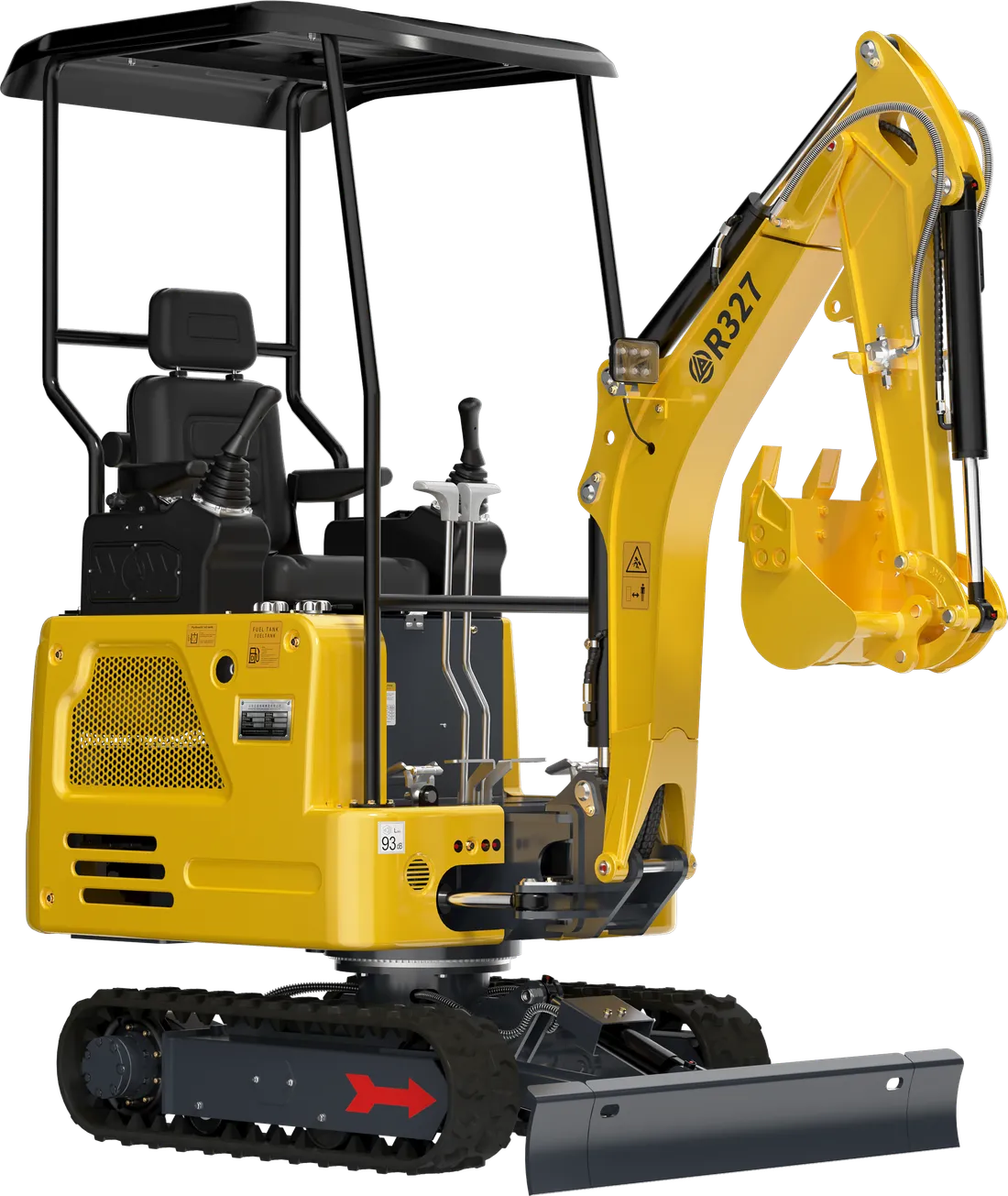
The R10 has a Koop 192F, the R327 a Kubota D722 and the R350 a Kubota D1703 diesel engine; engine parts such as filters and gaskets are selected according to this engine information. On most machines the boom, dipper arm and bucket pins are greased every working day. Measure the track tension regularly using the method in the manual; if you work with a hydraulic breaker, remember that the hydraulic filter and oil intervals get shorter. Details: track maintenance, pins, bushings and greasing, mini excavator models.
Tracked tractor
The QD35 runs on a water-cooled, single-cylinder Quanchai–Changzhou diesel engine and is belt-driven. In farm work, clean straw and grass off the radiator core every day, check the belt tension and look for cracks weekly, and clean the tracks at the end of muddy days. At the end of the season, check the antifreeze protection and store the machine in an enclosed, dry place. Details: tracked tractor maintenance checklist, QD35 product page.
Electric forklift
An electric forklift has no engine oil, fuel or coolant checks; the battery is at the centre of its maintenance. The RF20E has a 60V battery set made up of ten 12V 200Ah gel batteries, and the charging time is 6–8 hours. No water is added to a gel battery and its caps are not opened; don’t run the battery completely flat, don’t interrupt a charge once you have started it, and only use a suitable charger. Wipe the top of the battery with a dry cloth every week, and leave measuring the block voltages to the service team. Keep a regular eye on solid tyre wear and the mast chains too. Details: forklift battery care, forklift tyres, RF20E product page.
Floor cleaning machine
On cleaning machines, most of the maintenance is a short routine done after every use: empty and rinse the dirty water tank, clean the float and the suction filter, wipe the squeegee blade and check its edge, remove the brush or pad, and put the machine on charge with a suitable charger. Charging habits depend on the battery type; for example, the K1 has a 24V 60Ah lithium battery and the KL860 a 4 × 6V/200Ah battery pack. Don’t wash the machine with a pressure washer or a hose. Details: floor scrubber maintenance, choosing brushes and pads, floor cleaning machines.
Quick checklist
- The service threshold is tracked on the hour meter, and the calendar limit is known too.
- The daily and weekly checks are always done in the same order.
- Parts and oils have been prepared before the threshold, using the model and serial number.
- Genuine parts, or parts with documented technical specifications, are used for critical items.
- Every service is recorded with the date, hours, materials and documents.
- The appointment is booked a few working days before the service is due.
We describe the steps to follow if you notice a fault during maintenance in the what to do when your machine breaks down volume, and the wear and consumable items the warranty doesn’t cover in the what the warranty doesn’t cover volume.